

John F. Doane, M.D., from Discover Vision Centers, explains that people searching for an eye doctor in Lee’s Summit are often trying to answer a very practical question: who at the eye clinic do they actually need to see?
It sounds simple until you start booking. Optometrist, ophthalmologist, optician – the titles blur together quickly. Add in glasses, contact lenses, cataracts, eye pressure, screen strain, and sudden symptoms, and it is easy to understand why people put off making the appointment.
The good news is that each role has a clear purpose. You do not need to know every credential by heart. You just need a basic sense of who handles routine vision care, who handles medical or surgical eye problems, and who helps your glasses work in real life.
The Eye Exam Professional Most People Meet First
For many people, the first stop is an optometrist. The National Eye Institute describes optometrists and ophthalmologists as the two basic types of eye doctors and notes that both can provide comprehensive dilated eye exams and prescriptions for glasses or contact lenses [1].
In everyday terms, an optometrist is often the person you see when your vision feels off, but you are not sure why. Maybe your screen looks blurry by mid-afternoon. Maybe road signs are harder to read at night. Maybe your contacts feel dry before lunch, or your glasses technically work but no longer feel comfortable.
An optometrist can check how clearly you see, how your eyes focus, how well they work together, and whether your prescription needs to change. A routine exam may also include checking eye pressure, looking at the front and back of the eye, and deciding whether dilation is needed.
That matters because blurry vision is not always just a “new glasses” problem. It can be, but it can also be connected to dry eye, cataracts, diabetes-related eye changes, corneal issues, or other conditions. An optometrist may be able to manage some concerns directly, depending on state law and the patient’s needs, or refer the patient for medical or surgical care when something needs a closer look.
This makes optometry a common front door for eye care. It is where many people start when they need a prescription update, contact lens care, a general eye health check, or help figuring out whether a vision change is routine or not.
The Doctor Who Handles Medical and Surgical Eye Problems
An ophthalmologist is an eye doctor with medical and surgical training. The National Eye Institute explains that ophthalmologists may offer treatments, including surgery, that optometrists do not, and that some ophthalmologists specialize in specific eye diseases such as glaucoma or diabetic retinopathy [1].
This is the role that becomes important when eye care moves beyond routine vision correction. Ophthalmologists diagnose and treat eye conditions. They may care for cataracts, glaucoma, diabetic eye disease, macular degeneration, retina problems, corneal disease, eye inflammation, injuries, and other conditions that affect eye health.
Some symptoms should not wait for a regular vision appointment. Blurry vision, red or painful eyes, sudden new floaters or flashes, a dark curtain or shadow in vision, or vision changes after an injury can be reasons to seek medical eye evaluation. The National Eye Institute lists blurry vision and red, swollen, or painful eyes as reasons to see an eye doctor, and its retinal detachment guidance lists symptoms such as sudden floaters, flashes of light, and a shadow in vision [1,4].
That does not mean every symptom is an emergency. A new floater may not always mean a detached retina. Eye redness may come from something minor. But symptoms that appear suddenly, feel intense, or affect vision deserve more attention than a quick guess.
Ophthalmologists are also the professionals involved when surgery or advanced treatment is part of the conversation. Cataract surgery, refractive procedures, glaucoma procedures, retina treatments, corneal procedures, and eyelid surgery may all involve ophthalmology care, depending on the diagnosis and the doctor’s specialty.
They may also play a role when eye health is connected to another medical condition. Diabetes is a common example. The Centers for Disease Control and Prevention advises people with diabetes to get yearly comprehensive vision exams, including dilated eye exams, because diabetes-related eye problems may not cause obvious symptoms early on [3].
So, while an optometrist may be the right place to start for many routine needs, an ophthalmologist is often the right call when the issue is medical, surgical, sudden, complex, or tied to a broader health condition.
The Person Who Makes Glasses Works in Real Life
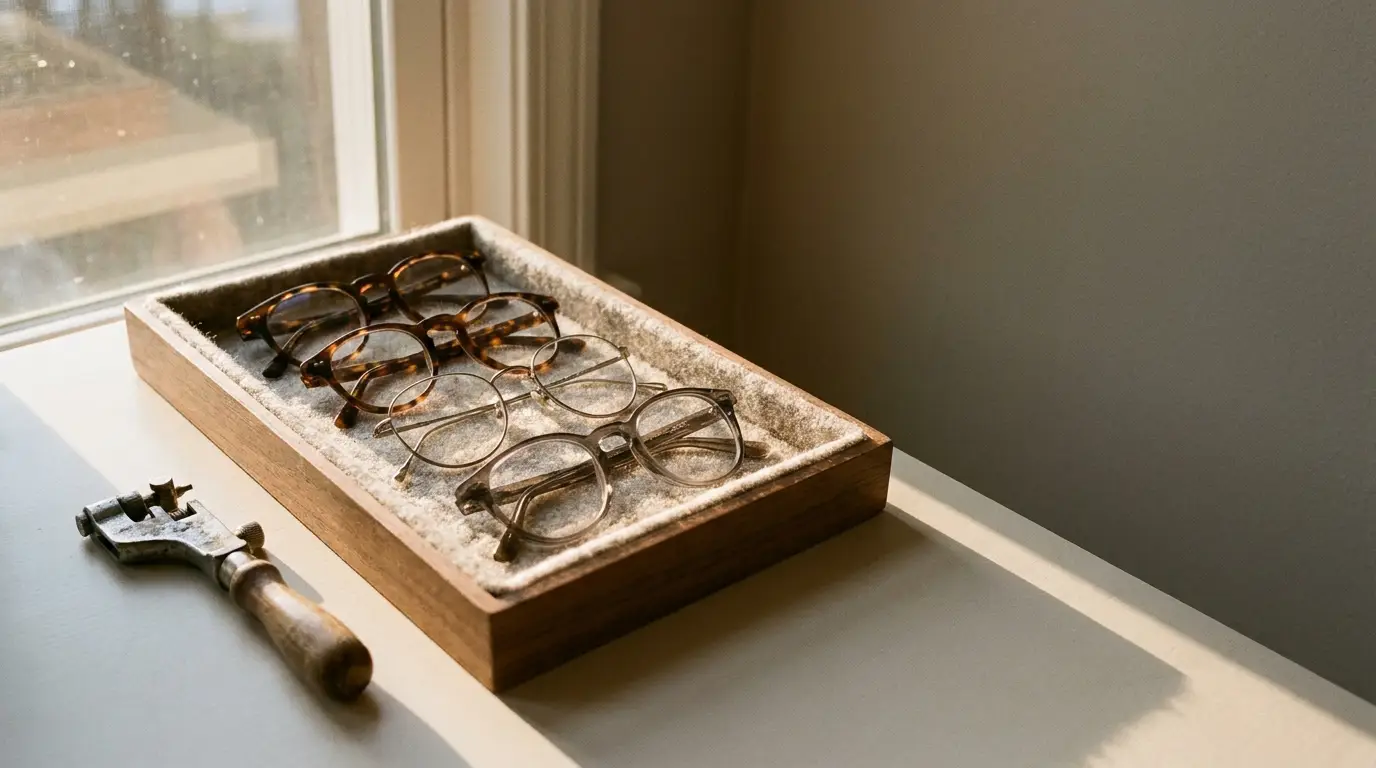
The optician is the person many people meet after the exam. This role is not the same as an eye doctor’s, but it can make a big difference in daily comfort.
Opticians work from prescriptions written by optometrists or ophthalmologists. The U.S. Bureau of Labor Statistics explains that opticians help fit customers for eyeglasses and contact lenses, help select frames and lenses, measure eyes and faces, and adjust or repair eyewear [2].
That sounds practical because it is. If you have ever had glasses that slide down your nose, pinch behind your ears, sit crooked, or make the world feel slightly tilted, you already know that a prescription is only part of the story.
An optician helps turn the prescription into something wearable. They may help you choose frames that work with your face shape, lens strength, and daily routine. They may explain lens materials, coatings, progressive lenses, glare reduction, or options for thinner lenses. They may also adjust frames so the lenses sit in the right position.
This can matter for style too. Glasses are not just medical equipment. For many people, they are on their feet all day. The right frame can feel natural; the wrong one can become a constant annoyance. A good fit can make the difference between glasses you tolerate and glasses you actually wear.
Still, an optician does not diagnose cataracts, glaucoma, dry eye, retina problems, or diabetes-related eye disease. They do not perform medical eye exams. Their work begins once the prescription is ready and the patient needs help with eyewear.
How the Right Referral Can Save Time
Eye care is not always one appointment with one person. Sometimes it works more like a relay.
A person may start with an optometrist because their vision is blurry. During the exam, the optometrist may notice cataract changes, high eye pressure, signs of diabetic eye disease, or another concern. The patient may then be referred to an ophthalmologist for diagnosis, monitoring, treatment, or surgery planning.
After treatment, the patient may return to an optometrist for routine care or work with an optician to update glasses. That is not duplication. It is each professional handling the part of care they are trained to manage.
A simple way to think about it:
- See an optometrist for routine vision care, prescriptions, contact lenses, and many common eye concerns.
- See an ophthalmologist for medical or surgical eye problems, especially if symptoms are sudden, painful, complex, or connected to another health condition.
- See an optician after a prescription is written and you need help with frames, lenses, fit, or eyewear adjustments.
For patients who are not sure where to begin, the symptom is usually the best clue. Mild prescription changes, contact lens discomfort, or a routine checkup may start with an optometrist. Sudden vision changes, pain, flashes, floaters, cataracts, glaucoma, diabetes-related eye concerns, or surgery questions may point toward an ophthalmologist. Glasses that need adjusting, replacing, or fitting belong with an optician once the prescription is set.
For people whose care does not fit neatly into one box, Discover Vision Centers provides optometry, medical eye care, and surgical services. That can help patients move from a routine exam to more specialized care when concerns such as cataracts, glaucoma, diabetic eye disease, retina problems, dry eye, refractive issues, or contact lens needs are identified.
The main takeaway is simple: the right eye care professional depends on the problem in front of you. When the right person handles the right step, the whole process gets easier – from the first exam to the glasses you wear home.
References:
[1] National Eye Institute. (2024, December 10). Finding an eye doctor. National Eye Institute. https://www.nei.nih.gov/eye-health-information/healthy-vision/finding-eye-doctor
[2] U.S. Bureau of Labor Statistics. (2025, August 28). Opticians: Occupational Outlook Handbook. U.S. Bureau of Labor Statistics. https://www.bls.gov/ooh/healthcare/opticians-dispensing.htm
[3] Centers for Disease Control and Prevention. (2024, May 15). Promoting eye health. Centers for Disease Control and Prevention. https://www.cdc.gov/diabetes/hcp/clinical-guidance/promote-eye-health.html
[4] National Eye Institute. (2025, November 5). Retinal detachment. National Eye Institute. https://www.nei.nih.gov/eye-health-information/eye-conditions-and-diseases/retinal-detachment















