That poofy, frizzy, won’t-sit-right hair problem? It has a name.
Straight but thick, coarse at the ends, flat at the roots, this specific texture sits right at the edge of wavy without fully committing. Most people spend years using the wrong products on it.
The right shampoo, the right leave-in, and the right cut change everything. Hair that once felt unmanageable starts to look fuller, feel softer, and hold its shape without daily effort.
Read on to find the exact routine, product picks, and styling tips built for this texture.
What is 1C hair?
1C hair is straight, thick, and coarse with natural body and subtle bends. It looks fuller than 1A or 1B hair but struggles with frizz, puffiness, and flyaways.
Scalp oils can’t easily reach the ends, leaving roots oily and ends dry. The right moisture balance keeps hair healthy and easy to manage.
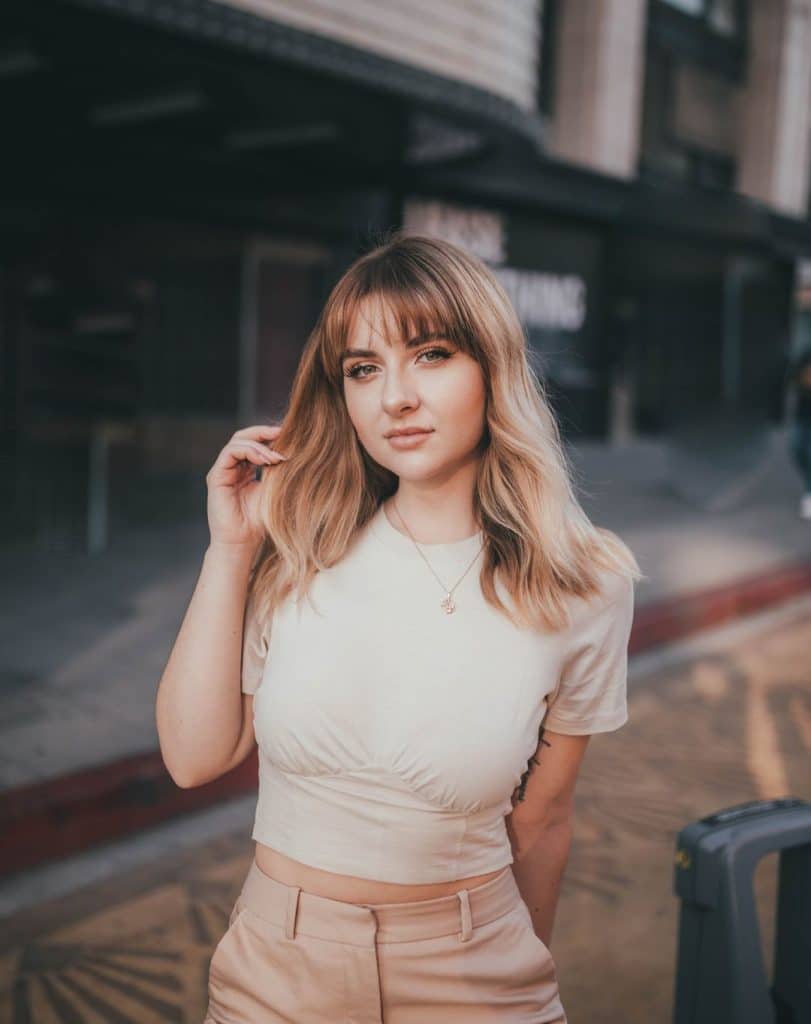
Signs You Have 1C Hair Type: Type 1C hair sits between straight and wavy, with flat roots, thick strands, and slightly bent ends.
- Thick texture: Strands feel coarse and easy to notice between the fingers.
- Poofy ends: Roots stay flat, while mid-lengths and ends look puffy or tousled.
- Frizz-prone: Bends and thickness make oil distribution harder.
- Flyaways and tangles: Static and knots often appear near the ends.
- Soft hold: It can hold loose bends or waves for a short time.
The Right Hair Care Routine for 1 C Hair
A simple 1C hair routine should focus on light moisture, gentle styling, frizz control, and natural movement without making the roots flat or greasy.
Step 1: Brush Before Wetting
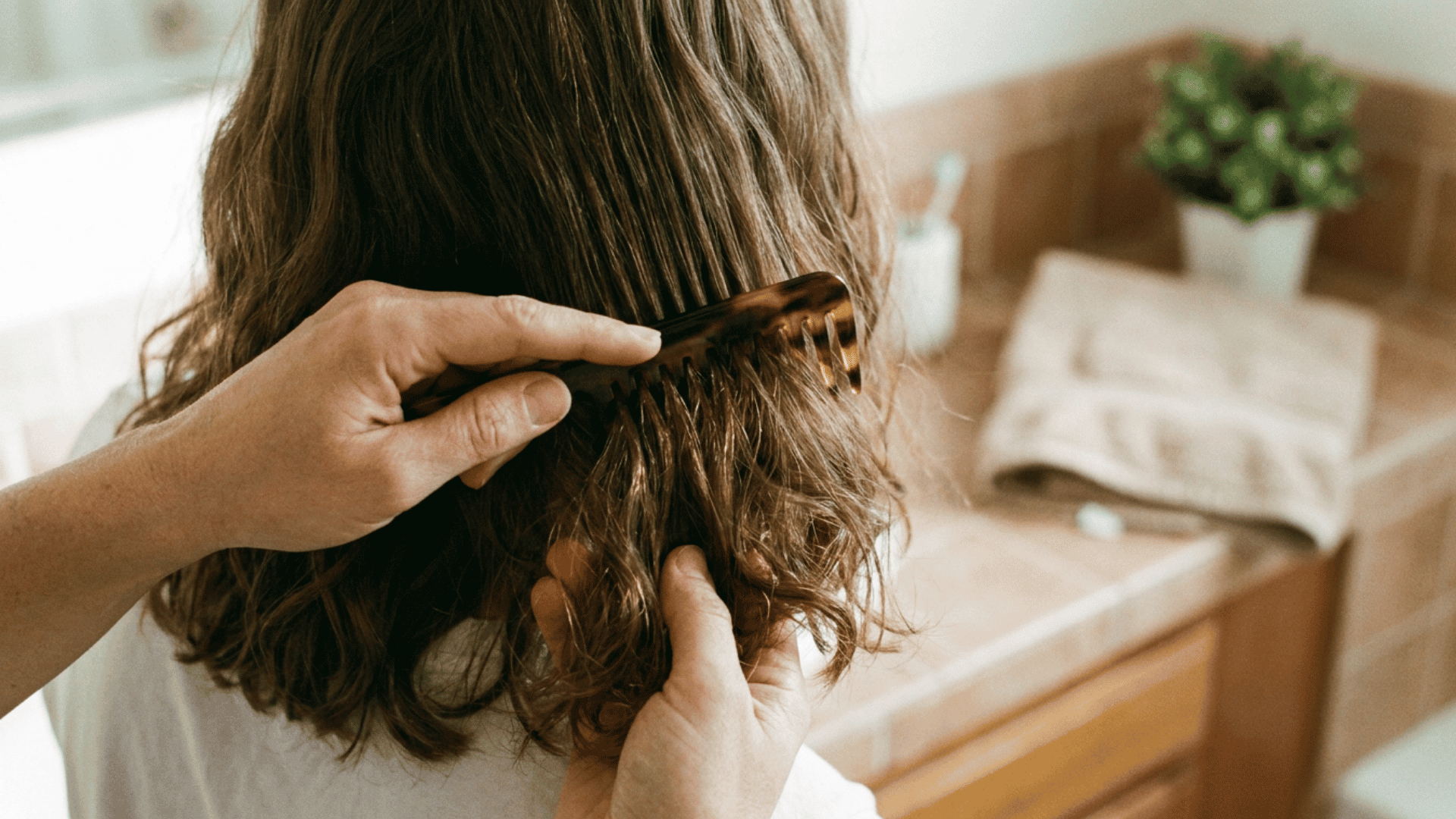
Before adding water or styling products, brush 1C hair gently to remove knots and tangles. This helps prevent breakage and makes the rest of the routine easier.
Since 1C hair can feel thick, coarse, and slightly tangled at the ends, starting with smooth hair helps products spread more evenly and keeps the final look softer and cleaner.
- Use a wide-tooth comb first.
- Start from the ends.
- Work upward slowly.
- Avoid harsh pulling.
Step 2: Dampen the Hair
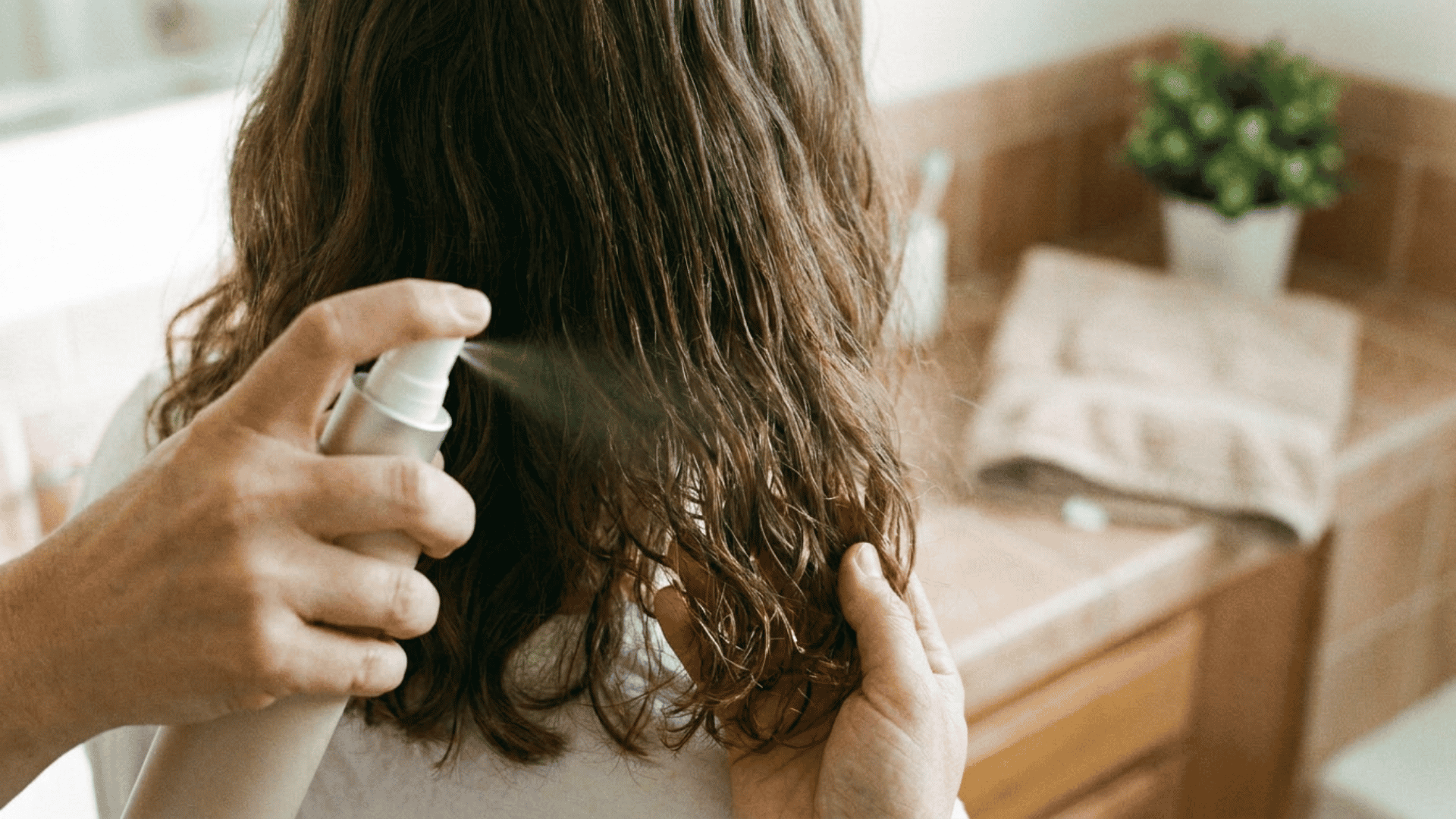
Lightly mist the hair with water until the mid-lengths and ends feel damp, not fully soaked. Keeping the roots mostly dry helps avoid a heavy-scalp feeling and reduces drying time.
For 1C hair, this step helps reactivate natural bends, reduce puffiness, and make the hair easier to shape before applying styling products.
- Use a continuous spray bottle.
- Focus on mid-lengths and ends.
- Keep hands slightly wet.
- Rewet dry sections as needed.
Step 3: Apply Leave-In Conditioner

Use a lightweight leave-in conditioner to soften the hair, control frizz, and make the strands easier to manage. Since 1C hair often gets poofy or dry through the ends, this step adds moisture without weighing the roots down.
Gently rake the product through, then scrunch to bring out soft bends and natural movement.
- Add product to damp hair.
- Avoid the roots.
- Rake for even coverage.
- Scrunch gently after raking.
Step 4: Add Mousse and Gel

Apply mousse first to give the hair light body, then use a small amount of gel to help hold bends in place. This works well for 1C hair because it supports natural shape without making the hair stiff or greasy.
Focus most of the product on the outer layers and ends where texture usually shows more.
- Glaze product over outer layers.
- Scrunch upward with light pulses.
- Use less on straighter sections.
- Add water if hair dries.
Step 5: Dry and Finish
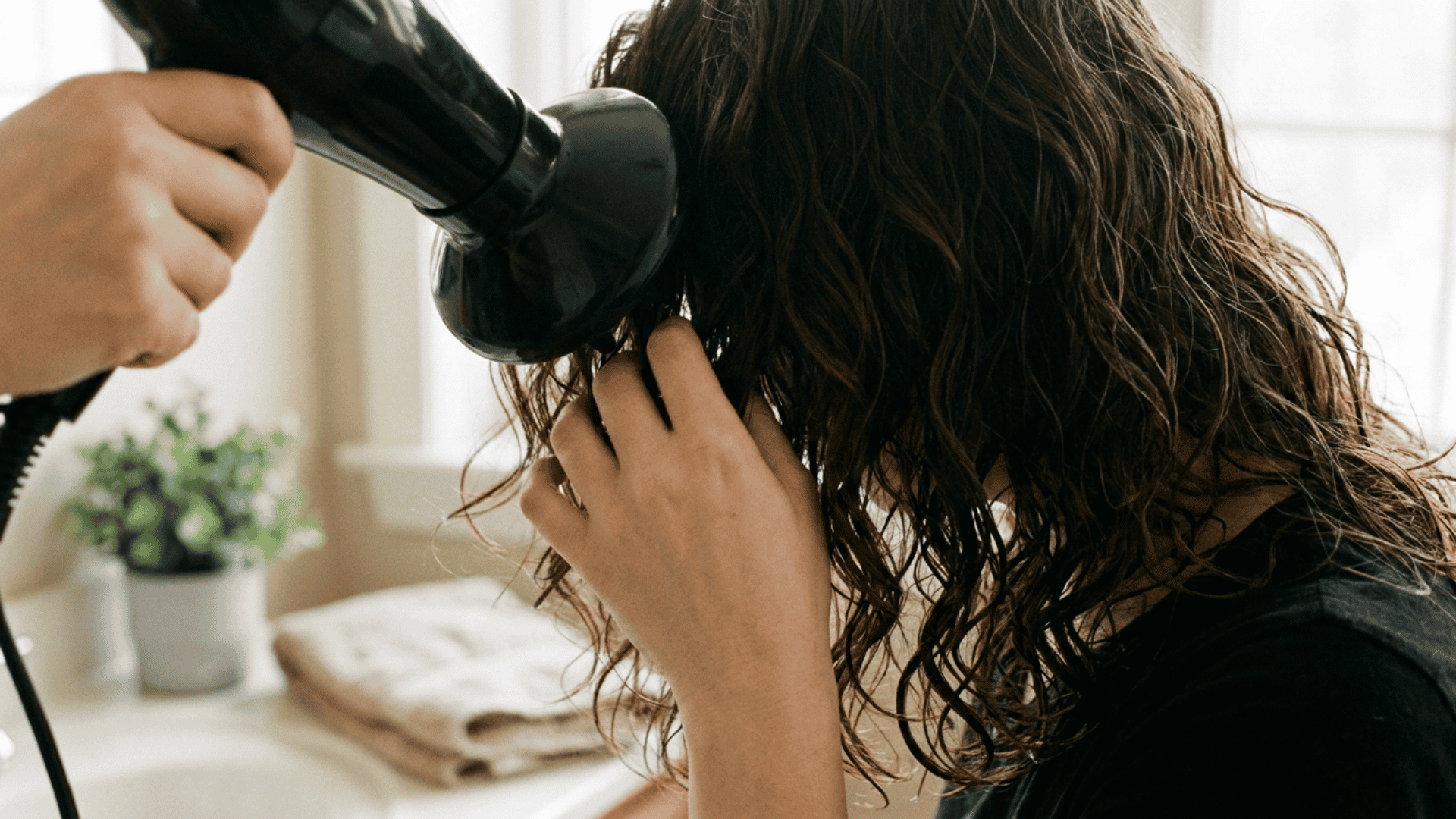
Let the hair air dry or use a diffuser on medium heat when faster drying is needed. Once the hair is mostly dry, soften any crunch with a small amount of lightweight oil or serum.
This final step helps smooth frizz, define soft bends, and keep 1C hair looking natural instead of stiff or overly styled.
- Diffuse on medium heat only.
- Use heat protectant before diffusing.
- Stop when mostly dry.
- Scrunch downward gently
Best Products for 1 C Hair
The best products add deep moisture to dry, coarse ends while staying light enough to keep roots from getting greasy. The goal is to smooth the hair cuticle, keep humidity out, and control frizz.
1. Cleansing and Conditioning
Washing should be spaced out to 2–3 times a week to stop natural oils from being stripped away.
Choose sulfate-free, volumizing, or balancing formulas that won’t weigh hair down. Pureology Hydrate Sheer Shampoo works well for light moisture without buildup.
Apply hydrating conditioners from mid-lengths to ends only. Pureology Hydrate Sheer Conditioner or Moxie Beauty Ultra Hydrating Conditioner both control frizz without leaving a heavy cast.
2. Leave-In Treatments
1C hair is often thick, so a leave-in treatment helps tame mid-lengths and ends between washes.
A water-based, lightweight product adds hydration and helps smooth flyaways. Moo and Yoo Miracle Milk or Moxie Beauty Super Defining Curl Cream both work well for daily care.
3. Styling and Frizz Control
These products work well for keeping hair sleek or bringing out soft, loose beach waves.
A few drops of a lightweight, fast-absorbing oil or serum seal the hair and add shine. Biosilk Silk Therapy and Bumble and Bumble Hairdresser’s Invisible Oil are both solid picks.
For soft waves, try a foam-based product like Bumble and bumble Surf Texturizing Finishing Foam.
4. Weekly Maintenance
Thick, coarse hair needs a strong moisture treatment once a week to protect against damage and rebuild strands.
Swap the regular conditioner for a deeply nourishing hair mask or bonding treatment.
Redken Acidic Bonding Concentrate 5-Min Liquid Mask or Shiseido Fino Hair Mask both bring dry, frizzy hair back to good condition
Best Haircuts for 1 C Hair
These three cuts work best because they reduce bulk while enhancing 1C’s natural texture.
Shoulder-Length Shag

A shoulder-length shag works well for 1C hair because the layers reduce heaviness and make the natural texture more visible. This cut adds shape, movement, and airy volume without making the hair look bulky.
It also helps reduce the flat-root, poofy-end effect that often comes with 1C hair, so the overall style feels softer, lighter, and easier to manage day-to-day.
The best length for this style falls between the shoulder and the mid-back.
Textured Lob (Long Bob)
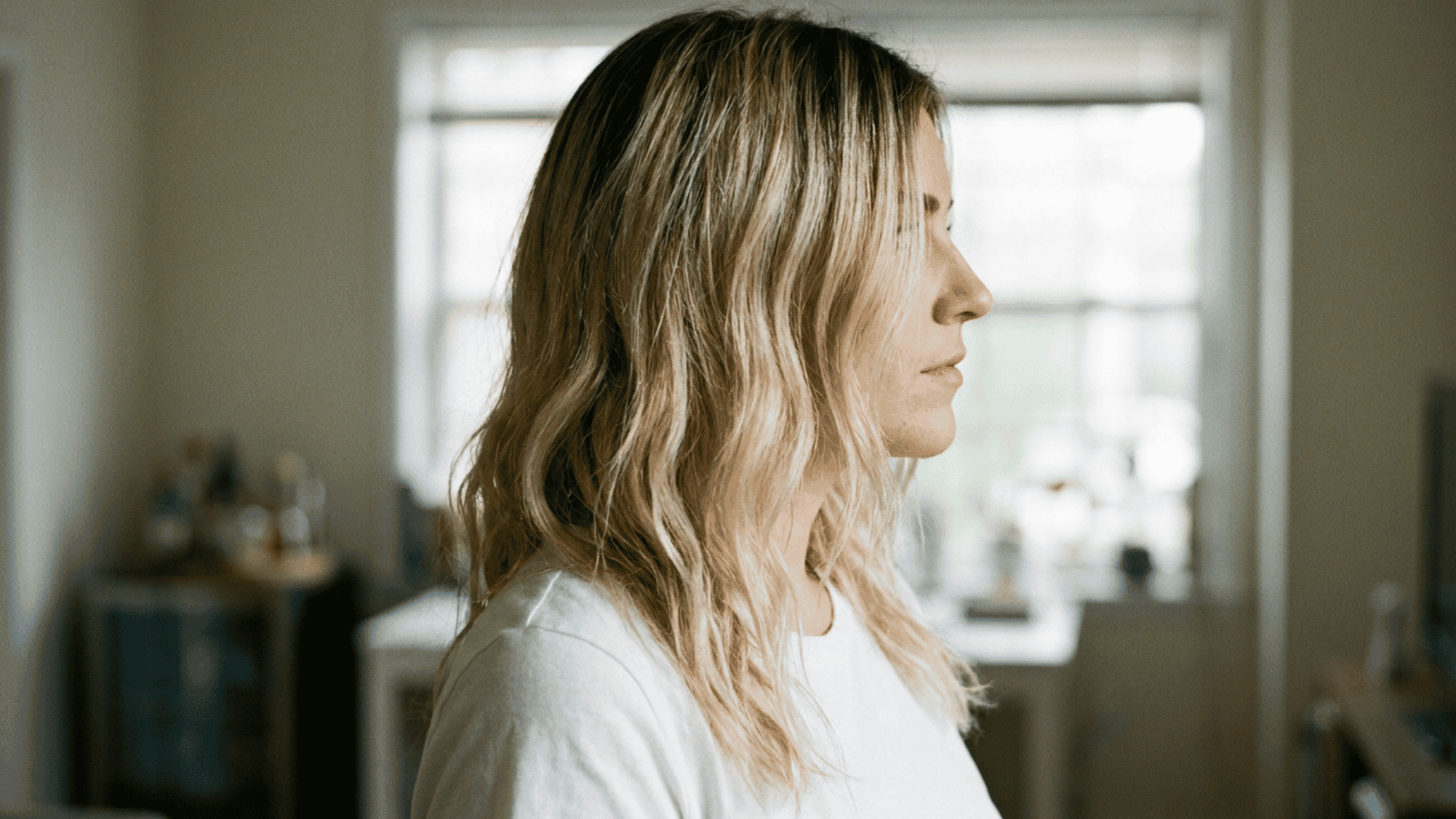
A textured lob gives 1C hair a balanced shape by removing excess weight while keeping enough length for smooth styling. The added texture helps the hair look fuller and more defined, especially through the ends.
It is a good choice for anyone who wants a polished look with soft movement, as it adds volume without making the hair look too thick or stiff.
The best length for this style falls between chin and shoulder length.
Long Invisible Layers

Long invisible layers are ideal for 1C hair because they reduce bulk without creating an obvious choppy look.
The layers are blended subtly, which helps the hair retain its length while gaining better movement and flow.
This cut works especially well for thicker 1C hair, since it softens heaviness and makes the texture feel lighter, smoother, and easier to style.
This style works best on medium-long to long hair.
Other Hair Types
Hair types are grouped by pattern, from straight to tightly coiled. The letters A, B, and C show how fine, thick, loose, or tight the pattern is
| Hair Type | Category | Key Traits |
|---|---|---|
| 1A | Straight | Very fine, flat, gets oily fast |
| 1B | Straight | Mostly straight, more volume, soft texture |
| 2A | Wavy | Loose S-waves, fine, easy to manage |
| 2B | Wavy | Clear S-waves, medium density, frizz-prone |
| 2C | Wavy | Deep waves from roots, thick, frizzy |
| 3A | Curly | Large loose curls, full but flat roots |
| 3B | Curly | Springy ringlets, pencil-sized, dry |
| 3C | Curly | Tight corkscrews, dense, high shrinkage |
| 4A | Coily | Soft, defined coils, fragile, need moisture |
| 4B | Coily | Z-shaped coils, wiry, shrink easily |
| 4C | Coily | Very tight coils, full, needs deep care |
1 C Hair Mistakes to Avoid
The most common mistakes with this hair type come from treating it like fine straight hair or forcing it into curls.
- Applying conditioner too close to the roots causes buildup and weighs down already thick strands.
- Rough towel-drying lifts coarse cuticles and creates serious frizz with the first rub.
- Brushing dry hair breaks the natural pattern apart and leads to instant puffiness and breakage.
- Overusing heat tools above 350°F damages 1C strands that are already naturally straight and coarse.
- Washing with sulfates and silicones strips natural oils and leaves dull, heavy buildup on the hair.
Final Thoughts
1C hair is not fully straight, not clearly wavy, but it is completely manageable with the right approach. The key is light moisture, frizz control, and products that work with the natural texture instead of against it.
Getting this right matters because healthy 1C hair looks fuller, feels softer, and holds style longer without daily work.
Start with one small change today. Swap heavy cream for a lightweight leave-in conditioner and see the difference.
Want more hair care tips? Browse our hair type guides to find what works best for your hair!
Frequently Asked Questions
Is 1 C Hair Rare?
1C hair is somewhat uncommon but not rare. It has straight roots, thicker strands, soft bends, and frizz-prone ends.
Why Does Gen Z Have Curly Hair?
Many Gen Z people embrace natural texture, avoid heat damage, and follow curly styling trends, including perms and textured cuts.
Is Curly Hair Genetic?
Yes, curly hair is mostly genetic. Follicle shape, inherited traits, and multiple genes influence curl pattern, thickness, and texture.