
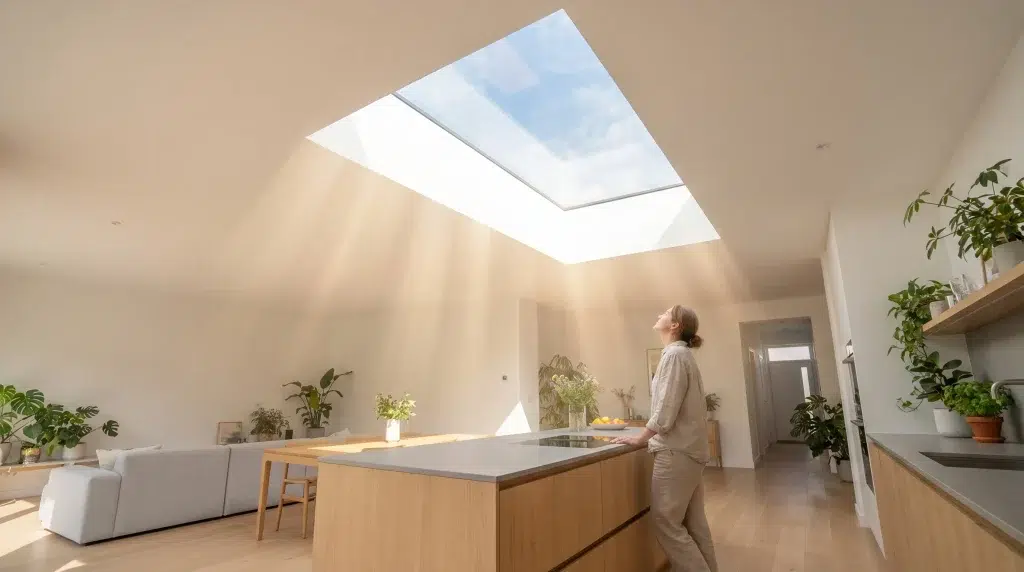
Flat roof windows can transform the feel of a home in a way few upgrades can. They don’t just “add light”—they change how rooms are used, how spacious they feel, and even how comfortable they are through different seasons. But choosing the right one isn’t as simple as picking a size and hoping for the best. Glazing options, kerb details, ventilation, orientation, and compliance all matter—and the wrong choices can lead to glare, overheating, condensation issues, or a window that simply doesn’t suit the space.
If you’re planning a kitchen extension, loft conversion, or a flat-roofed garden room, here’s how to make smart decisions that hold up long after installation day.
Start with the purpose of the room (not the product)
Before looking at styles, take a step back and ask: what problem are you solving?
A flat roof window in a hallway has a different job than one above a dining table. In practice, the “right” window is the one that supports how the space is lived in—light levels, privacy, ventilation needs, and temperature comfort.
Daylight: even illumination beats dramatic bright spots
Many homeowners aim for maximum daylight, but more isn’t always better. A single large rooflight can create intense pools of sun and harsh contrast, especially in south-facing roofs. In living areas, you often want soft, even light that reduces reliance on artificial lighting without creating glare.
A useful approach is to think in zones: where do you want task light (food prep, reading) and where do you want ambient light (circulation spaces, lounging)? The answer can influence whether you choose one larger window, several smaller ones, or a combination.
Privacy and sightlines matter more than you expect
Roof windows feel “private” because they face the sky—but overlooking can still happen with taller neighbouring buildings. If you’re in a dense area, consider glazing that reduces visibility from above or positioning windows away from direct sightlines. This is often overlooked until after installation, when the room is finished and the reality sets in.
Choose the right type: fixed, opening, or walk-on
Flat roof windows generally fall into a few functional categories, each with clear trade-offs. The best choice depends on whether you need ventilation, access, or durability under foot traffic.
Fixed vs opening: ventilation is a comfort feature, not a luxury
Fixed rooflights are typically simpler and can be ideal where ventilation isn’t needed. But in kitchens, bathrooms, and highly insulated extensions, warm moist air needs a controlled escape route. An opening roof window—manual, electric, or solar—can dramatically reduce condensation risk and improve comfort in summer.
If you’re exploring the market and comparing configurations, it helps to browse a full range of flat roof windows to see what’s possible across fixed, vented, and specialist options, then narrow down based on your room’s needs rather than aesthetics alone.
Walk-on and access rooflights: specialist solutions for specific layouts
If the rooflight is part of a roof terrace or positioned on a flat roof that’s occasionally accessed, you’ll need a walk-on specification. These require robust glazing build-ups and slip resistance considerations. Similarly, access rooflights (designed to open wide enough for roof access) can be useful for maintenance routes or terraces, but come with additional structural and safety considerations.
Get the glazing specification right (it affects comfort all year)
Glazing isn’t just about energy ratings—it shapes temperature, glare, noise, and even how the light looks at different times of day.
Control heat gain without living in a cave
Large roof glazing can invite overheating, especially on south- or west-facing roofs. Modern solar control coatings can cut heat gain while still letting in good visible light, but you want balance: overly aggressive solar control can dim the room and flatten the quality of daylight.
A practical rule: if the space already runs warm (open-plan kitchens, rooms with big bifolds, top-floor spaces), prioritise solar control early. Retrofitting shading is possible, but planning the glass spec correctly is usually the cleaner solution.
Prioritise acoustic performance if you’re near noise sources
Rain noise is a common worry with roof glazing, but external noise (roads, flight paths, nearby nightlife) can be the real issue. Acoustic laminated glazing can help, though it may slightly affect light transmission. If you’re close to a busy road, this is one of those upgrades you’ll feel every day.
Don’t underestimate installation details: kerb height, pitch, and waterproofing
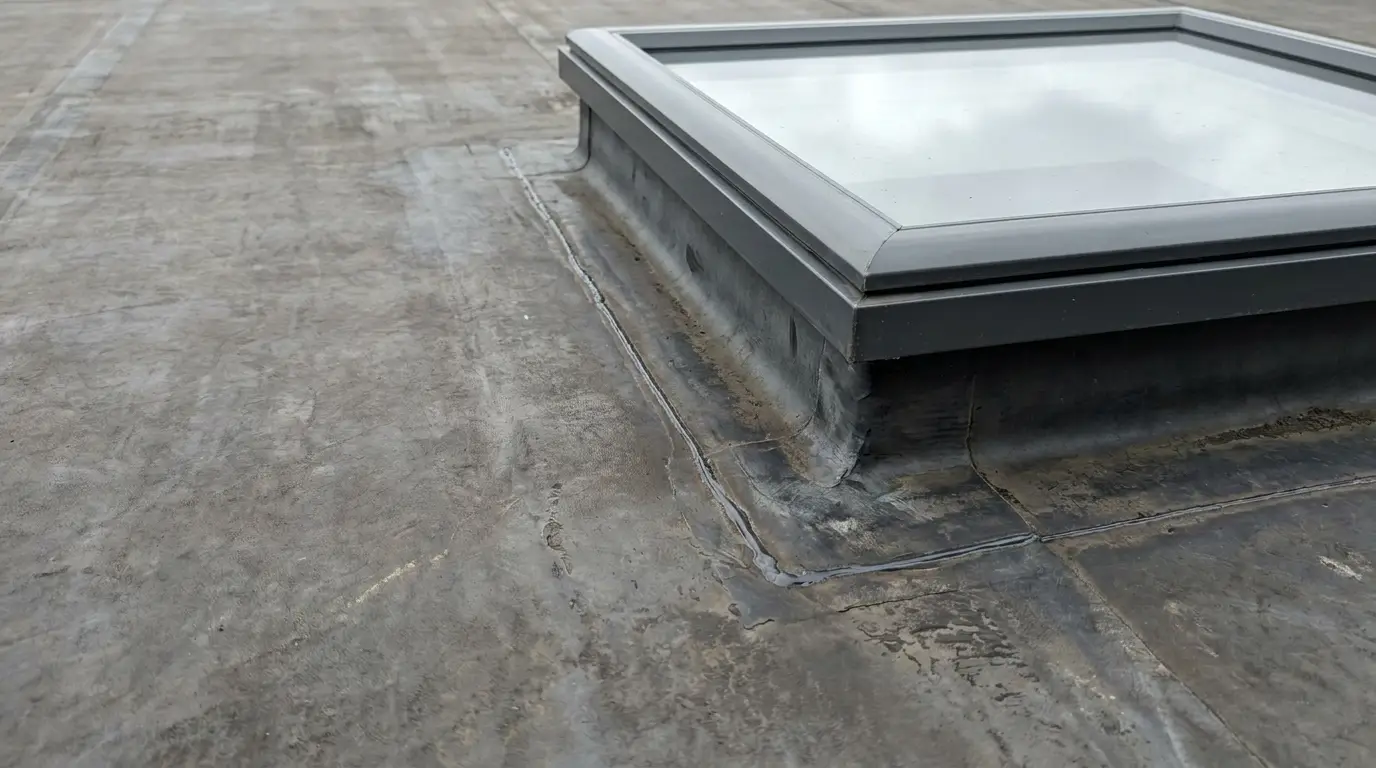
A high-quality window can still perform poorly if the detailing is wrong. Flat roof windows live or die by installation quality because they’re exposed to standing water, wind-driven rain, and thermal movement.
Kerb height and build-up affect both appearance and performance
Many flat roof windows sit on an upstand/kerb. The kerb height must suit your roof build-up and manufacturer requirements (often linked to waterproofing and drainage). Too low, and water management becomes risky. Too high, and you may end up with a bulky internal reveal that blocks light and looks awkward.
Check the minimum pitch—even “flat” roofs aren’t truly flat
Most systems require a minimum pitch to shed water effectively. If your roof is very low pitch, you may need a unit designed for that scenario or adapt the kerb to create the correct fall. This is not the place to improvise; confirm compatibility early with your installer and the window specification.
Size and placement: think like a lighting designer
Choosing size is more nuanced than “bigger is brighter.” Placement determines how light travels across surfaces—and whether the room feels calm or chaotic.
Here’s a quick way to sanity-check your plan (use this as a conversation starter with your designer/installer, not a strict formula):
- Place roof windows where light can spread: central positions often distribute light more evenly than edge placements.
- Avoid glare lines over screens: if a kitchen has a TV nook or a study area, angle/position matters.
- Use multiple units for wider rooms: two or three rooflights can outperform one oversized unit in terms of comfort and visual balance.
- Consider furniture and function: put the brightest light where you actually need it (worktops, islands, reading corners).
Regulations, safety, and practical realities
Depending on your project, Building Regulations may influence glazing type (especially safety glazing), ventilation provision, and thermal performance. If the window is positioned low enough to pose a fall risk, guarding or specific specifications may apply. In roofs near boundaries, fire performance can also become relevant.
And don’t forget maintenance: self-cleaning coatings can help, but access still matters. If the window will be hard to reach, factor in how you’ll clean it and whether opening mechanisms are practical.
Final thoughts: choose for comfort, not just looks
A flat roof window is one of those features you interact with indirectly—through how the room feels at 8am, how it stays cool during a heatwave, how quickly steam clears after cooking, and whether you need lights on at midday. If you choose based on comfort and performance first, the aesthetics usually follow naturally.
If you’re unsure, bring your installer into the decision early, share how you use the space, and pressure-test the plan against orientation, ventilation, and glazing spec. It’s far easier to design in comfort than to retrofit it later.