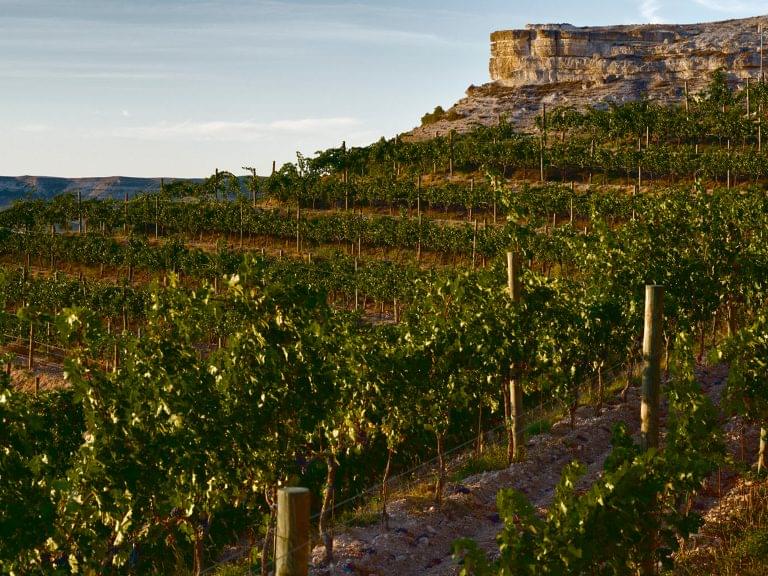
For years, decades even, I’d crisscrossed the regions of Burgundy, Barolo, and who knows where else, always meaning to make it to the Rueda region of Ribera del Duero.
I’d tasted the wines, of course – who hasn’t been mesmerized by a Vega Sicilia or tempted by the black, brooding weight of a well-made Tinto Fino?
But tasting a wine is one experience, and living it is quite another.
When the opportunity arose to immerse myself in this famous area for two days that are only a couple of hours north of Madrid, I jumped at it. Below was a region in transition in a beautiful way – with one foot in tradition and another in a brave new world of terroir-driven wines.
Day One: Checking Into History
The Posada Real: Where Coaches Once Stopped
I elected to stay at the Posada Real de Bardón Bas in Aranda de Duero because it was a 16th-century stage coach inn that had been adapted for modern usage but was otherwise right in the heart of the city’s wine scene. As I wandered in and out of the ancient stone archways there, I felt history all around me—it was no modern hotel that I was staying in.
My own room retained the rustic quality with the benefits of modern comfort. The luxury, however, lay, quite literally, just beyond my door: the bodegas, the tapas bars, the seven kilometers of subterranean wine tunnels that crisscross the city. Aranda isn’t close to the wine but founded upon it.
First Impressions: The Landscape That Shapes the Wine
Madrid was a long-haul train ride, but the train itself was nothing short of revelatory. As we ascended into the Meseta Central, this huge plateau that bisects Spain, the country felt downright magical. Hills sprinkled with ancient castles, because, of course, this is the land of Castilla y León, gradually gave way to rolling hillsides covered in grapevines, all of it bathed in the golden, shimmering tones of the iconic Mediterranean light.
First of all, I noticed the altitude. With an elevation ranging from 2,500 to 3,600 feet above sea level, the vineyards are among the highest in Spain, much higher than those of the Rioja region by several hundred feet. This makes itself felt in the strength of the sun’s rays and the cold air. In February, I frequently found myself shading my eyes with the aid of sunglasses one moment and donning my jacket the next because the differences in temperature could be as much as 50 degrees from day into night, which, in fact, are the very reasons the wines of Ribera del Duero are so distinctive.
The Wines: What Makes Ribera Different
Afternoon at Prado Rey: Understanding the Philosophy
My first serious tasting experience was at Prado Rey, and from there, everything else unfolded to the beat of the same drum. They have a Solera system for their prestige cuvée, Rábano, that blends vintages in a manner that’s unseen in the majority of Spanish reds. It’s this creative approach, born from a deep appreciation for heritage, that marks the modern Ribera experience.
It’s more than a bigger, bolder Tempranillo, Rioja’s flagship wine. It’s a different animal altogether – darker in color, tasting more toward blackberry, black cherry, and black fruits instead of the bright reds found in Rioja. It has a thicker, more grippy tannin, and a higher alcohol content, often above 14% and sometimes topping 15%.
The Tasting Notes That Changed My Perspective
Prado Rey White (Albillo Mayor)
Before we even got to the reds, they gave me something that completely surprised me – a white offering made from the local Albillo Mayor white grape variety! Since 2019, whites are now allowed in this DO, and this was my first taste of this revolution. Very smoky and complex, with tropical and citric overtones, this one aged in steel tanks to keep its crisp freshness. I recalled the significance of Indigenous grapes here; this one has been growing happily for centuries just waiting for someone to pay tribute to it.
Prado Rey Crianza
Traditional Ribera, in its most authentic expression, exudes a deep ruby-purple luminescence within the glass, offering notes of blackberry, dried herbs, and subtle vanilla hints of its passage in oak for a year. Blackberry once again dominates the palate, where it is matched by the vibrant acidity and tannins, which, although sturdy, remain controlled. It is approximately 14% alcohol, providing grip without warmth. This is the best of Ribera, with maximum balance.
Rábano (Solera Blend)
The revelation. This non-vintage blend had tertiary flavors with bright fruit—leather, tobacco, and dried figs—but at the same time, there were flashes of blackberry and plum. The wine had a silky texture that bordered on Burgundian finesse, yet underlying that finesse was that characteristic Ribera punch. This wine made me think hard about the potential of Spanish wine.
Day Two: From Tradition to Revolution
Morning at Dominio Basconcillos: The Classic Approach
The next day, I visited Dominio Basconcillos to taste their Viña Magna Reserva. This is the embodiment of the heritage of Ribera del Duero: 80-year-old vines with a high ele-vation level and a long aging in oak that imparts a full-bodied quality with a strong structure. It’s like a Lexus – it’s elegant, refined, built-to-last wine. It has black fruit along with dried herbs and flowers. A meaty undertone also comes across in the tertiary characteristics. It is the wines like this one that established Ribera del Duero on the international scene in the 1980s.
Afternoon at Bodega Sarmentero: The New Wave
The contrast was stark. Sarmentero is a small, family-run operation practicing ecological viticulture. They poured me three expressions of Tempranillo from the same vineyard:
The Unoaked Tempranillo
Pure, explosive fruit. No oak to hide behind—just crystalline expression of grape and terroir. Bold body but incredibly fresh, with vibrant acidity. Not common in Ribera, where oak is king, but it showed what the grape could do on its own.
Five Months in Oak
Same vineyard, light oak influence. The fruit was still primary, but now there was structure, a framework. You could taste both the grape and the winemaking.
Twelve Months in Oak
The sophisticated version: dry, complex, integrated tannins, higher alcohol. This was for the serious wine lover who appreciates nuance and evolution.
Tasting these three side-by-side was like watching a masterclass in winemaking philosophy. Each was excellent, but they told completely different stories about what Ribera could be.
The Revelation: What Stands Out

The Beauty Beyond the Bottle
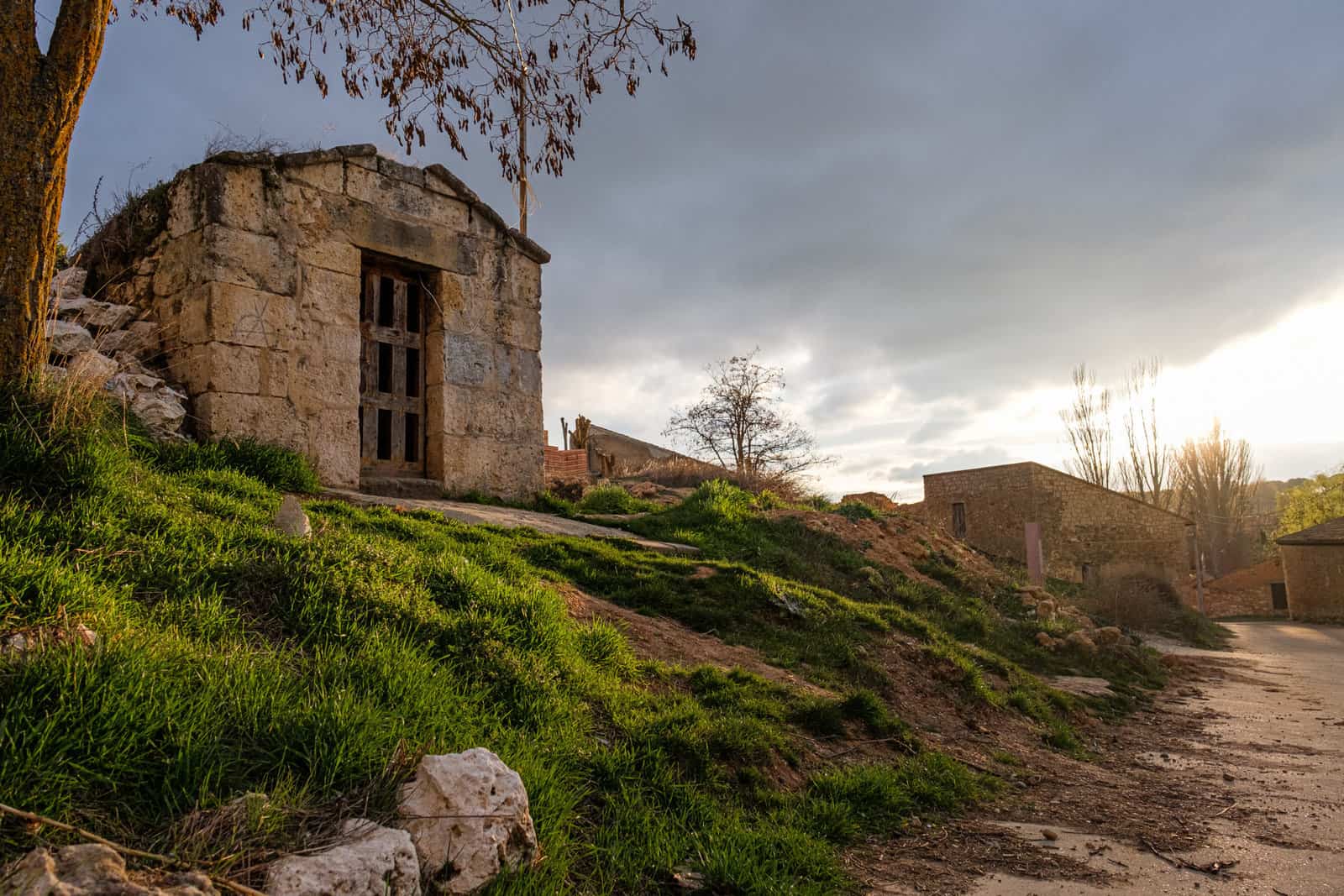
In between wine tastings, I explored this stunning landscape which so defines these wines. I walked through Pedrosa de Duero, an ancient medieval village with streets as narrow and winding as one might have walked in ancient times. I stood before the imposing Peñafiel Castle, sitting atop a ridge covered in vines. I peered into the sunken lagars, like hobbit-holes, which were traditional cellars with natural temperature and humidity control even before air-conditioned tanks were possible.
As the sun sank over Gumiel de Izán, casting its last light on those limestone cliffs, I felt exactly—down to my bones—what terroir is all about. Such a cruel and beautiful landscape: the limestone and clay soils, the extreme temperatures, the abbreviated grape ripening season—terroir is more than a reflection of the wine from this place. It is the wine.
What Makes Ribera Unique
Following two days of submersion in tastings and discoveries, several key takeaways began to weave together.
High-altitude vineyards provide Tempranillo with a unique combination of intensity and crisp natural acidity. The grapes explode with ripeness in the strong sunlight, but the chill of the nights preserves the freshness. This delivers power with lift, never weight.
Whereas Rioja tends towards cherry and strawberry, Ribera del Duero presents blackberry, black plum, and dark cherry fruit. The wines exude a sense of muscularity and intense concentration, with the sharpened acidity preventing them from tipping into imbalance.
One-quarter of the vineyards in the Ribera region are over 50 years old, with a tiny proportion, four percent, being over a century old. There are some non-grafted, pre-phylloxera vineyards, particularly in sandy soils, that perform very well, resulting in highly complex wines.
Final Reflections: A Region Finding Its Voice
On my last evening, sitting in a tapas bar in Aranda with a glass of local Tempranillo and a plate of lechazo (roast lamb), I reflected on what makes Ribera del Duero so compelling right now. This is a region with 2,600 years of wine history but only 42 years as an official DO. It achieved fame by making big, oaky, powerful wines that impressed international critics. But now, having proven itself, it’s asking deeper questions: What does our terroir really express? How can we make wines that are distinctly ours?
The answer, I suspect, will emerge over the next decade as winemakers continue mapping their soils, isolating their best parcels, and fine-tuning their approach. Some, like Vega Sicilia and Pesquera, will continue crafting wines in the powerful, age-worthy style that built the region’s reputation. Others will push toward fresher, less-oaked, more vineyard-specific expressions.
Both approaches are valid. Both are exciting. And both are producing wines that can stand alongside the world’s best.