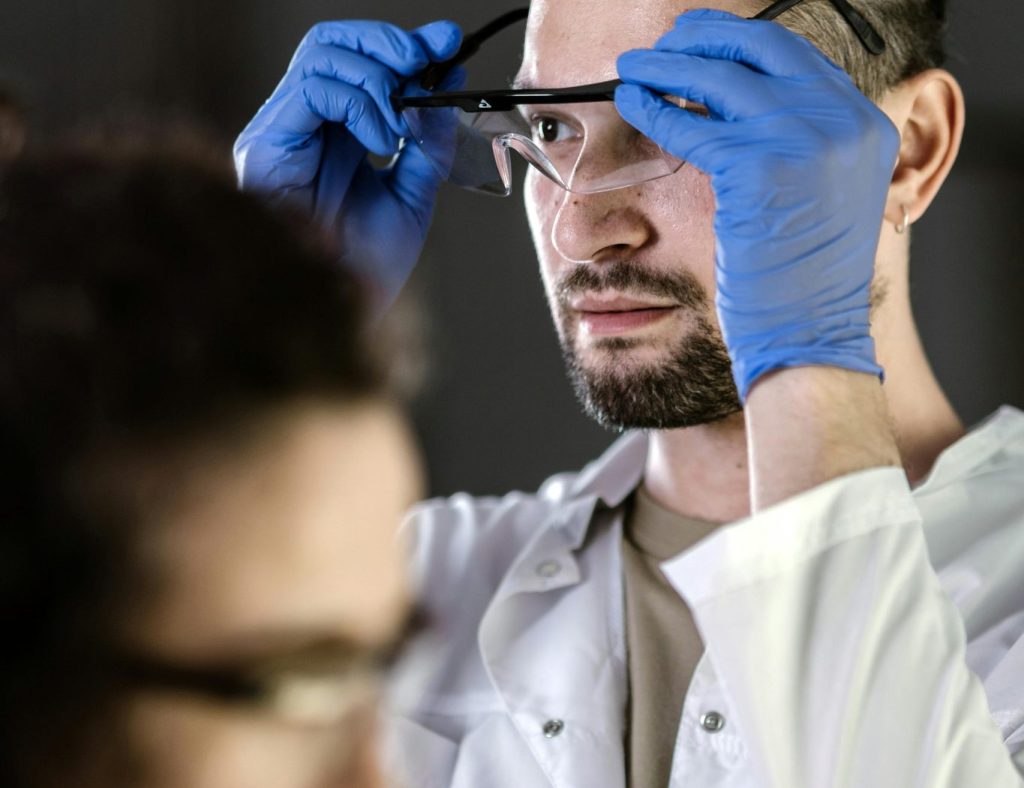
One of the most widely used safety requirements in working environments, laboratories, workshops, and factories is eye protection. Owing to this, several individuals believe that all protective eyewear provides the same level of protection against all threats. This assumption is, in fact, perilous. The distinction between ordinary safety glasses and laser glasses is notable, and it is essential to recognize this difference to avoid severe eye injuries.
Simplistically, both categories of eyewear are designed to protect the eyes, yet they address entirely different threats. Ordinary safety glasses are used to protect the eyes against physical hazards, whereas specialized eyewear designed to counter optical exposure is intended to protect against invisible or imperceptible hazards that may cause harm.
What Standard Safety Glasses Are Designed to Do
The normal safety glasses are designed to protect the eyes from workplace accidents. They normally consist of flying pieces of debris, dust, bits of wood or metal and splashes of chemicals. Safety glasses serve as a physical barrier between the eyes and external objects in construction sites, machine shops, or laboratories that work with liquids.
Moreover, most safety glasses are impact-resistant and may include side shields to prevent particles from entering from any angle. There are also models that safeguard against wind, smoke, or light exposure to chemicals. These glasses, however, are not designed to control light energy. They are not selective in terms of filtering wavelengths and they do not attenuate high-energy sources of light.
Furthermore, the simplest example is using a power drill. Glasses are preferable in preventing debris from striking your eyes, but they provide no assistance in case you should stare at a powerful source of light. It is here that the confusion may start.
What Laser Glasses Are Specifically Built For
Laser glasses are used in a completely different application. They are designed to block specific wavelengths of laser light rather than the physical objects they are intended to block. Lasers are potentially very concentrated and even a short period of exposure is permanent eye damage. Laser exposure does not necessarily cause immediate pain; this is a particularly dangerous aspect, unlike debris or splashes.
Additionally, laser eye protection glasses are designed based on the type of laser used. Lasers have different wavelengths, and to protect oneself effectively, eyewear should be precisely matched to the wavelength. This is one reason laser safety glasses cannot be replaced with general-purpose eye protection.
Goggles for laser eye protection are common in areas with higher laser intensity or greater risk of exposure. Such goggles typically provide a better fit for the eyes and cover more of the eye without compromising vision. The purpose of all these measures is to reduce the amount of laser energy before it reaches the eyes.
Why the Confusion Between Safety Glasses and Laser Glasses Exists
Among the most widespread myths is the belief that lasers can be blocked using tinted glasses or dark glasses. Although darker lenses can reduce brightness, they do not filter certain laser wavelengths. Indeed, using the incorrect eyewear may add to the danger as it may lead to the dilatation of the pupils and this will permit more lasers to enter the eye.
Take the case of wearing sunglasses when welding or handling a laser system. The glasses can make them feel safe, but they cannot block focused optical energy. This illusion of safety is among the primary factors why laser-related eye injuries still happen in the workplace.
Laser eye protection safety glasses are designed and laser-tested. They are marked with optical density ratings and wavelength ranges to ensure proper use. The normal safety glasses do not have them.
How Laser Exposure Differs From Physical Hazards
Physical hazards are evident and can be expected. Pieces of debris may fly, or you can actually feel a splash before serious damage is done. Exposure to a laser, by contrast, is instantaneous and invisible. The eye focuses the laser light onto the retina, thereby increasing its intensity and thereby increasing the risk of injury.
This is why laser glasses will be required in settings where lasers are present, even when no apparent threat is evident. Even a reflected Laser beam can cause damage, and exposure may occur in a fraction of a second.
Laser eye protection glasses will help mitigate this invisible risk. The functional principle of these glasses consists of their ability to filter dangerous wavelengths and still allow sufficient light of visible wavelengths to be visible and do the work safely.
Choosing the Right Protection for the Right Task
The difference between standard safety glasses and laser glasses lies in the assessment of the hazard posed by lasers. In the event of physical collisions, dust, or splashes, conventional safety eyewear is typically adequate. In the case of a laser, this applies to laser-specific protection, even for a short time.
Many workplace safety programs create confusion in the middle, when teams often believe that a specific type of eyewear can be used universally. This is where expert advice will be useful. Tools such as NoIR Insight help users determine when to wear laser-specific eyewear and how to select appropriate protection for real-world scenarios.
For example, laser glasses should be selected based on the laser wavelength, power level, and the environment in which they will be used. The degree of particularity is not applicable to ordinary safety eyewear; this is another reason the two cannot be considered identical.
Why Laser-Specific Protection Matters
Injury to the eyes using lasers may be irreversible. Low-power lasers can also cause retinal damage, provided the exposure conditions are favorable. This renders laser safety glasses essential in any environment where lasers are present, including research laboratories, hospitals, and workplaces.
Glasses and laser eye protection goggles are designed to minimize risk while remaining useful. They provide users with a clear view while offering the required protection. Such a balance promotes regular usage, which is a key to effective safety.
In comparison, the use of ordinary safety glasses in the area of lasers presents a vital gap in protection. The eyewear may comply with general safety requirements, but it fails to protect against the specific risks associated with laser exposure.
Understanding the Difference Protects Vision
The distinction between safety glasses and laser glasses is well established and should not be overlooked; both should be part of a healthy lifestyle when needed. The use of safety glasses mitigates observable and foreseeable physical risks. Laser glasses are protective eyewear against optical hazards that may be undetectable and can cause damage instantly.
This awareness of the difference can be used to avoid injuries resulting from a lack of understanding, rather than from carelessness. People will be able to make informed decisions when they recognize that not all types of protective eyewear provide the same level of protection.
Finally, selecting appropriate eye protection is concerned with the appropriate tool for risk correspondence. Laser eye protection safety glasses are no longer merely a necessity in laser environments. They are invaluable protective gear that safeguard vision, aid safe operation, and make visible the invisible risks.