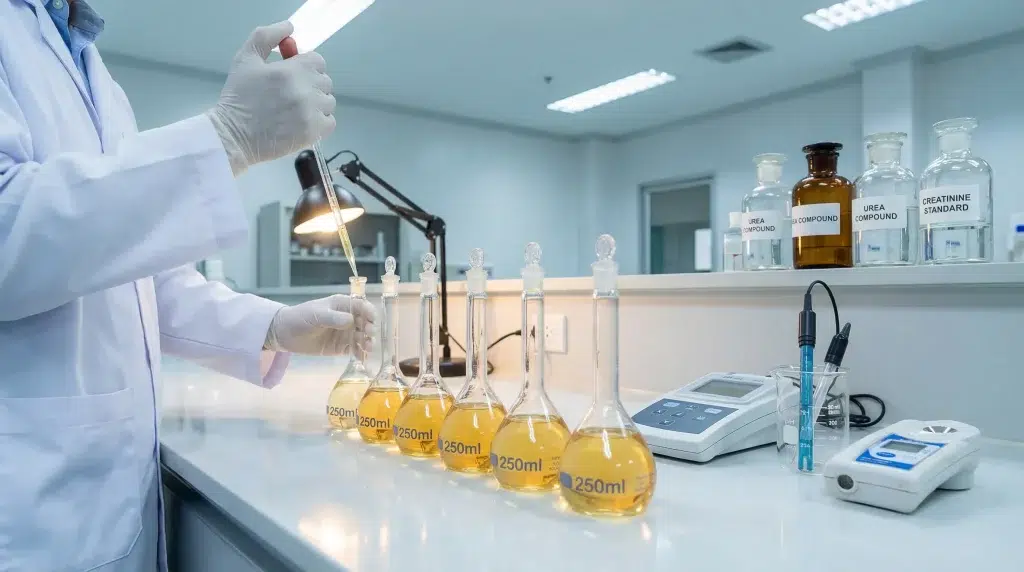
In laboratory science, consistency is everything. Whether calibrating instruments, validating procedures, or conducting controlled experiments, researchers rely on standardized materials that behave predictably under specific conditions. Among these materials, synthetic biological fluids play an important role. One of the most widely referenced examples is synthetic urine, which must closely replicate the chemical and physical characteristics of its natural counterpart to serve its intended laboratory and research purposes.
But what exactly goes into developing a consistent synthetic urine formulation? The answer lies in careful chemical profiling, rigorous quality control, and a deep understanding of human biochemistry. Behind every stable formulation is a process grounded in precision and repeatability.
Understanding the Need for Standardization
Human urine is a complex biological fluid composed primarily of water, but it also contains a broad range of dissolved substances. These include urea, creatinine, uric acid, electrolytes such as sodium and potassium, and various trace compounds. The concentration of these components can vary depending on hydration, diet, health, and other physiological factors.
For laboratory use, variability is not ideal. Standardization ensures that each batch of synthetic urine has a defined chemical composition within tightly controlled parameters. This allows laboratories to test equipment, train personnel, and validate analytical procedures without the unpredictability associated with natural samples.
A standardized chemical profile is essentially a blueprint. It specifies the precise concentrations of key analytes, acceptable pH ranges, and physical characteristics such as specific gravity. By adhering to these specifications, manufacturers create a reproducible product that behaves consistently from one production run to the next.
Core Components of Synthetic Urine Formulations
Developing a reliable synthetic urine formulation begins with identifying its essential components. Each ingredient is selected to mimic the chemical markers typically found in human urine.
Urea is one of the primary components. As a major waste product of protein metabolism, it must be present in realistic concentrations to mirror natural composition.
Creatinine is another critical compound. It is commonly used in laboratory analyses as a reference marker because it is excreted at relatively stable rates in healthy individuals. Its inclusion in synthetic formulations helps maintain authenticity in testing environments.
Uric acid, electrolytes, and buffering agents are also included to simulate ionic balance and acidity. The pH range is especially important, as natural urine typically falls between 4.5 and 8. Achieving the correct pH requires precise buffering systems that prevent drift over time.
Beyond these components, manufacturers must consider factors such as color, clarity, and specific gravity. Even subtle differences can affect the outcome of calibration procedures or instrument validation.
Achieving Chemical Stability and Shelf Life
Creating a standardized chemical profile is only part of the challenge. Maintaining stability over time is equally important. Biological samples degrade naturally, but synthetic formulations must remain chemically stable during storage and transportation.
To accomplish this, developers conduct extensive stability testing under various environmental conditions. Temperature fluctuations, light exposure, and storage duration can all influence chemical balance. Formulators therefore select ingredients and stabilizing agents that resist degradation while preserving the intended profile.

Quality control processes typically include batch testing, analytical verification, and documented traceability. Each production lot is evaluated to confirm that it meets predefined chemical specifications. This ensures that laboratories can rely on the same composition month after month.
For example, products such as Quick Fix Synthetic Plus Urine are designed around clearly defined chemical benchmarks. Their formulation strategies emphasize repeatable concentration levels, stable pH balance, and reliable physical characteristics that align with laboratory standards.
Calibration and Instrument Validation
One of the most important applications of standardized synthetic urine lies in instrument calibration. Laboratories use automated analyzers and chemical detection systems that must be tested with reference solutions before processing real samples.
If the reference material varies unpredictably, it becomes impossible to determine whether an instrument is functioning correctly. A stable, consistent synthetic urine sample provides a controlled benchmark. Technicians can verify measurement accuracy, confirm detection thresholds, and troubleshoot inconsistencies without introducing biological variability.
Standardized formulations are also used in training environments. Laboratory professionals learn to operate analytical systems using materials that replicate real-world samples but offer predictable outcomes. This controlled approach enhances both safety and technical competence.
Regulatory and Ethical Considerations
The development of synthetic biological materials also intersects with regulatory and ethical considerations. Laboratories must comply with established standards for accuracy, documentation, and traceability. Using standardized synthetic samples reduces reliance on donated biological fluids, which can present privacy, consent, and biohazard challenges.
In many research and educational settings, synthetic alternatives provide a safer and more practical option. They eliminate concerns about pathogen transmission while offering consistent chemical composition. From an ethical standpoint, this reduces the need for human sample collection in non-clinical applications.
Moreover, maintaining transparent chemical specifications fosters accountability. Manufacturers who publish clear concentration ranges and performance metrics contribute to greater confidence within laboratory and quality assurance communities.
The Role of Ongoing Research and Refinement
Scientific understanding evolves continuously. As analytical technologies become more sophisticated, expectations for reference materials also increase. Modern detection systems can measure minute variations in chemical concentration, which means synthetic formulations must meet higher precision standards than ever before.
Ongoing research plays a key role in refining chemical profiles. Developers monitor advances in clinical chemistry and analytical methodology to ensure that formulations remain compatible with contemporary testing equipment. This may involve adjusting buffering systems, refining concentration tolerances, or enhancing stability under varied environmental conditions.
The goal is not merely replication but functional reliability. A well-designed synthetic urine product must consistently perform under real laboratory conditions, providing dependable results regardless of batch or timing.
Precision, Transparency, and Reliability
At its core, the development of standardized synthetic urine formulations reflects a broader principle in scientific practice: reliability builds trust. Laboratories depend on materials that behave predictably. Researchers depend on data that can be reproduced. Technicians depend on calibration tools that confirm system integrity.
Achieving this level of reliability requires precision at every stage, from ingredient sourcing to final quality checks. It demands transparency in chemical composition and rigorous documentation in manufacturing processes. Most importantly, it requires a commitment to consistency that does not waver between production cycles.
Standardized chemical profiles are not accidental outcomes. They are the result of methodical formulation, thorough testing, and continuous improvement.
Conclusion
In an era where accuracy and accountability define scientific credibility, standardized synthetic materials serve a critical function. Developing consistent synthetic urine formulations involves more than combining a few common compounds. It requires an intricate balance of chemistry, quality control, stability testing, and regulatory awareness.
By carefully replicating key chemical markers and maintaining strict production standards, manufacturers create formulations that laboratories can trust. These standardized profiles support calibration, training, and validation efforts across diverse scientific settings.
Ultimately, the science behind consistent synthetic urine is a testament to the power of precision. When chemical composition is defined, verified, and maintained, researchers gain the dependable foundation they need to pursue accurate, meaningful work.