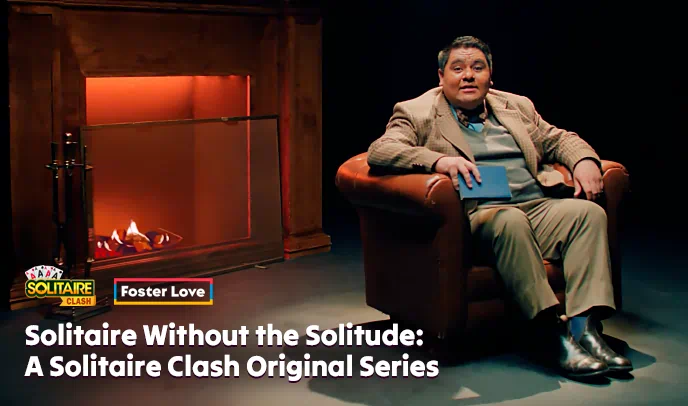
Solitaire has always filled quiet moments. It’s the card game people turn to when there’s time to pass, a pause in conversation, or a space that feels slightly uncomfortable. Solitaire Without the Solitude, a Solitaire Clash Original Series by AviaGames, takes that familiar behavior and examines it from a fresh angle, looking at how a traditional solo card game has followed people through shared spaces for centuries.
The three-part video series uses a mockumentary format to explore the evolution of Solitaire, blending dry humor with recognizable settings and modern context.
A Solitaire Clash Video Series With a Unique Twist
The series is directed by Amir Farhang, an Iranian-American commercial director, writer, and creative director represented by Caviar. Farhang is known for award-winning branded storytelling and narrative short films, often combining cinematic visuals with subtle humor. His approach is evident in the pacing and tone of the series, which remains restrained and confident without overexplaining its message.
Leo González leads the series as a composed, documentary-style guide. His calm delivery anchors each episode, even as the scenarios become more exaggerated, helping the series maintain a grounded, observational feel.
The Evolution of Solitaire: History, Office Play, and Family Dinner

Solitaire Without the Solitude breaks its story into three short episodes, each placing Solitaire in a setting that feels strangely familiar:
Episode 1: The Solitaire History – A straight-faced theory traces Solitaire back to a 1700s French prison, where long games and heavy silence set the tone for the world’s most solitary card game.
Episode 2: Office Solitaire in the 1990s – The episode shifts to 1990s cubicles, where desktop Solitaire thrived as the quiet companion to looking busy.
Episode 3: Solitaire at the Family Dinner Table – The final episode takes place at a family dinner, where a stalled conversation sends everyone reaching for Solitaire.
Together, the episodes show how Solitaire has always followed people into shared spaces, even when it appeared to be played alone. The progression feels natural, making it easy to keep watching as the series builds toward its modern conclusion with Solitaire Clash.
How Solitaire Clash Modernizes a Classic Card Game
One of the strengths of the series is how naturally Solitaire Clash fits into the narrative. There are no feature explanations or instructions. Instead, Solitaire Clash is presented as a modern version of a classic card game that removes isolation while keeping the structure players already know.
By focusing on competitive, timed play, Solitaire Clash aligns with how people engage with games today—connected, fast-paced, and shared.
The Real-World Story Behind the Solitaire Clash Series
Beyond the screen, the series is connected to the Solitaire Clash Christmas Wonderland Wishes Charity Event. Leo González helped bring AviaGames together with Foster Love through his personal connection to foster care and family experiences tied to that community.
That collaboration adds context to the project, grounding the series in something real rather than treating it as a standalone campaign.
Final Review of Solitaire Without the Solitude
Solitaire Without the Solitude by AviaGames succeeds by simply paying attention to how people have always used Solitaire. Through familiar settings, measured pacing, and a dry mockumentary style, the series shows that Solitaire was never truly isolated, it just existed quietly alongside other people. With confident direction from Amir Farhang and a grounded performance by Leo González, the three episodes build naturally toward Solitaire Clash without overexplaining why it fits. As a review, the series feels thoughtful, easy to watch, and surprisingly relatable, especially for anyone who has ever opened Solitaire to fill a quiet moment.