


Range anxiety is not only an electric-car problem. E-bike riders can have the same concern: Will there be enough battery to finish the commute, take a longer weekend ride, and still get home comfortably?
The solution is not automatically choosing the largest battery available. A useful long-range e-bike should cover the rider’s realistic trips while leaving enough reserve for hills, weather, cargo, and changes in riding conditions.
What Does E-Bike Range Actually Mean?
E-bike range is an estimate, not a guaranteed distance.
The same battery can deliver different mileage depending on rider weight, terrain, speed, assistance level, tire pressure, weather, and cargo. A flat ride using moderate pedal assistance usually places less demand on the battery than repeated hills or loose terrain.
That is why riders should use the manufacturer’s listed range as a planning reference rather than assuming they will always reach the highest number.
How Much Range Do You Really Need?
Start with the longest trip you make regularly.
A 12-mile daily commute does not necessarily require an extreme-range battery. A rider planning 40-mile weekend trips, however, needs much more capacity and reserve.
Consider the entire round trip, then allow extra range for unexpected detours or more demanding conditions.
The better question is not “Which e-bike goes the farthest?” but “How far do I actually need to ride on a normal long day?”
Why Can Real-World Range Be Lower?
Several factors increase battery use.
Higher assistance levels require more energy, while hills make the motor work harder. Extra cargo, soft surfaces, headwinds, cold temperatures, and faster riding can also shorten usable range.
This becomes especially important on longer trips. A rider who arrives at the halfway point with almost no reserve has little flexibility if conditions change on the return.
Using moderate assistance on easier sections and saving higher settings for hills can help make battery use more predictable.
What Should an Electric Bike for Adults Prioritize Beyond Range?
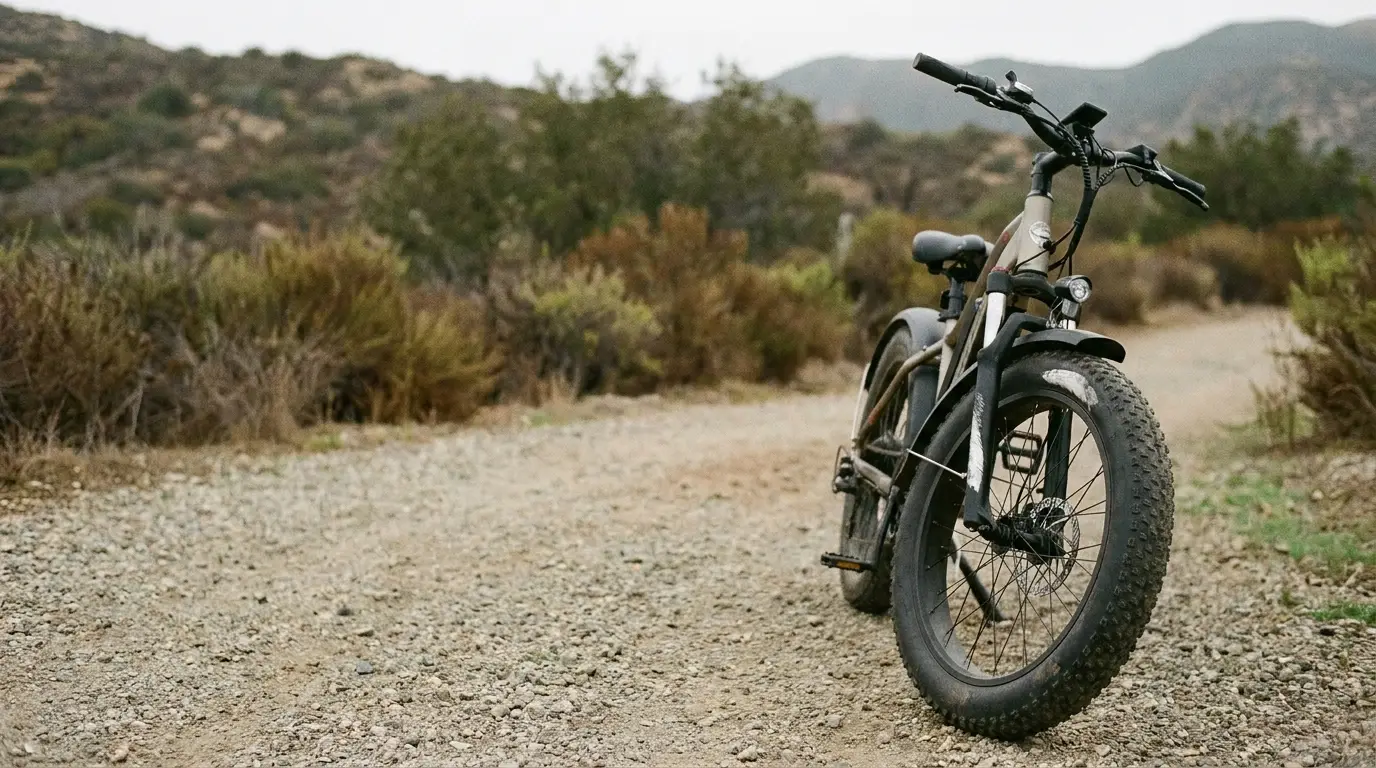
When choosing an electric bike for adults, battery capacity should be considered alongside rider fit, brakes, tires, suspension, bike weight, and charging convenience.
A long-range bike is not useful if it is uncomfortable or difficult to handle.
Wide tires may improve stability on rougher surfaces but add weight and rolling resistance. Suspension can improve comfort on broken pavement and gravel, while dependable brakes become increasingly important on longer or hillier routes.
A removable battery can also make charging easier when the bike cannot be parked near an outlet.
What Does a Versatile Long-Range Setup Look Like?
The Puckipuppy Beagle 2 provides one example for riders who want everyday transportation with additional flexibility for longer outdoor rides.
This fat tire electric bike uses a removable 48V 15Ah battery with a manufacturer-listed range of approximately 40–60 miles. It combines a 750W rated motor with up to 960W peak output, 26 × 4-inch tires, 110mm adjustable front suspension, and hydraulic disc brakes.
Puckipuppy positions the Beagle 2 for commuting, neighborhood errands, gravel roads, and moderate outdoor routes. Its maximum listed load capacity is 400 pounds.
For someone who also wants an electric bike for hunting, the same mixed-terrain setup can support permitted forest roads and scouting access without requiring a bike used exclusively outdoors. However, its wider tires and outdoor-oriented components contribute to a listed weight of 77.6 pounds, which is worth considering if the bike needs to be carried upstairs or lifted onto a vehicle rack.
Does a Bigger Battery Always Mean a Better E-Bike?
No. More battery capacity usually means additional cost and weight.
Riders comparing the fastest e-bike options should also look beyond top speed. Higher speeds can increase energy use, so battery capacity and real-world range become more important when faster riding is part of the plan.
Someone riding mostly short city routes may get little benefit from paying for extreme range. A rider regularly covering longer suburban or recreational routes may find the extra capacity much more useful.
The goal is not to buy the largest battery possible. It is to have enough range that ordinary trips do not require constant battery calculations.
Long Range Is About Confidence, Not the Biggest Number
Range anxiety becomes easier to manage when riders stop treating maximum advertised mileage as the only measure of an e-bike.
Start with real weekly mileage, consider terrain and riding conditions, and leave enough reserve for the unexpected.
A good long-range e-bike is not necessarily the one with the biggest battery—it is the one whose practical range comfortably fits the trips you actually make.