Ask any drummer what their practice setup looks like, and the answer in 2026 rarely involves a full acoustic kit left out in a spare room.
It involves headphones, a compact footprint, a module that doubles as a recording interface, and the freedom to play at 11pm without waking the household.
The question is no longer whether an electronic drum set can replace acoustic practice. For most players, it already has. The real question is which one is built for the way you actually play.
Whether you are a beginner navigating your first kit, a gigging drummer maintaining chops between rehearsals, a school band family trying to manage volume at home, or someone returning to the instrument after years away.
The electronic drum set market now offers options calibrated to each of those realities. This guide cuts through the specification noise and focuses on what actually matters: pad feel, module quality, triggering accuracy, and long-term playability.
Why the conversation has shifted from acoustic to electronic
The case for electronic drums used to rest almost entirely on volume control. That was a practical argument, but a limiting one. It framed e-kits as a compromise. The product category has moved well beyond that framing.
Contemporary electronic drum sets ship with sample libraries recorded at professional facilities, multi-zone pads that register ghost notes and rimshots independently, and mesh heads that respond to dynamic variation in ways that wooden-shell acoustic kits cannot always replicate at lower tension levels.
For players doing late-night sessions, recording demos directly into a DAW, or maintaining a practice routine across different locations, an electronic kit is not a workaround. It is the most practical instrument for the job.
Drummers who travel regularly often think carefully about how their practice gear fits into a wider logistical system.
As covered in this piece on how touring musicians store gear between gigs, protecting and managing instruments on the road is a real planning challenge, and having a compact electronic kit at home means maintaining consistent practice without relying on acoustic rehearsal spaces.
Matching the kit to your practice reality

For beginners and school band families
The priority at entry level is accessibility without frustration. A beginner should not spend their first weeks fighting poor triggering or a confusing module interface. Look for kits that include a mesh snare at minimum, clear module navigation, and a realistic hi-hat controller rather than a fixed-zone cymbal pad.
For families managing practice in shared living spaces, the advantage of a quality mesh kit over a rubber-pad entry kit is significant. Mesh pads reduce impact noise transmitted through stands and floors, which matters as much as acoustic volume when neighbours or sleeping household members are a factor.
Best electronic drum set recommendation for beginners and school band families:
- Alesis Nitro Max — best budget-friendly starter option
- Roland TD-07KVX — best step-up choice for better feel and quieter practice
For adult hobbyists and restarters
Adult learners often come to the instrument with a clear sense of what they want to play and less patience for gear that fights them. The most practical approach at this level is a mid-tier kit with a module that supports independent zone assignments.
Being able to assign a favourite snare sample to a specific pad zone and customise kit configurations encourages longer, more focused practice sessions.
Best electronic drum set recommendation for adult hobbyists and returning players:
- Yamaha DTX6K2-X — best for sound quality and musical feel
- Roland TD-17KVX2 — best all-around mid-tier option for long-term practice
For gigging and semi-professional players
At this tier, the electronic kit is often a secondary instrument used for home practice, composition sketching, and recording. Players here usually need better module performance, more detailed triggering, and connectivity that supports hybrid setups or direct recording workflows.
For drummers building hybrid rigs, module outputs and routing flexibility become essential. The best performance-grade kits do more than feel realistic under the sticks; they integrate smoothly into rehearsal, recording, and live environments.
Best electronic drum set recommendation for gigging and semi-professional players:
- Roland TD-50X — best premium choice for realistic feel and hybrid performance
- Pearl Mimic Pro — best for advanced sample control and recording-focused setups
Where to find the right electronic drum set for your needs
Buying an electronic drum set without the ability to compare pad feel across models is genuinely difficult. Spec sheets do not communicate how a mesh pad rebounds under dynamic variation. Module interfaces look intuitive in product videos and feel different under time pressure during an actual session. This is why the retailer matters as much as the product category.
Drum Center of Portsmouth carries a curated selection of best electronic drum sets spanning entry-level to professional performance rigs, with staff who approach specifications through the lens of how a kit will perform in actual playing conditions rather than how it reads on a product page.
That distinction matters when you are spending between 600 and 4,000 USD on a practice instrument that needs to hold up across years of use.
The depth of inventory at a specialist retailer also allows for genuine comparison, not just between brands, but between generations of the same model line.
Understanding why a TD-17KVX2 is a meaningful step up from its predecessor, or where the Alesis Strike Pro SE earns its price premium over the Strike kit, requires the kind of contextual knowledge that only comes from handling both instruments regularly.
If you are still narrowing down what kind of drummer you are and which features matter most, Drum Center of Portsmouth’s YouTube channel is also an excellent resource to compare kits, hear modules in action, and get a clearer sense of what fits your playing style.
What separates a practice kit from a performance-grade setup
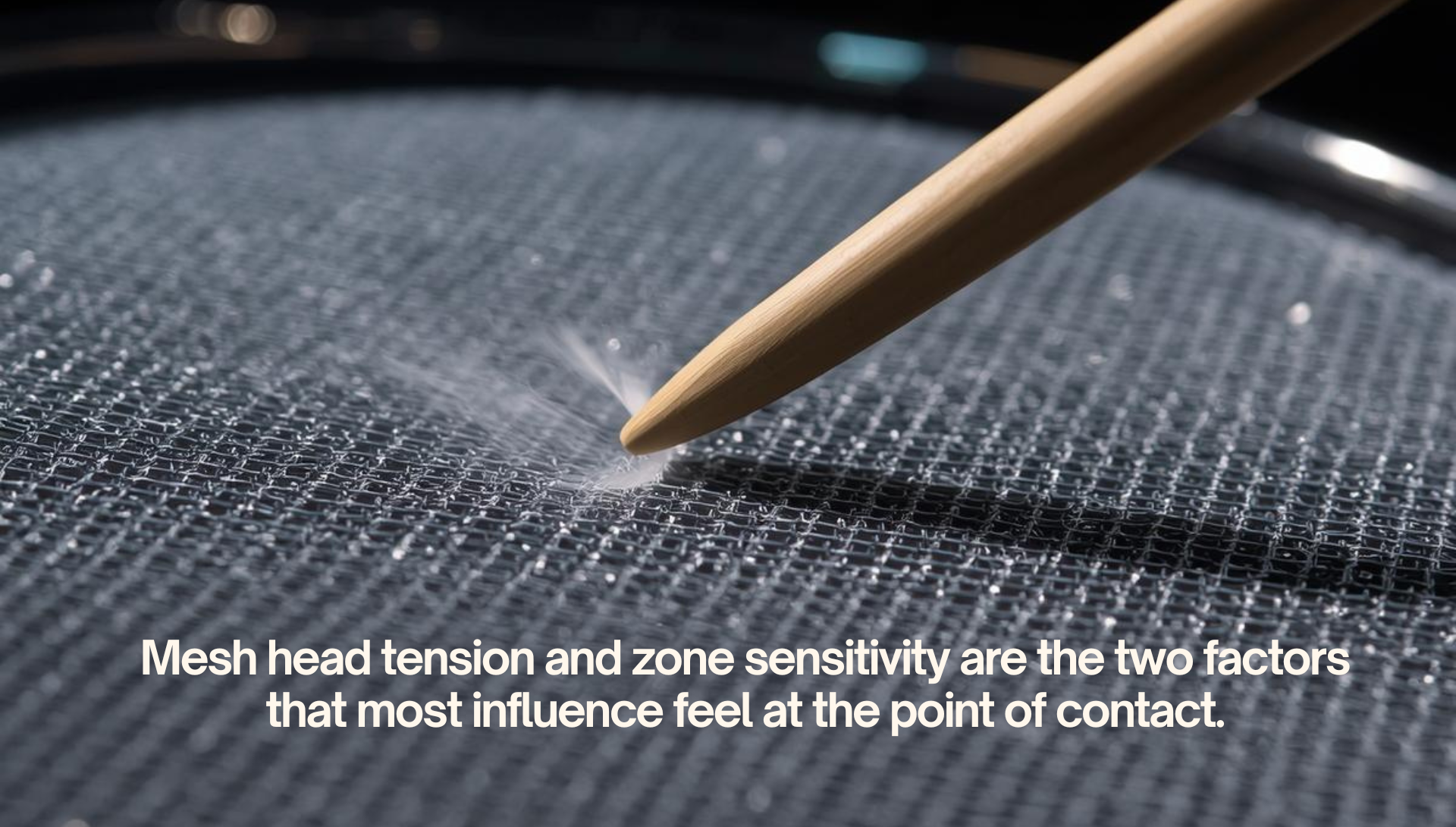
Not all electronic drum sets are designed for the same kind of player.
The entry tier, typically priced under 500 USD, gets a beginner to a usable setup: rubber pads, a basic module with preset kits, and enough connectivity to plug into headphones or a speaker. At this level, the limitations become apparent quickly.
Rubber pads lack the rebound of mesh, triggering can miss finer dynamic nuances, and cymbal pads rarely replicate the swelling feel of a proper crash.
The mid-tier bracket, from roughly 700 USD to 1,800 USD, is where e-kits begin to reward serious practice. Mesh heads become standard across pads and kicks.
Module libraries expand to include studio-recorded multi-velocity samples, and MIDI connectivity opens the door to software integration.
Players at this level are not just practicing; they are building techniques that transfer directly to an acoustic kit, and recording ideas without setting up a separate interface.
At the professional level, the considerations shift toward feel consistency across all surfaces, including cymbals, and latency performance at the module. Advanced players notice latency issues below 10 milliseconds; the best modules now operate well within that range, making the playing experience indistinguishable from acoustic response for most practice contexts.
This principle echoes something useful from the world of guitar: as this piece on the subtle choices guitarists make argues, the relationship between an instrument and the player depends on setup, feel, and attention to nuance far more than any single specification on paper. The same holds for drums.
A technically superior module means little if the pad feel discourages the kind of detailed practice that builds real skill.
Module quality: the detail most buyers underestimate
The drum module is the brain of any electronic kit, and it is the component most commonly treated as an afterthought during purchase decisions focused on pad specifications. This is a mistake that becomes more expensive over time.
A well-designed module handles multi-velocity sample layering, meaning the samples triggered at low ghost-note dynamics differ from those triggered at full-velocity strikes, producing a more natural and responsive sound. Modules that flatten velocity layers into two or three zones produce a machine-like consistency that actively works against the development of dynamic sensitivity in practice.
MIDI output quality is a related consideration for players who intend to use the kit with recording software.
Cheap modules introduce timing jitter into MIDI signals that become audible when recording to a click track. Professional-grade modules handle this through dedicated MIDI clock management, producing a signal tight enough for multi-track session work.
Building a setup that grows with you
One of the most pragmatic arguments for investing in a mid-tier or professional kit rather than an entry-level setup is expandability.
The best kits in the 1,000 to 2,500 USD bracket accept third-party pads, additional cymbal inputs, and updated module firmware. This means that as a player develops, the kit can develop with them: adding a second crash cymbal, upgrading to a larger bass drum pad, or integrating an acoustic snare trigger alongside the electronic kit.
Entry-level kits rarely offer this flexibility.
A fixed hardware rack, limited trigger inputs, and proprietary connections mean that the only upgrade path is an entirely new kit.
For a beginner who may be investing 300 to 500 USD, this is an acceptable trade-off.
For a player who anticipates serious practice over a two to three year horizon, the economics of a mid-tier investment are significantly more favourable.
The electronic drum market in 2026 is large enough to offer a genuine match for every player at every stage. The challenge is identifying which specifications translate into real-world playability for your specific practice context, rather than which model looks most impressive in a side-by-side comparison. Start with how you practice, then work backwards to the kit that fits that reality.