Some stories don’t need explosions or twists to keep you hooked.Sometimes, the most gripping thing on screen is a long pause.
A look that says everything. A secret no one says out loud.That’s the world Annabel Newland writes.
She is a screenwriter whose work pulls you in not with big dramatic moments, but with the quiet, uncomfortable truth of being human. Her characters don’t always say what they mean.
They carry things. They hide things. And somehow, that makes them feel more real than anyone else on screen.
Annabel Newland is a writer worth knowing.
The World She Puts on Screen, Turning the Camera on the Forgotten
Most films follow people who feel important – heroes, villains, the ones the story revolves around. Annabel isn’t interested in those people.
She writes about the ones we tend to skip past. The overlooked. The ones who feel too complicated, too quiet, or too broken to follow.
In her work, these are the most fascinating people in the room.
Her characters are often performing a version of themselves – pretending to be okay, pretending to be someone they’re not, desperate to feel seen.
They stare into the void. They want to live the “right” way but don’t always know how. Annabel focus’ on them anyway, and in doing so, asks us to do something we rarely do: actually look.
The Craft – Restraint, Subtext, and the Forgotten Art of Silence
Annabel’s writing is defined by what she doesn’t say. Two lines in and you already feel the weight of something unspoken. By the end, that silence is the whole point.
- Restraint is her superpower. Where other writers rush to explain, Annabel holds back. She trusts the audience to feel what she doesn’t spell out, and that trust is rare.
- Subtext is everything. Her scripts are full of conversations that are about something else entirely. Characters argue about dinner when they’re really talking about grief. They laugh when they want to cry. The real meaning lives underneath.
- Silence is not empty – it’s loaded. As she puts it: “The most interesting moments in film are the silences – when we’re given permission to fill in the blanks of what our characters would say if they had strength.” On her pages, a silence isn’t a pause. It’s a confession.
- She writes characters mid-unravel. “I’m interested in capturing people in the process of Unravelling. Watching as they lie to themselves, and are forced to continue on.” It’s an uncomfortable place to sit – but it’s honest.
- Subtext isn’t a trick for Annabel – it’s a worldview. She doesn’t use restraint because it sounds sophisticated. She uses it because she believes that’s how real people actually move through the world: carefully, guardedly, and rarely saying what they truly mean.
For Annabel, the unwritten line is just as powerful as anything on the page – sometimes more so.
Recurring Themes – The Architecture of Her Obsessions
Two films in, and the patterns in Annabel’s work are already unmistakable. She returns to the same emotional territory again and again – not because she’s stuck, but because she’s digging.
These are the ideas she keeps going back to, and the ones that make her work feel like it belongs to her and no one else.
The Quiet Horrors of Girlhood
Annabel doesn’t romanticize being young and female. She doesn’t soften it or make it cute.Her work looks at the dark, uncomfortable parts of girlhood that most stories prefer to leave out.
The moments when something feels wrong but there’s no language for it yet.
The confusion, the fear, the pressure to smile through it all. She writes this territory without nostalgia and without drama – just the quiet, creeping dread of ordinary moments that turn out to not be ordinary at all. It’s unsettling because it’s familiar.
Memory and Perception
Her characters don’t have a clear grip on what happened to them – and neither do we.Memory in Annabel’s work is slippery.
What a character remembers shapes who they are, but those memories aren’t always reliable. Perception shifts.
The past is rewritten, sometimes by accident, sometimes on purpose.
This makes her stories feel unstable in the best way – like the ground is always slightly uncertain beneath your feet. You’re never quite sure what’s real, and that uncertainty is the point.
Performance vs. Authenticity
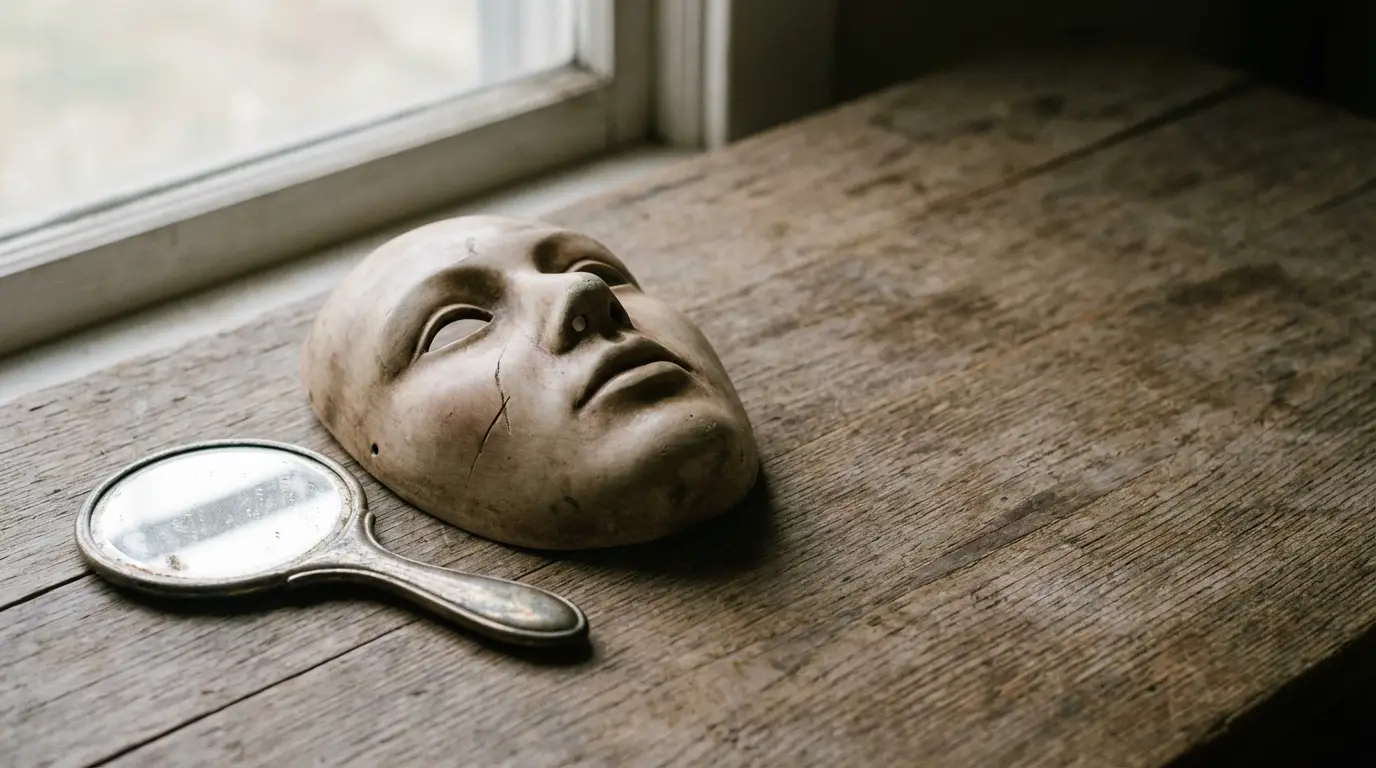
Almost every character Annabel writes is wearing a mask.They present one version of themselves to the world – calmer, stronger, more together – while something completely different churns underneath.
The gap between who they are and who they’re pretending to be is where all the drama lives.
She’s fascinated by the effort it takes to keep up that performance, and what happens when it starts to crack. It’s not about deception. It’s about survival. Her characters lie to themselves because the truth is too heavy to carry out in the open.
The Path – From Art School to AFI
Annabel started at art school, but left after a year – an early sign that she was drawn more to story than to image alone.
She went on to earn her undergraduate degree from the Australian Film Television and Radio School (AFTRS), one of the most respected film schools in the world.
From there, she began working in the Australian film industry, eventually finding her way into the indie-horror space – the perfect home for a writer drawn to quiet dread and psychological tension.
A major milestone came when she worked on The Moogai, a feature from acclaimed production company Causeway Films, which premiered at the Sundance Film Festival in 2024.
She then made the move to Los Angeles, where she completed her Master of Fine Arts in Screenwriting at the American Film Institute, graduating with the class of 2025.
Beware the Wolves (2025)
Beware the Wolves premiered at AFI Fest in 2025 and immediately announced Annabel as a writer to watch.
The film follows a young boy who witnesses something horrific happening to his sister during an extended stay with their grandparents, and must find a way to escape.
It is a story about the terrible weight of knowing – of seeing something you can’t unsee and carrying it alone.
Annabel layers the horror quietly, letting it seep in rather than announce itself. The boy’s silence is not weakness. It is survival. Every theme she is known for – the unspoken, the powerless, the dark corners of childhood – lives inside this film.
Conclusion
Annabel Newland is still early in her career, but her voice is already fully formed.
That’s the remarkable thing. Most writers spend years figuring out what they want to say. Annabel already knows.
She writes about the people we forget to look at, in the places we’d rather not go, with a stillness and precision that makes you feel every unsaid word.
As her themes continue to shift and deepen with time and experience, the most exciting question isn’t what kind of writer Annabel Newland will become. It’s what she’ll show us about ourselves that we weren’t ready to see.