Introduction
Music generation has conventionally relied on studio access, instruments, and technical production skills. Generative AI is reducing such barriers, and Producer AI is a widely popular name in this space. In February 2026, Google announced that the generative AI music generation is now part of Google Labs, a move that tethers it with DeepMind’s models of Google. In this guide, let us cover what the Producer AI platform provides, how its main features operate, and what creators must keep in mind before beginning.
What Is Producer AI?
Producer AI (now known as Google Flow music) is a platform for generating and fine-tuning music with generative AI technology. Google describes it as a creative collaborator that can help with creating lyrics, fine-tuning it with a melody, or building completely new genres.
Instead of just beginning inside a conventional production suite, users begin with a standard request, like asking for a Lofi beat. They then transform the result with the help of follow-up instructions. Adjustments such as reverb throws or punchier low end can be used on a music or song video.
The Producer AI tool was created with and for a wide community of artists, which includes aspiring musicians to establish Grammy-winning artists like rapper Lecrae and The Chainsmokers, as per Google.
Important factors at a glance:
- Google has announced the move of the platform to Google Labs on February 24, 2026.
- You can access its globally available version at the official Producer AI website (flowmusic.app), along with free and premium plans.
- You can embed each output with SynthID, which is an imperceptible watermark of Google for recognizing Google AI-powered content.
What Are the Main Features of the Producer AI Platform?
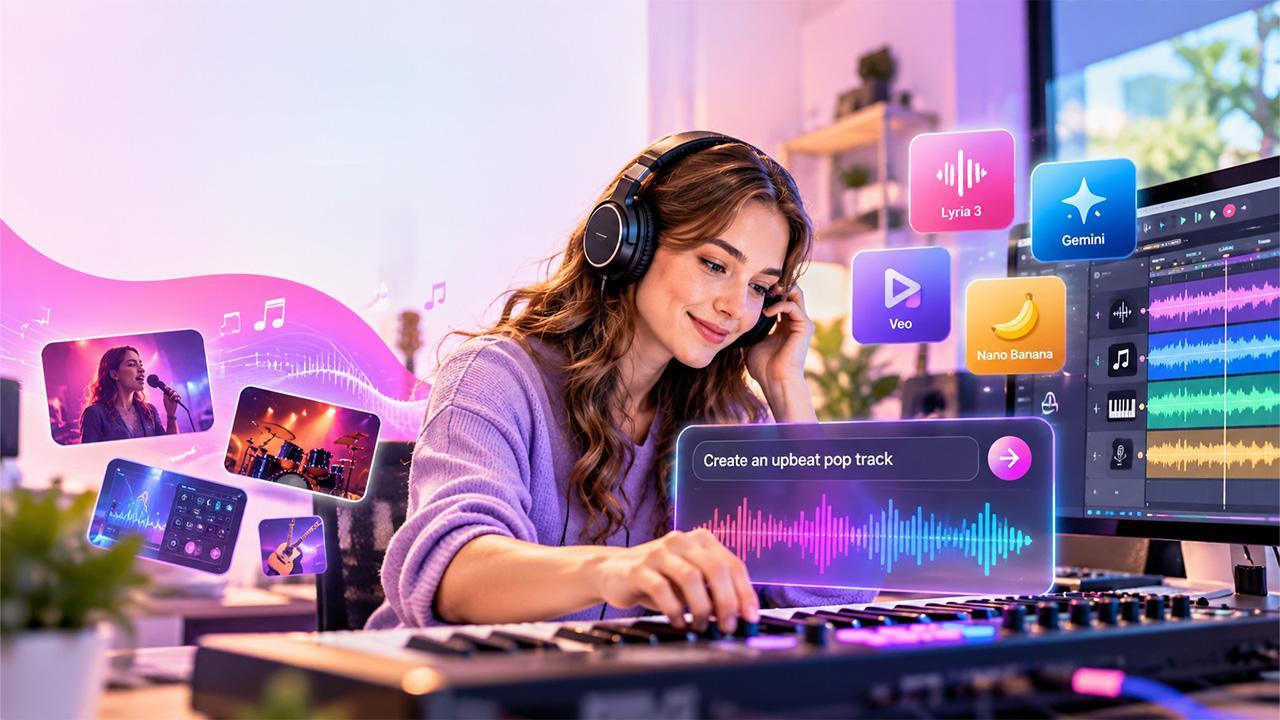
According to Google, the platform uses Lyria 3, Gemini, Veo, and Nano Banana, all created using Google DeepMind. The key features are as follows:
- Lyria 3 Music Model: The platform utilizes a preview version of Lyria 3, which is the newest high-fidelity of Google DeepMind, a professional-level model of music creation. It is built to understand the musical elements from rhythm to arrangement. It also provides granular controls like time-aligned lyrics and tempo.
- Conversational Workflow: Users can begin with a short request and fine-tune the output step-by-step. This helps both beginners as well as experienced musicians.
- Spaces: This feature allows artists to leverage natural language to develop new instruments, effects, and other mini applications. Examples vary from a standard keyboard to a node-driven modular environment of audio patching. These generations can be remixed and shared across different users.
- SynthID Watermarking: You will see an imperceptible watermark in all outputs that help in their identification as AI-powered content.
- Melody and Lyric Support: The platform can work as a partner while generating lyrics or shaping a melody, not only when creating a completed track.
Google has said its key focus area for the Producer AI software is higher creative control for artists. The wider focus is to improve human artistry, allowing exploration and expression. This direction is also showcased in Music AI Sandbox, which is an experimental toolset that Google DeepMind, Google Labs, and YouTube have used to collaborate with songwriters, musicians, and producers.
How Can Creators Leverage Producer AI?
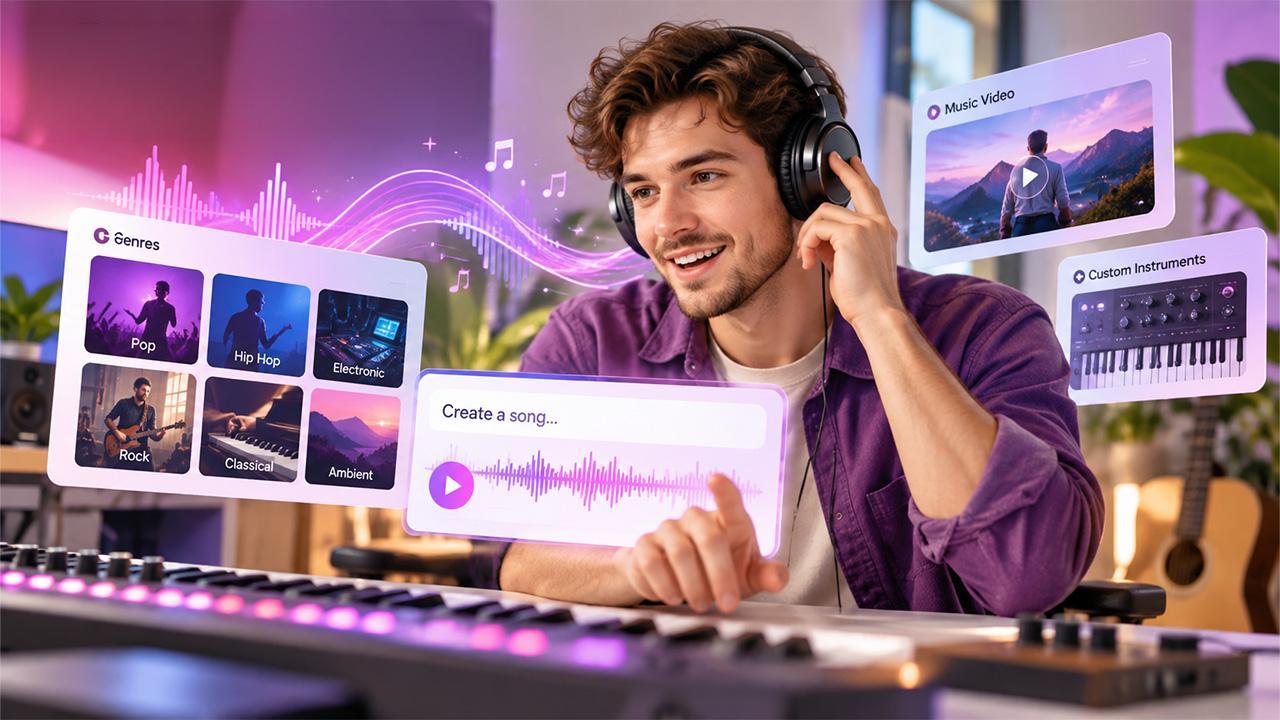
The platform aligns with a broad range of creative objectives. Common applications are as follows:
- Songwriting Drafts: Transforming a melody or lyric into a fuller song.
- Genre Exploration: Trying out cross-genre blends without manually recreating a session.
- Personal Projects: Elias Roman, who is a Senior Director of Product Management at Google Labs, suggests utilizing the platform for customized birthday songs and personalized workout music.
- Music videos: Google has listed music videos as among the outputs that users can fine-tune.
- Custom tools: Developing effects and instruments through Spaces.
A straightforward way to start:
- Go to the official website and log in.
- Describe the mood, song, or genre in user-friendly language.
- Optimize the result with follow-up instructions, like adding effects or changing the low end.
- Go through Space to develop or remix custom instruments.
Numerous creators combine original music with images or visuals. Google Flow is an AI filmmaking platform from Google Labs created on Imagen, Veo and Gemini, comprising Storyboard Studio. It transforms a written story into assets, scenes, and camera shots.
Points You Need to Consider Before Utilizing Producer AI
- Validate Your Source: Producer.ai is the official address of the platform. However, since it has been renamed as Google Flow Music, you can access the platform at flowmusic.app. Numerous mobile apps and independent websites utilize similar names. Thus, you must differentiate the official source from lookalikes.
- Check Present Plan Details: There are free and paid plans with this tool. Limits and features can vary. Check out the official website to see what its paid plans include.
- Review Terms of Usage: Anyone who is planning to monetize or publish a track must read the terms first on the official website.
- Plan for Completed Work: AI-generated music may still require editing, mixing before release, and arrangement. If a project also requires a video script, an AI script generator can aid in creating the first draft. This draft must be reviewed and optimized by the creator.
Conclusion
Producer AI ensures conversational music generation, community-built tools, and Google DeepMind Models into a single workspace. Its move to Google Labs showcases a higher focus on creative control, with characteristics like Spaces, Lyria 3, and SynthID transforming the experience. For content creators, musicians, and hobbyists, the Producer AI platform provides a crucial way to quickly test song ideas, given the fact that users work from the official website and go through the terms before publication. Creators who need to widen the scope of their music and turn it into video and other formats can explore AISuites‘ toolset, which provides image, video, and content tools in a single workspace.
Frequently Asked Questions
Q1. What is Producer AI?
A- Google Flow Music (previously known as Producer AI) is a Google Labs platform that creates as well as optimizes music through generative AI. Users begin with a simple prompt and fine-tune the result via follow-up instructions.
Q2. Which AI models does Producer AI use?
A- It utilizes Gemini, Lyria 3, Nano Banana, and Veo, all built by Google DeepMind. Lyria 3 is a music model that manages arrangement, rhythm, and controls such as time-aligned tempo and lyrics.
Q3. What do we mean by Spaces in Producer AI?
A- Spaces allows artists to utilize natural language to create effects, custom instruments, and mini apps, from a standard keyboard to a node-based modular audio environment. Artists can remix such creations and share it with other users.
Q4. How to know if a track was created with a Producer AI?
A- Each output has SynthID, which is an imperceptible watermark that works as an indicator that the content is AI-generated. It does not have any effect on the quality of the music.
Q5. What do I need to check before publishing music with Producer AI?
A- Go through the current plan details and terms of usage on the official website, specifically if you are planning to monetize the track. AI-generated music may also require editing, mixing, and arrangement before you release it.