Walking into a custom suit appointment for the first time can feel like unfamiliar territory. You’re not sure what questions to ask, what choices to make, or how long the whole process takes. That uncertainty is completely normal. The good news is that a custom suit appointment is far more straightforward than most first-time buyers expect. This guide walks you through every stage, from your initial consultation to your final fitting, so you arrive prepared, confident, and ready to get a suit that fits you perfectly.
What a Custom Suit Appointment Actually Involves
A custom suit appointment is not simply a matter of choosing a fabric and waiting. It is a structured, collaborative process between you and your tailor that unfolds over multiple visits. The first appointment is typically the longest and most involved, as it covers your measurements, style preferences, fabric selection, and an initial discussion about the suit’s purpose.
Understanding what happens during these appointments helps you choose the right tailor from the start. The process usually begins with a consultation, followed by precise body measurements, then fabric and style decisions. After that, the suit enters production. You then return for one or more fittings before the final garment is ready. So for that reason, it is better from the beginning to find the best bespoke suit near you, to meet the tailor easily when it is needed.
Each stage serves a specific purpose. Nothing in the process is arbitrary. Your tailor uses every detail you provide to build a garment that reflects your body, lifestyle, and personal style. Most first-time buyers are surprised by how much input they have throughout the journey.
How to Prepare Before You Walk In
Preparation makes a real difference in the quality of your appointment. The more clarity you bring to the table, the easier it becomes for your tailor to translate your ideas into a finished garment.
Before your appointment, think about what you actually need the suit for. A business suit for daily office wear has very different requirements than a suit for a wedding or a formal event. Consider the setting, the season, and how often you plan to wear it.
It also helps to look at reference images beforehand. You do not need to arrive with a fully formed vision, but even a few photos of suits you admire give your tailor a clearer starting point.
What to Wear, Bring, and Know Ahead of Time
For the appointment itself, wear or bring the dress shirt and shoes you plan to pair with the suit. Your tailor needs to see how the suit will sit with what you already own. A dress shirt affects collar and sleeve measurements. Your shoes affect how the trousers are hemmed.
Bring any suits you currently own if you have them, particularly ones you love or hate. They tell the tailor a lot about your fit preferences without you needing to explain everything in words.
Know your approximate budget ahead of time. Custom suits vary widely in price depending on the tailor, the fabric, and the level of construction. Having a number in mind prevents awkward pauses and helps your tailor steer you toward the right options.
The Consultation: Sharing Your Vision With Your Tailor
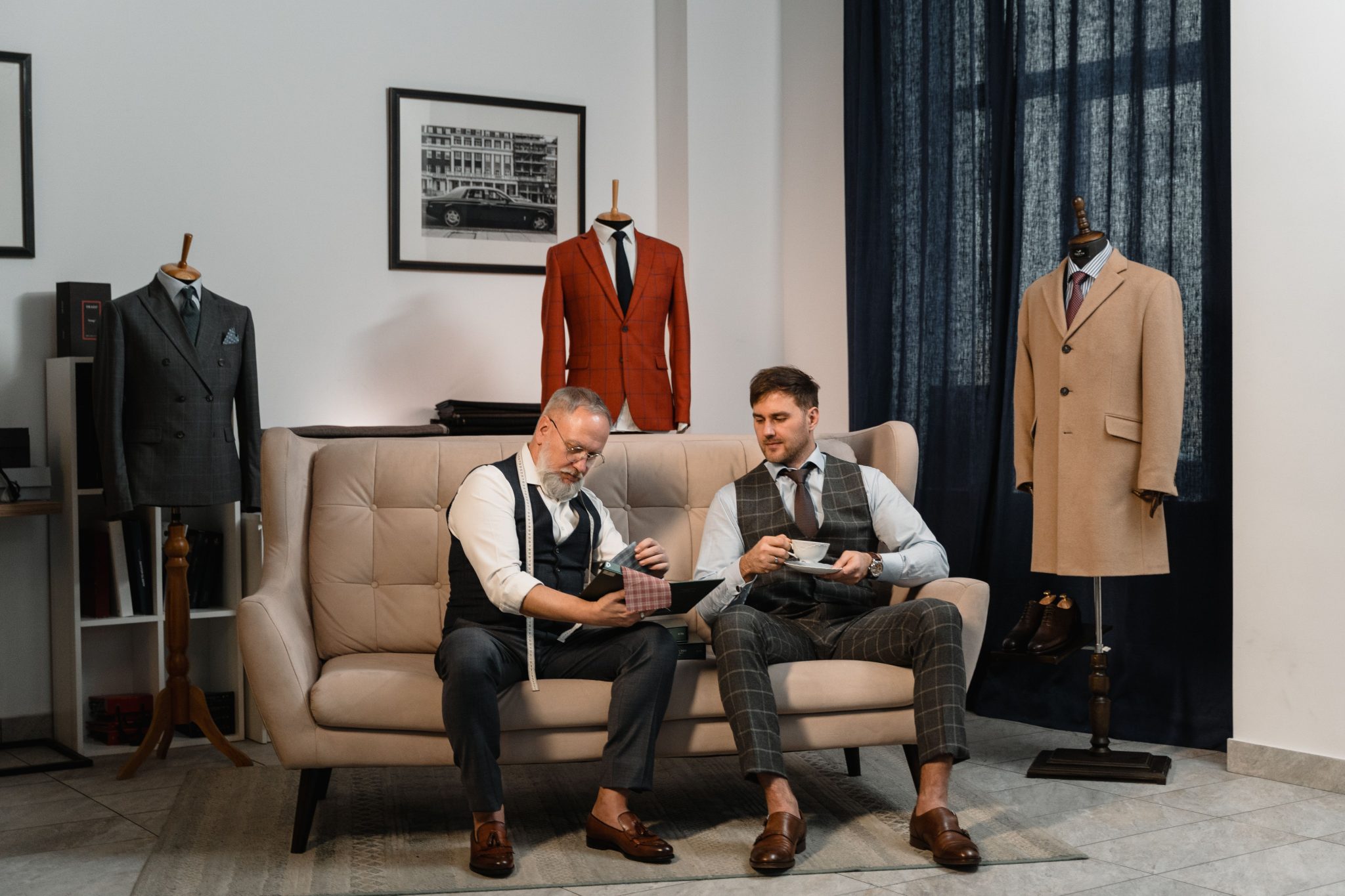
The consultation is the foundation of your entire custom suit experience. This is where you and your tailor get to know each other, and where your vision starts to take shape. Do not treat it as a formality. The more honest and specific you are during this stage, the better the final result.
Your tailor will ask about your lifestyle, the occasions you dress for, and your general style preferences. They may ask whether you prefer a slim or relaxed fit, how high you like your trouser rise, or whether you want a single- or double-breasted jacket. None of these questions has a wrong answer. They are simply tools your tailor uses to understand you.
If you are unsure about something, say so. A skilled tailor will guide you through the options and offer professional recommendations based on your body type and the purpose of the suit. You are not expected to have all the answers upfront. That said, the more you engage with the process, the more accurately the suit will reflect what you actually want.
Measurements, Fabric, and Style Selections Explained
After the consultation, your tailor will take your measurements. This is one of the most important steps in the custom suit appointment process. Unlike off-the-rack suits, which are built for a generic body shape, a custom suit is constructed entirely around your specific proportions.
Expect your tailor to measure more than just your chest and waist. They will measure your shoulders, sleeve length, neck, back length, seat, thigh, inseam, and more. Some tailors take up to twenty or more individual measurements. This level of detail is exactly what separates a custom garment from anything you would find on a store rack.
Fabric selection follows measurements. Your tailor will likely present you with a range of fabric swatches organized by weight, weave, and composition. For a first suit, many tailors recommend a mid-weight wool in a neutral color such as navy or charcoal, as these offer the most versatility.
Style decisions are made alongside fabric choices. These include lapel style, button stance, pocket placement, lining color, and trouser details such as pleats or cuffs. Each choice is yours to make, though your tailor’s guidance here is genuinely useful, especially for first-time buyers.
How Many Fittings to Expect and Why They Matter
Most custom suit appointments involve one to three fittings after the initial consultation, depending on the tailor’s process and the garment’s complexity.
The first fitting typically happens once the suit has been cut and partially assembled. At this stage, the garment is held together with temporary stitching so the tailor can check the overall structure against your body. You will try it on, and the tailor will mark adjustments directly on the fabric. This fitting is about shape and proportion, not fine details.
A second fitting, if included, takes place after those adjustments are made. By this point, the suit is much closer to finished. The tailor checks that previous corrections worked as intended and addresses any remaining issues with fit or construction.
Some tailors offer a third and final fitting once the suit is complete. This is essentially a last review before the garment is handed over to you. Not every tailor includes this step, but if yours does, use the time to try the suit with your actual shirt and shoes and assess it under good lighting.
Fittings matter because no set of measurements, but precise, guarantees a perfect result on the first attempt. Bodies are three-dimensional and complex. The fitting process is how your tailor refines the garment from a well-constructed draft into something that feels as though it was made for you specifically, because it was.
Conclusion
A custom suit appointment is a thoughtful process built around your needs, your body, and your style. For first-time buyers, the most important thing to remember is that you do not need to arrive with all the answers. Your tailor’s job is to guide you. Come prepared with a general sense of purpose and budget, stay engaged during the consultation and fittings, and trust the process. The result will be a suit that fits and feels unlike anything you have worn before.