The waiting list is gone. So is the drive across town, the schedule conflict, and the awkward reality of practising in front of a stranger for the first time. For millions of learners, the entry point to music education has quietly relocated, from a room at the end of a school corridor to wherever they happen to be.
This is not a pandemic holdover. It is a structural shift in how music is taught, learned, and valued. The global online music education market is projected to grow from approximately $6.5 billion in 2024 to $18 billion by 2032, a trajectory that reflects something deeper than convenience: it reflects a genuine change in how students, parents, and working musicians relate to the idea of learning.
For beginners aged seven, adults returning to guitar after a twenty-year pause, and semi-professional musicians looking to tighten specific skills, the online lesson has become not a compromise but a preference. Understanding why, and what it means for how we build musicians in 2026, is the conversation worth having.
1. Flexibility is not a feature anymore — it is a prerequisite
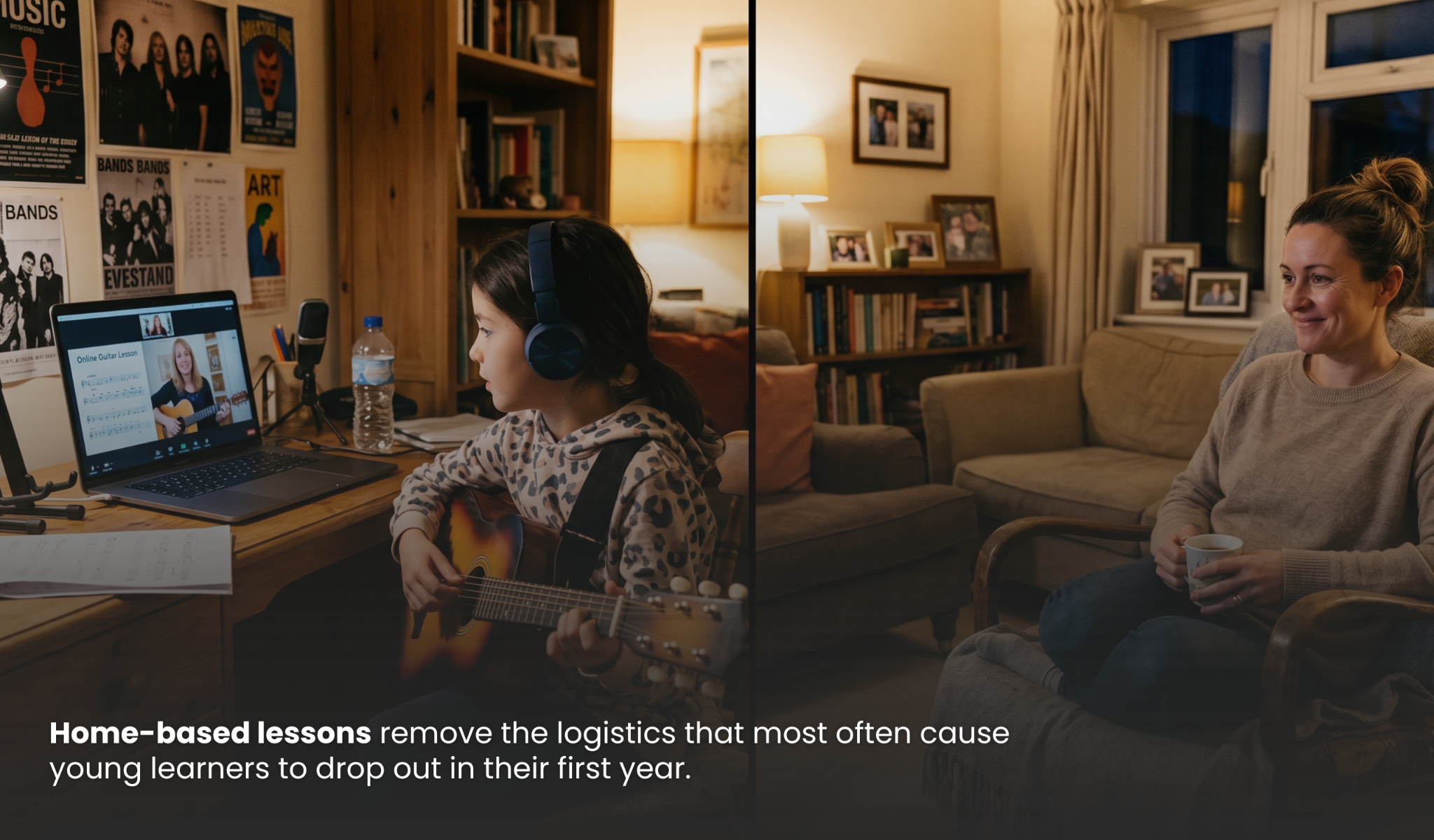
Ask any music teacher who made the transition online about the first thing their students said, and the answer is usually some version of: ‘I actually showed up.’ The friction of travel, parking, timetable clashes, and the social pressure of learning somewhere unfamiliar quietly pushes a significant number of beginners out of music before they have had a proper chance.
Online lessons eliminate those friction points without eliminating what matters. The teacher-student relationship, the tailored feedback, the accountability of a weekly session: all of these survive the screen. What disappears is the geography problem.
For families searching for structured, curriculum-led lessons from professional teachers, services like online music lessons offered by Music To Your Home demonstrate the model at its best: qualified instructors matched to students based on learning goals and instrument choice, with lesson continuity built into every progression stage.
This is not passive video content. It is live, interactive, and tailored, which is exactly why the data shows one-to-one live instruction growing faster than self-paced formats within the broader market.
2. Who is actually learning online, and what that reveals
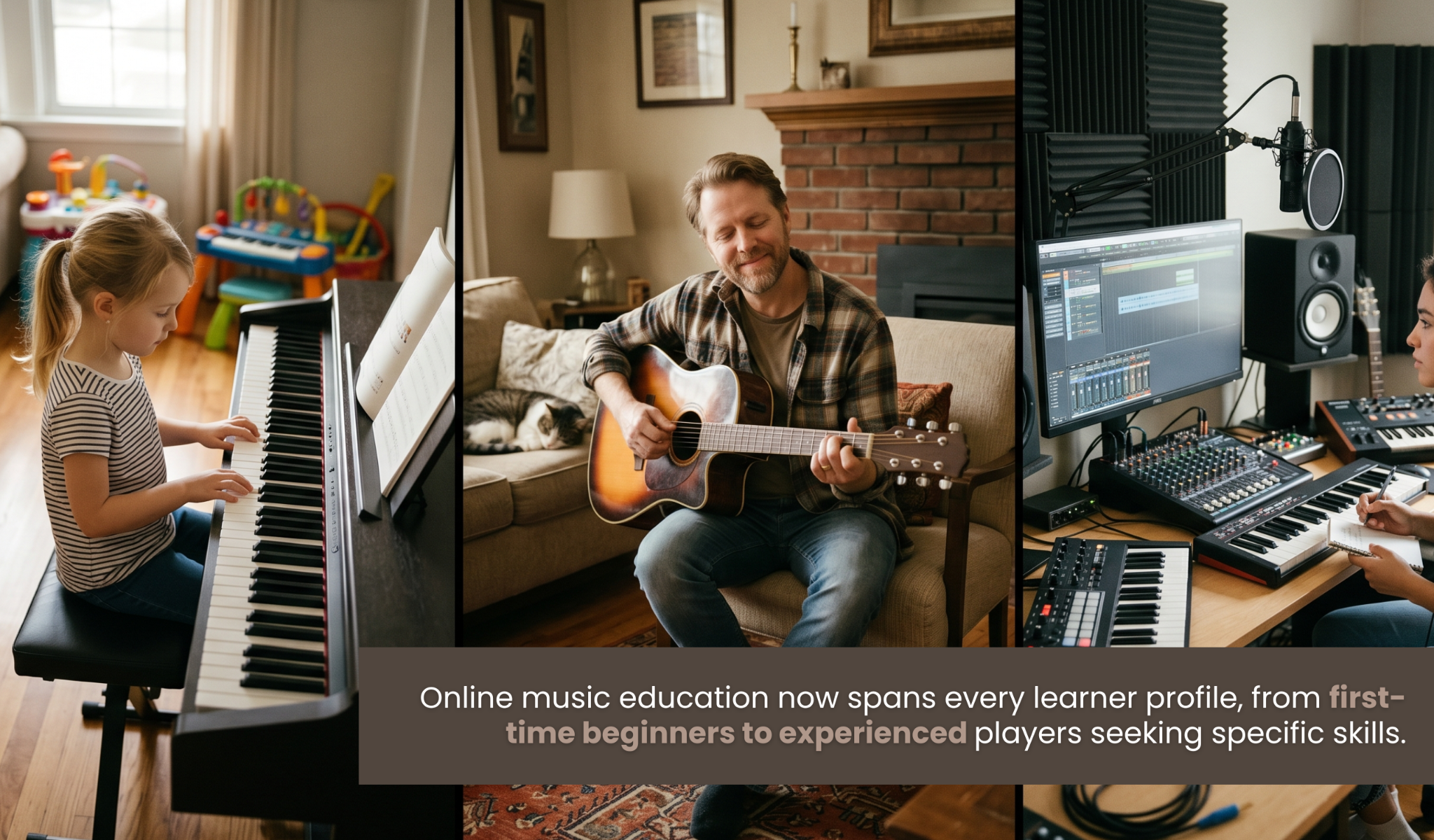
One of the more revealing shifts in online music education is just how broad the learner profile has become. Piano still leads instrument choice at around 35 percent of platform enrolments, followed by guitar at 25 percent, but the range of learners taking up those instruments has widened considerably.
Parents of young beginners represent a major and growing segment, drawn by the ability to sit in on lessons, monitor progress, and avoid the uncertainty of handing their child over to a stranger in an unfamiliar building. Adult hobbyists and “restarters” (those who played as children and are picking it back up) now account for a substantial share of new enrolments, motivated by the absence of the social judgement that often keeps adults away from traditional group settings.
Semi-professional and working musicians use online lessons differently: to address a specific technique gap, to study a genre outside their primary training, or to work with a teacher in another city whose specialism is exactly what they need. For this group, geography was always the barrier, and online access removes it entirely.
What unites these learner types is the expectation of personalisation. A parent wants their child paired with a teacher who understands child development and keeps lessons playful. An adult hobbyist wants someone who will not make them feel behind. A working musician wants targeted, efficient sessions with no time wasted on fundamentals they already own. Online platforms that do teacher-student matching well, rather than simply offering a list of available instructors, serve all three.
3. The pedagogy has genuinely improved
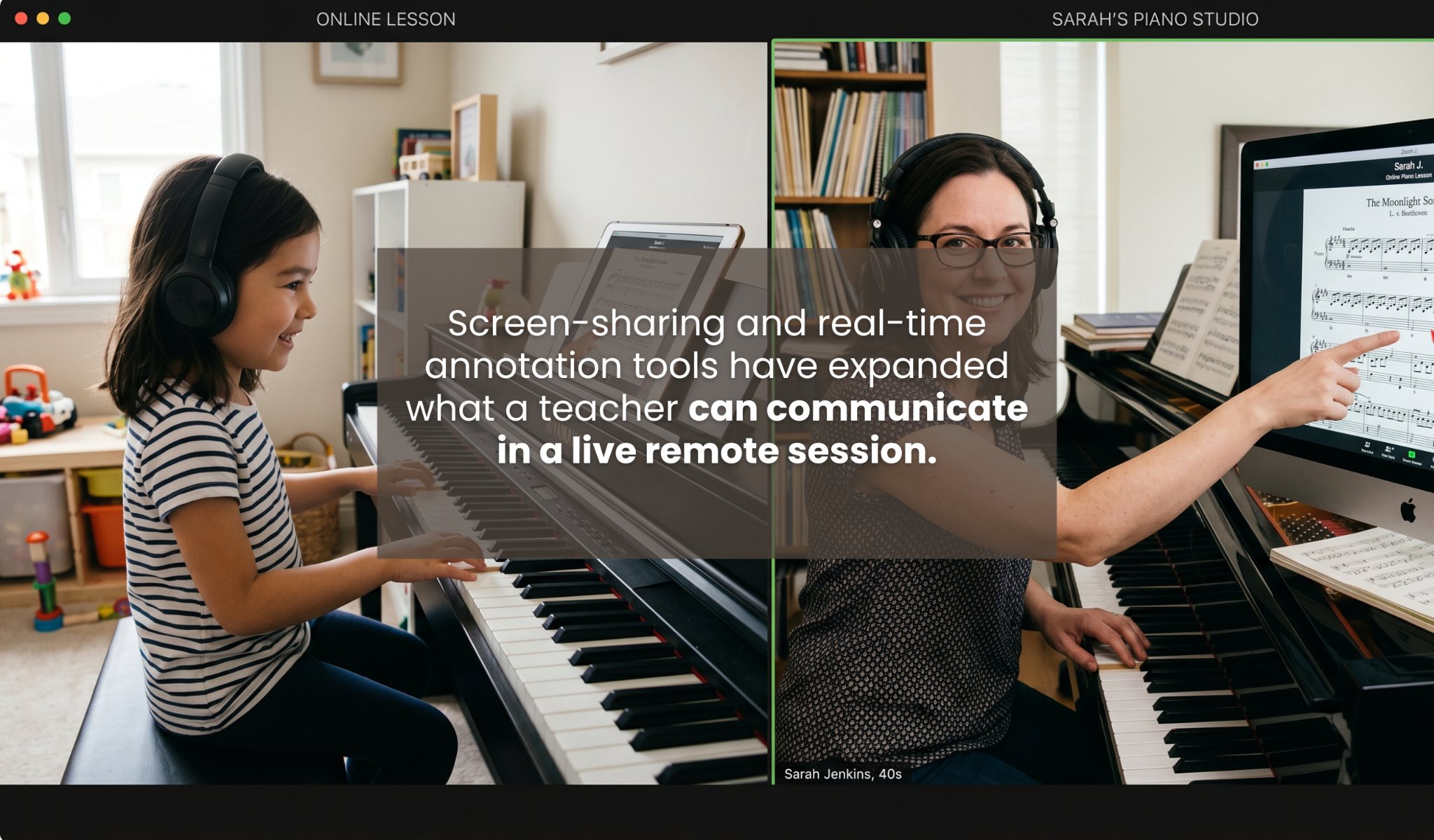
Early scepticism about online music teaching often centred on a legitimate concern: can you actually teach an instrument through a screen? The answer, after several years of widespread practice, is nuanced but broadly positive, provided the setup is right.
The tools have improved significantly. Audio-over-IP latency has dropped to levels that allow real-time playing without noticeable delay in most home broadband environments. Screen sharing allows teachers to annotate sheet music, demonstrate fingering in close-up, and mark up student recordings frame by frame. Some platforms now incorporate AI-assisted pitch detection and rhythm feedback as a supplement to teacher instruction, not a replacement for it.
The pedagogical model that works consistently is live, one-to-one instruction with a teacher who understands how to adapt their usual physical cues for a camera. Great online teachers learn to over-communicate what they would normally demonstrate by feel: they describe hand position, ask students to rotate the camera, and build verbal check-ins into the lesson rhythm. These are skills that can be taught and practised, and the most effective online music educators have developed them.
Gigwise’s earlier piece on how NYC schools combine music theory with piano lessons highlights how theory integration has become a defining quality marker in both online and in-person instruction, a standard that remote learning has not lowered but in some cases accelerated, because lesson time is used more deliberately when there are no distractions.
4. The cultural legitimacy question: is online music education “real”?
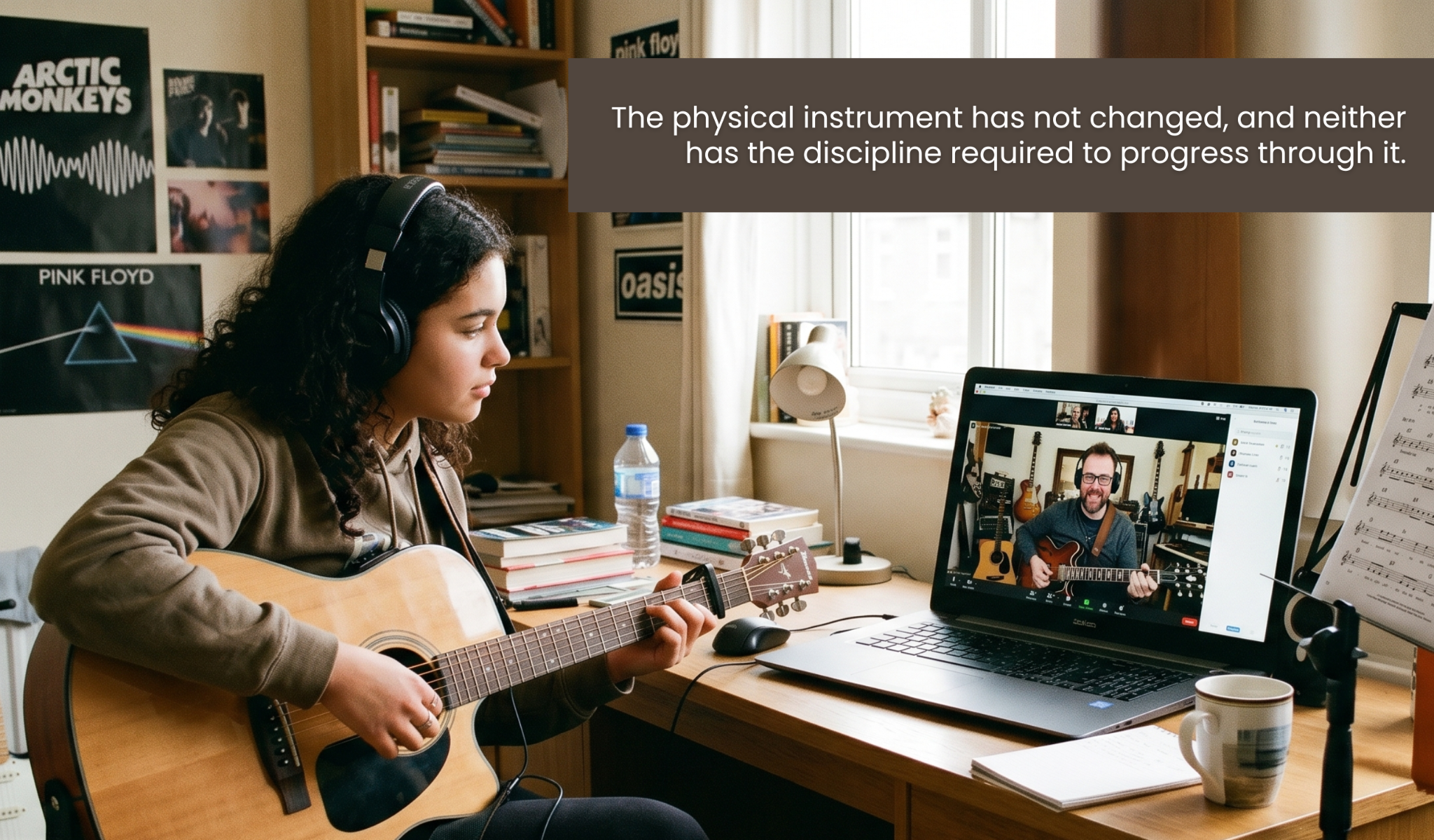
The cultural resistance to online music education tends to cluster around a single concern: that something irreplaceable happens in the physical shared space of a music lesson, and that this cannot be digitised. It is a reasonable concern, and it is worth taking seriously.
Live performance, ensemble playing, and the kind of unplanned improvisation that emerges when two musicians are in a room together, these are experiences that online settings cannot fully replicate. A student working toward their first recital or preparing for a school band audition will, at some point, need to practise in a physical group. That is not going away.
But the assumption that physical presence is required for high-quality individual instruction is being tested and, in many cases, disproved by practice. Institutions including Berklee Online and Juilliard’s virtual masterclass programmes have demonstrated that technical skills, music theory, and interpretive nuance can all be developed remotely to a professional standard.
What the evidence increasingly suggests is a hybrid model: online for regular individual instruction, in-person for ensemble, performance preparation, and the less quantifiable experience of making music in a shared space. This is the direction in which the most forward-thinking music schools and independent teachers are already moving.
5. What to look for when choosing an online music teacher or platform
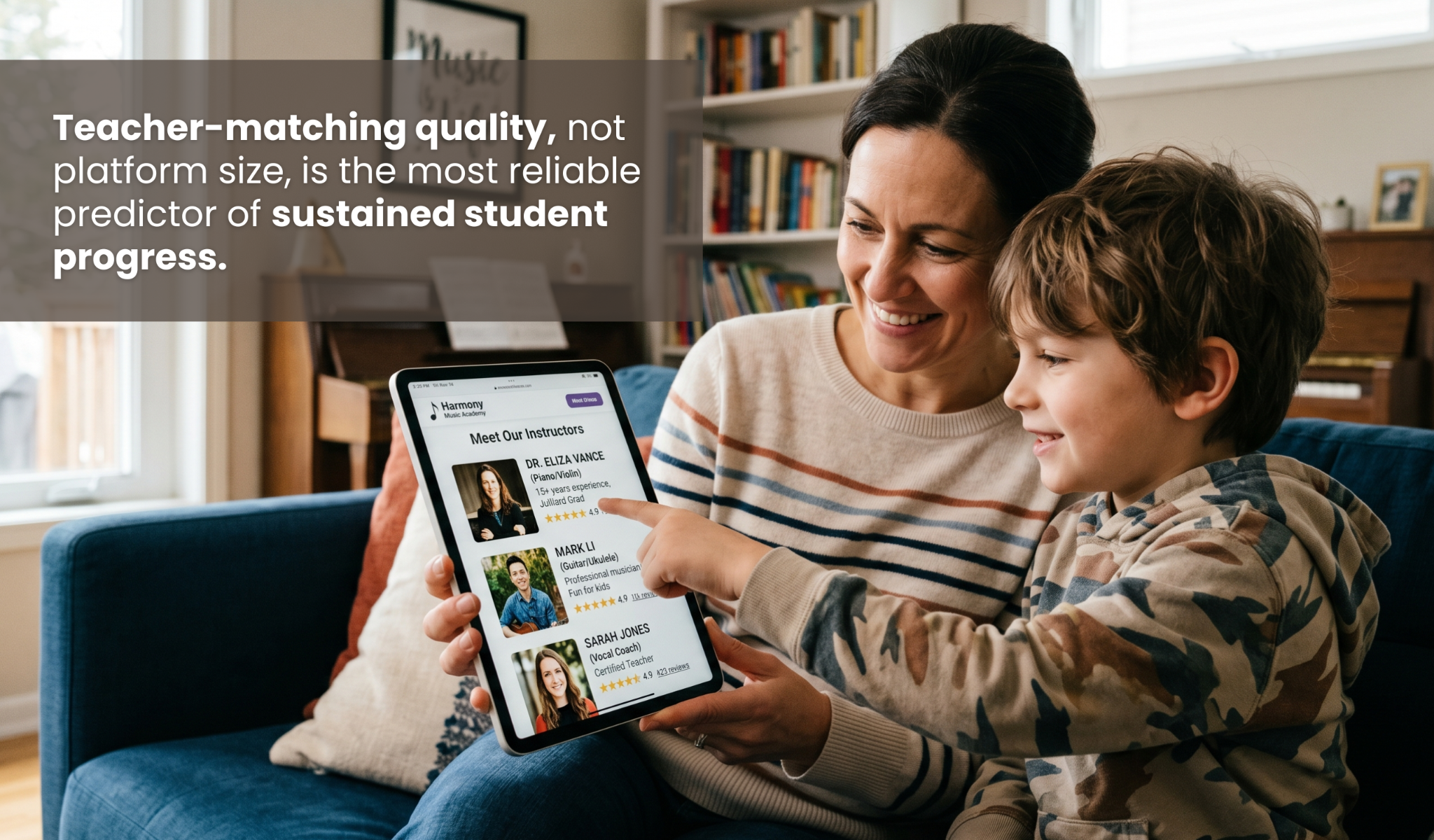
Not all online music education is equivalent, and the market is large enough now that the range in quality is significant. For families, adult beginners, and working musicians navigating the choice, a few practical filters matter more than platform size or marketing claims.
- Teacher qualification and instrument specialism: A qualified teacher with a track record in your specific instrument and your learner’s age group is more valuable than a generic ‘music teacher’ with a broad portfolio.
- Lesson structure and curriculum pathway: Look for providers who can articulate how a student progresses from their current level to a defined next milestone, not just a series of disconnected sessions.
- Trial lesson availability: Any reputable service should offer a first lesson or introductory session that allows both the student and teacher to assess compatibility before committing.
- Communication between lessons: Progress notes, practice guidance, and parent-facing updates (for younger learners) are markers of a service that takes accountability seriously.
- Flexible scheduling without sacrificing consistency: The best online services offer flexible booking while building the habit of a regular, fixed lesson time, because regularity drives progress in music more reliably than any other single factor.
Music To Your Home’s approach to teacher matching, which aligns educators to students based on learning goals, availability, and personality fit rather than simple availability, is the kind of service architecture that produces better long-term outcomes than browsing a marketplace of individual tutors.
6. The bigger picture: access, equity, and what online lessons actually change
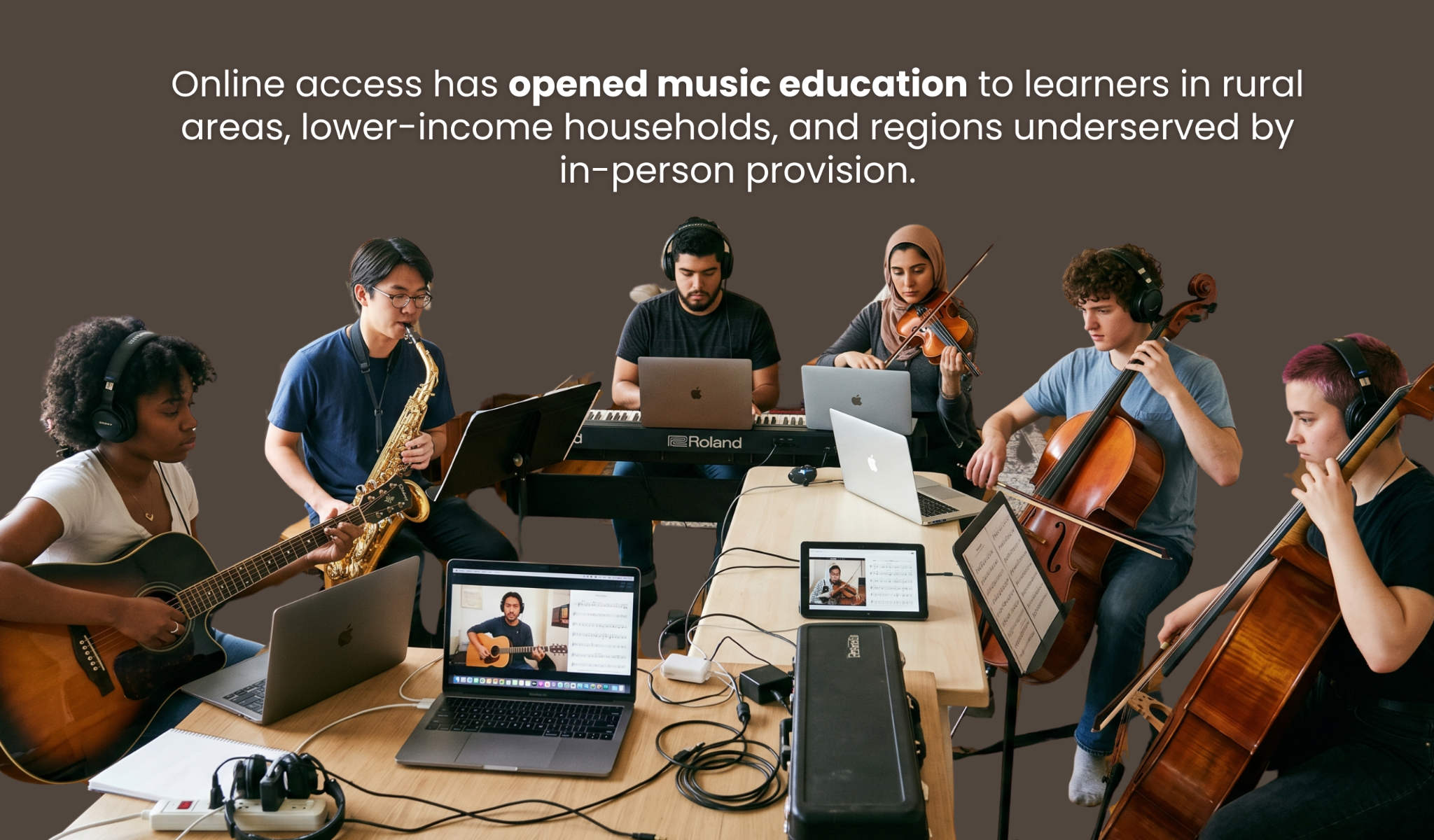
Perhaps the most significant long-term consequence of the online music education shift is what it does to access. Historically, access to high-quality individual music instruction was strongly correlated with geography and income: you needed to live near a good teacher and be able to afford their rates, travel to lessons, and often purchase or hire an instrument through local retail.
Online delivery does not eliminate all of those barriers, but it meaningfully reduces them. A student in a rural area with no specialist instrument teacher within reasonable distance now has access to the same quality of instruction as a student in a major city. A family with limited flexibility around school and work hours can find a teacher whose schedule fits, rather than the other way round.
The growing body of research into online music pedagogy suggests that motivation and consistency, the two factors most predictive of sustained progress, are actually supported rather than undermined by well-structured remote instruction. When the lesson fits into a student’s life rather than disrupting it, they attend more regularly, practise more reliably, and stay enrolled longer.
That is the underlying logic of the online music education boom: it is not that the screen is better than the room. It is that getting to the room was always the problem, and now it is largely solved.
The new pipeline is already here
Music education has always been a pipeline: from first contact with an instrument, through the development of technique and theory, toward fluency, expression, and in some cases a professional practice. The online lesson has not replaced that pipeline. It has widened the entrance.
For parents exploring first lessons, adults returning to an instrument they once loved, and musicians at any stage looking for tailored instruction from qualified teachers, the practical question is no longer whether online lessons can work. It is how to find the right one. Platforms built around genuine teacher-student matching, structured curriculum pathways, and accountable progress tracking, such as Music To Your Home’s online lessons, represent the model that is setting the standard for what high-quality remote music education looks like in 2026.