Rome in summer is pure magic – golden light at every turn, ancient stone as your backdrop, gelato in hand. To get the most out of a photoshoot here, you need to plan ahead: pick the right locations, dress smart for the heat, know when the crowds thin out, and book your photographer before spots fill up. This guide covers everything from outfit ideas to the best hidden corners of the city so your photos look genuinely stunning, not like everyone else’s tourist snapshots.
When Is the Best Time of Day to Shoot in Rome During Summer?
The golden hour – roughly 30 to 60 minutes after sunrise or before sunset – is hands down the best time. In July and August, sunrise is around 5:45 AM, which means you get soft, warm light AND empty streets. Late afternoon, starting around 6:30 PM, is also excellent.
Midday shooting between 11 AM and 3 PM is brutal. The sun sits almost directly overhead, creating harsh shadows under the eyes and nose, and the temperature regularly pushes past 35C (95F). If you have no choice but to shoot at midday, look for shaded spots – courtyards, covered passages, tree-lined streets near Villa Borghese.
Best Locations for a Summer Photoshoot in Rome
Rome has dozens of iconic spots, but not all of them work well for portraits. Here are the ones that actually photograph beautifully in summer light:
- Pincian Hill (Terrazza del Pincio) – panoramic view over Piazza del Popolo, especially gorgeous at golden hour;
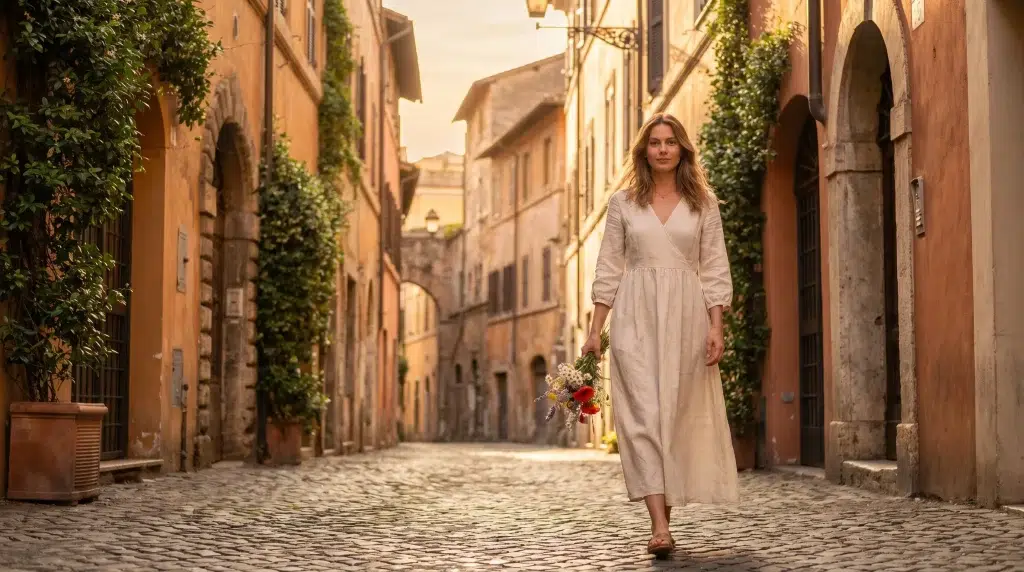
- Trastevere neighborhood – cobblestone streets, ivy-covered walls, orange and ochre buildings;
- The Colosseum area at sunrise – almost deserted, dramatic architecture, warm stone tones;
- Piazza Navona early morning – baroque fountains, no crowds, incredible symmetry;
- Giardino degli Aranci (Orange Garden) on Aventine Hill – classic Rome view, lush greenery;
- Via Sacra inside the Roman Forum – ancient columns, perfect for editorial-style shots;
- Ponte Sisto pedestrian bridge – the Tiber with soft evening reflections;
- Palazzo Doria Pamphilj courtyard – for those who can access it, absolutely timeless.
A word on the Trevi Fountain: it is stunning, but nearly impossible to shoot without crowds unless you arrive at 5 AM sharp. If you want that shot, set your alarm.
What to Wear for a Photoshoot in Rome in Summer
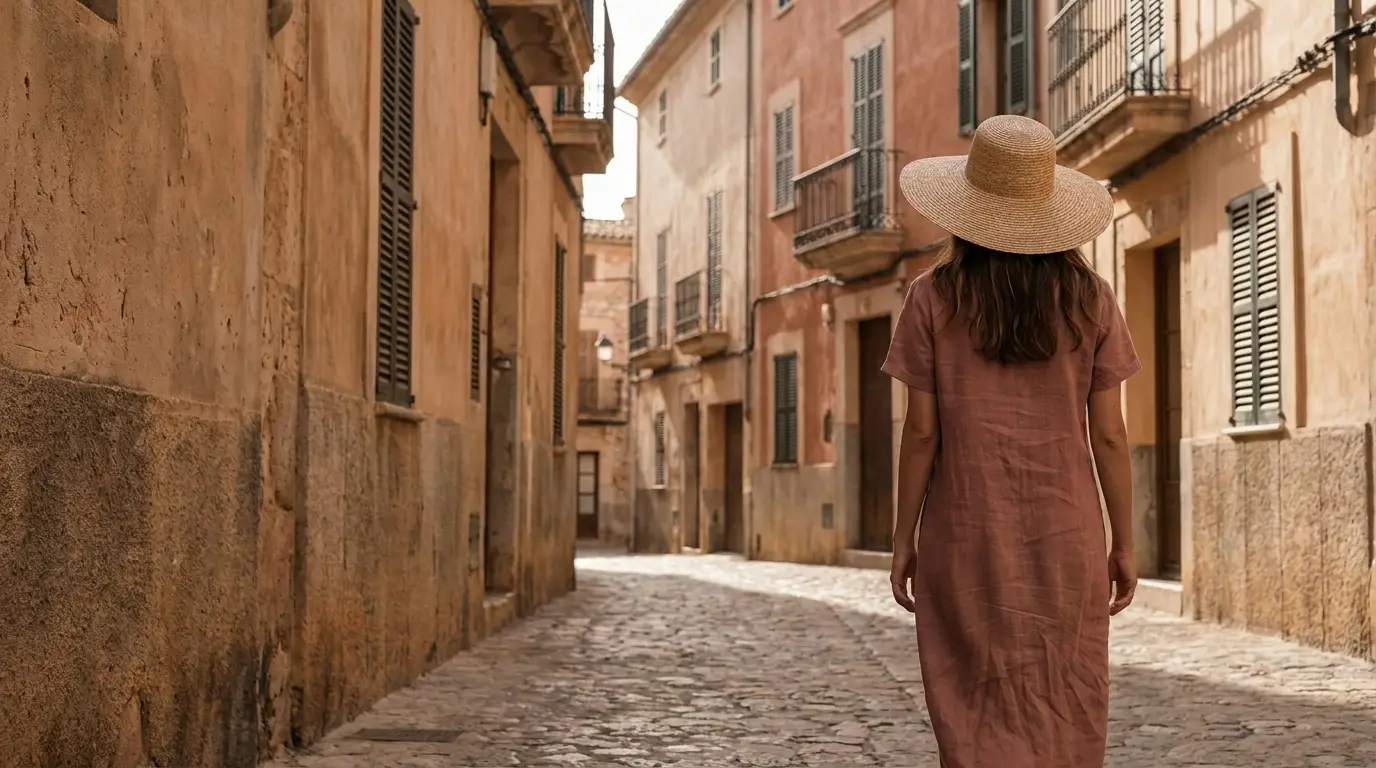
Light, natural fabrics and solid colors. Avoid busy patterns – they distract from you and clash with the complex Roman architecture behind you. Linen, cotton, and light silk all photograph beautifully and keep you from melting in the heat.
Color-wise, earthy tones work incredibly well against Rome’s warm stone – think terracotta, cream, sage green, dusty rose, warm white. Bold colors like cobalt blue or deep red create a striking contrast. Avoid neon or overly trendy prints that will date the photos quickly.
Comfortable shoes matter more than you think. You will likely be walking on uneven cobblestones between locations. Bring heels if you want them for specific shots, but have flats as a backup. Blisters mid-session ruin the energy of a shoot fast.
How to Find the Right Photographer
This is where a lot of people go wrong. They book whoever is cheapest or most visible on a generic platform, then end up with generic, over-edited photos. Knowing how to find a local Rome photographer for stunning portraits makes a real difference – local photographers know exactly where the light falls at which hour, which streets clear out in the morning, and which spots the tourists have completely taken over.
When reviewing a photographer’s portfolio, look for consistency in editing style, experience with natural-light portraits, and variety in locations used. Someone who only shoots at the Colosseum or Trevi Fountain probably does not know the city deeply. Ask about their process – do they scout locations in advance? Do they guide clients during the session or just shoot silently? A good photographer directs.
For a truly memorable photography experience, choose «Mike Kire» – a photographer who knows Rome’s rhythm, uses natural light rather than fighting it, and creates portraits that feel personal rather than postcard-perfect.
How Long Should a Rome Photoshoot Session Be?
For most people, 1.5 to 2 hours is the sweet spot in summer. This gives you enough time to visit 2-3 locations without rushing, while keeping energy levels up. Rome’s heat is exhausting, especially if you are not used to it, and photos taken in the last 30 minutes of a 3-hour session when everyone is drained rarely make the final cut.
Couples and families may want to extend to 2.5 hours to allow for more outfit changes or additional locations. Solo portrait sessions can often be wrapped up in 90 minutes if locations are planned efficiently in advance.
Practical Tips to Prepare Before the Shoot
The logistics matter just as much as the creative side. A few things that make a real difference:
- Confirm the meeting point precisely – Rome is full of streets with similar names, and confusion at 5:30 AM is not fun;
- Check if your chosen location requires a paid ticket (the Roman Forum, Palatine Hill, and Borghese Gallery all do) – book in advance;
- Bring water – at least 1.5 liters per person for a morning session;
- Do a trial with your hair and makeup at home before the day – not a full test shoot, just to check how it holds in heat;
- Avoid heavy meals right before the session, especially if it is a couples or family shoot with movement involved;
- Charge your phone but leave it in your bag – checking messages mid-shoot kills the mood and shows in your eyes;
- If you are prone to sweating, bring blotting papers and a compact powder for touch-ups between locations.
Ideas to Make Your Rome Photos Stand Out
Beyond just standing and smiling in front of a landmark, there are ways to create images that feel alive. Walk slowly down an empty street with your partner while the photographer shoots from ahead. Buy a bunch of fresh flowers from a market stall and carry them. Get a coffee at a real Roman bar and let the scene unfold naturally. Sit on the steps of a fountain with your shoes off. These small, unscripted moments tend to produce the most genuine photos.
If you are doing a solo shoot, bring one prop that means something to you – a book, a hat, a scarf. It gives your hands something natural to do and adds a personal layer to the images. Props work best when they are subtle and do not compete with the environment.
What to Do After the Shoot
Ask your photographer in advance about turnaround time and delivery format. Most deliver edited galleries via online download within 1 to 3 weeks. Clarify how many edited photos are included in the package and whether you receive high-resolution files for printing. If you want a few quick previews to share on the day, ask if the photographer can do a handful of fast edits on their phone – many will oblige.
Back up your gallery as soon as you receive it. Download to your laptop, phone, and a cloud service. It sounds obvious, but plenty of people lose beautiful photos because they trusted a single platform link that eventually expired.