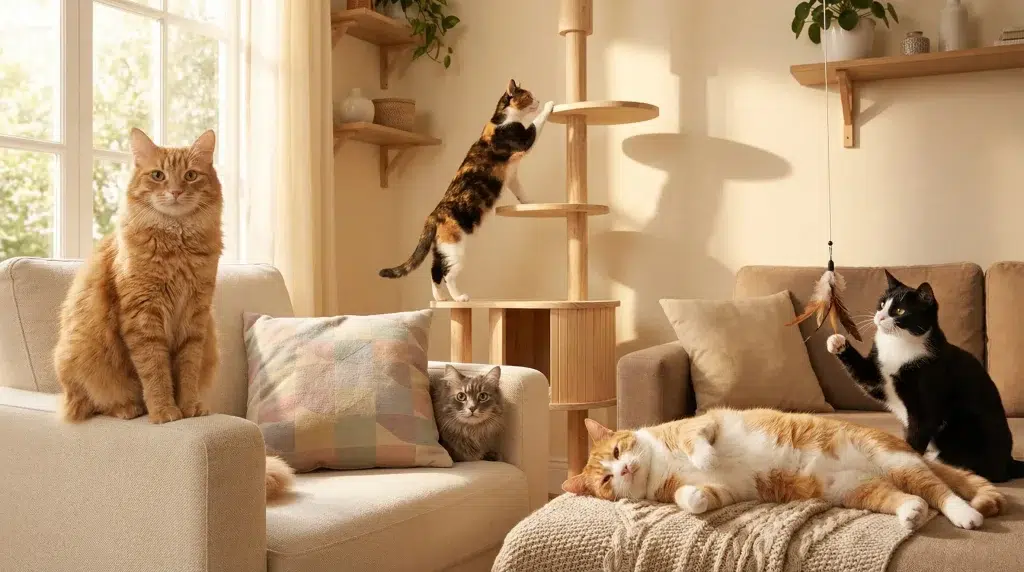
Cats are some of the most popular pets in the world, and a lot of this is based on their personalities. Plus, they’re smaller than dogs and tend to be great companions in homes and apartments alike. For these reasons, it’s not a bad idea to consider a cat if you want to get an emotional support animal (ESA).
That said, it helps to understand the possible cat personality traits that you can run into. Otherwise, you may find yourself overwhelmed or even bullied in your own home. Knowing your cat’s personality can help encourage camaraderie, and make for a happy healthy relationship.
What “Cat Personality” Really Means (And Why It Matters)
Cat personality refers to consistent patterns of behaviors that cats may have. In other words, it’s not used to describe one-off changes in mood or other changes in their environment. Unlike dog breeds, cats also tend to vary greatly based on the individual. Cats can be independent, or very social. They can be affectionate or inquisitive. It’s not a measurement of how they react to stimuli- like did they get mad when you offered them a piece of steamed broccoli. But rather the patterns they express in their behavior.
That said, understanding common cat personality traits can help you bond with them, learn more about them, and ultimately improve your overall connection.
How Cat Personality Traits Develop
Cat personality traits tend to develop based on the cat’s upbringing and genetics. While there is some correlation between orange cats acting crazy and tortis having a lot to meow about, these traits aren’t breed-dependant.
The “Feline Five” Traits Researchers Use to Describe Cat Personality
When it comes to cat personalities, you’ll find that there are five common ones that researchers tend to agree on. Learn more about each one and how to care for these cats below.
Neuroticism
These are cats that hide often, run away when they see you, and tend to be generally scared. While these cats can be hard to care for, the main goal is getting them to warm up to you with predictable routines and safe zones.
Extraversion
These are cats that tend to explore their surroundings, meow frequently, and sometimes even get up to no good. If you notice that your cat has a knack for adventure, you’ll want to make sure they have cat trees, plenty of toys, and lots of ways to explore.
Assertiveness
Too much assertiveness in a cat can result in resource guarding and being mean to other animals. If you have other pets, you’ll want to work on socialization and making sure everyone has a space to call their own.
Impulsiveness
When cats switch from play to overstimulation, it’s a sign that they’re a little more impulsive. Cats may also switch from cuddling to running around or doing something else. To bond with these cats, you’ll want to keep play sessions short and to the point – make sure you respect their boundaries.
Agreeableness
Some cats are friendly and gentle; these are your lap cats. With these cats, your main care goal should be to provide them with consistent affection. However, some areas, like their bellies, may still be off limits.
Common Cat Types
When it comes to cat types, you’ll find that there are a handful of combinations. For example, some cats may be more agreeable but also assertive if there are other animals or pets. Learn about some common cat types below.
Social Butterfly
Social butterflies are cats that are extroverted and agreeable. You’ll find that these cats benefit from playing, cuddling, and consistent affection. We also recommend focusing on ways to minimize boredom.
Shy and Reserved
On the opposite side of the cat personality spectrum, you have shy and reserved cats. There are cats that need safe spaces and a consistent routine to maintain their happiness. Handle them gently for the best results.
Adventurous
When cats have a lot of extroversion and curiosity, their sense of adventure is limitless. Make sure these cats have plenty of toys, towers, and climbing activities to prevent boredom. These cats may benefit from a catio or walks on a leash!
Confident “Bossy” Cat
Some cats like to think that they’re the boss. They’ll end up being assertive and sometimes neurotic. For this reason, you’ll want to focus on play outlets and figuring out why they have put their own rules in place. It means that something is missing or upsetting them. They seek security.
Laid-back/Chill Cat
Some cats just like to hang around, and the best way to care for them is to let them do exactly that. Sure, playtime and toys are important, but they may not need too much stimulation; keep an eye on them if activity levels become too low.
Cat Personality and Your Lifestyle
When choosing a cat, understanding the various cat personality traits is essential. While you can’t gather everything from a few interactions, you can learn a lot, and you should choose a cat that best suits your needs and lifestyle. If you need an emotional support animal cat, a laid-back cat who’s very agreeable may be the right fit for you.