


Introduction
In the UK, the bathroom is often the smallest room in the house, yet it frequently carries the highest renovation cost per square metre.
Leading British architects and manufacturers agree: a successful bathroom isn’t just about the “Instagrammable” tiles—it’s about a relentless commitment to detail and long-term structural value.
Most post-renovation regrets stem from overlooking invisible technical details in the early planning stages.
1. The Strategic “Three-Zone” Flow
In the tightly-packed footprint of a modern London flat, bathroom ergonomics are often a secondary thought. However, leading designers now advocate for a defined “Three-Zone” separation: isolating the vanity, the toilet, and the shower into distinct functional pockets.
The Logic: For multi-member households, this layout de-congests the morning “rush hour” bottleneck, allowing simultaneous use without compromising privacy.
The “Steam Shield” Factor: Beyond efficiency, this is about asset protection. As one homeowner aptly put it: “I don’t want my luxury skincare products or high-end electronics compromised by steam every time someone showers.” Creating a physical or glass-partitioned boundary is the essential first step toward a high-dry, hotel-standard living experience.
2. Precision Shower Partitioning: The Detail that Defines Quality
Installing a glass partition is standard practice for “dry-wet” separation, but true “premium feel” lies in the precision of the edges.
Many leaks occur not because the glass is faulty, but because of poor-grip or aging seals. Leading UK specialist suppliers, such as SIMBA, emphasize that a high-performance sealing system must feature a 12.5mm Deep-Grip channel.
By opting for engineering-grade designs like SIMBA’s magnetic seals made from medical-grade transparent PVC, you eliminate the “yellowing” effect of cheap alternatives and ensure a watertight sanctuary that won’t compromise your bathroom’s sleek aesthetic.
3. The Optical Expansion: Floor-to-Ceiling Mirrored Cabinetry
In a standard UK bathroom, every vertical inch is an opportunity. A floor-to-ceiling mirrored unit doesn’t just eliminate the redundant “dust-trap” above the cabinet; it acts as a perceptual amplifier. By reflecting the opposite wall and light source, it effectively doubles the visual volume of the room, creating an airy, expansive feel even in windowless ensuites.
Advanced Integration: Consider extending the cabinetry seamlessly across the toilet cistern. For a typical 4sqm layout, this “wall-of-mirrors” approach creates 30% more concealed storage while maintaining a flush, minimalist “hotel-luxe” finish that hides daily clutter from sight.
4. The “Gap” Strategy: Eliminating Visual Noise
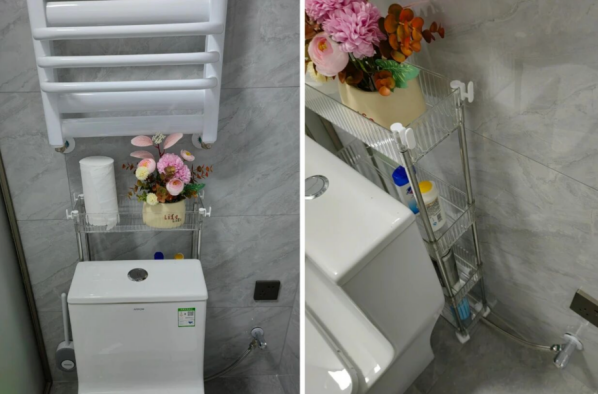
Gaps between vanities, walls, and toilets are breeding grounds for bacteria and odors. Instead of leaving them as dead space, integrate them:
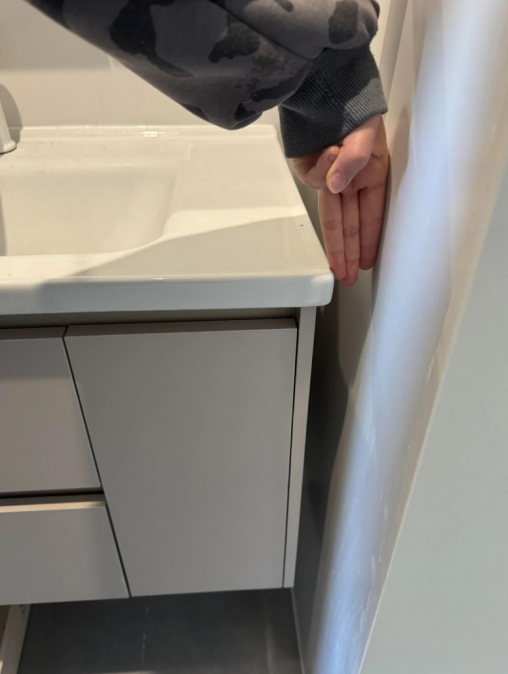
Vanity Gaps: Install acrylic shelving or retractable hooks to hide the void while adding utility.
Toilet Recesses: Utilize multi-tier slimline shelving to turn a gap into a feature.
Shower Niches: When boxing in pipework, ask your builder to create a 3-tier recessed niche.
Crucial Tip: Ensure the niche shelving has a subtle 1-2° slope to prevent standing water and subsequent grout mould.
5. Strategic Heat Placement: Breaking the “Over-Shower” Myth
It is a common UK misconception to install the heater (extractor/light combo) directly inside the shower zone.
The Reality: The steam from a hot shower provides ample warmth while you’re inside. The real “chill” happens when you step out.
The Fix: Install your heating/fan unit in the “dry zone”—directly above the toilet or vanity. This balances the ambient temperature across the entire room and provides much-needed airflow during the humid summer months.
6. Material Integrity and Thermal Tolerance
The longevity of a premium bathroom depends on the physical stability of its components.
The Science: Many low-end PVC components (especially generic seals) suffer from thermal deformation when exposed to temperatures above 75°C.
The Standard: Selecting components from a specialist UK brand like ShowerDoorSeal.uk ensures superior molecular stability. Their seals are engineered to withstand years of high-temperature cycles without warping, curling, or losing their friction-fit.
Conclusion
A dry, well-ventilated bathroom is the cornerstone of a healthy home. By choosing engineering-standard components from brands like SIMBA and following these renovation principles, you aren’t just avoiding future handyman fees—you are actively protecting the long-term capital value of your property.