
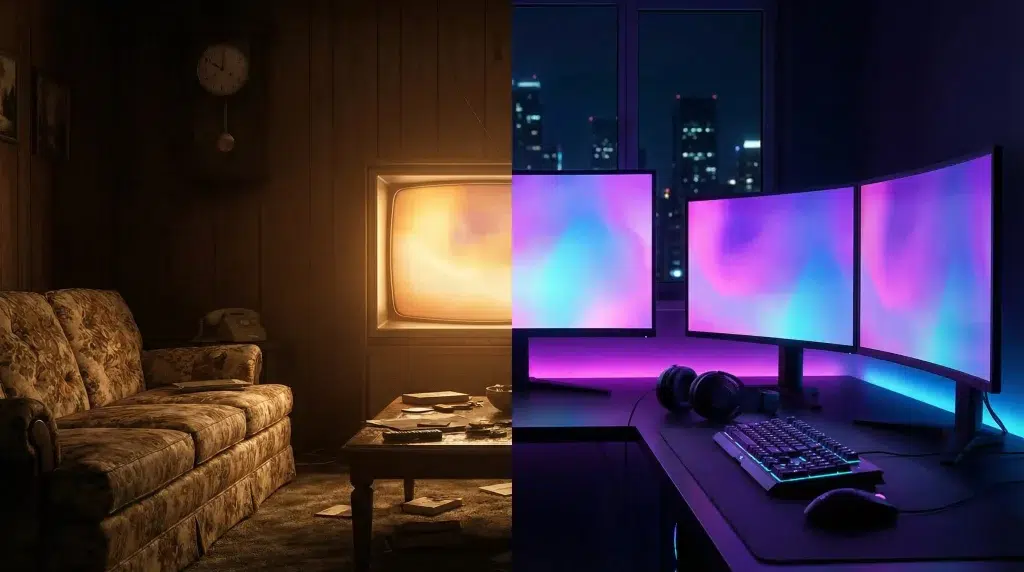
Around midnight the internet feels different. Social media slows down a little. News sites stop updating as often. But gaming platforms get louder. Twitch chats speed up. Multiplayer servers fill again. Somewhere in the world a streamer is halfway through a five hour session and still telling viewers they will log off “after one more match.” Late night entertainment did not disappear when streaming arrived. It simply changed shape, and gaming ended up taking a large part of that space.
When Television Owned the Night
A couple of decades ago the late hours looked very different. Television dominated that time of day. If someone stayed awake long enough, the same types of shows usually appeared on screen. A host behind a desk, a band on the side of the stage, a short comedy monologue about the day’s headlines, then a few celebrity interviews before the closing music. Johnny Carson helped turn that format into a cultural routine during his long run on The Tonight Show. Later hosts followed the same rhythm, and audiences returned every night because there was no real alternative. If you missed the broadcast, you simply waited for a rerun. That system worked as long as television controlled when entertainment could be seen. The internet slowly changed that without making a dramatic announcement.
Streaming Turned Gaming Into Nighttime Entertainment
The atmosphere changed again once gameplay became something people could watch as well as play. When Twitch launched in 2011 it allowed players to broadcast their sessions live. At first the audiences were small. A handful of viewers gathered in chat while someone streamed a game from their bedroom. The platform itself had grown out of Justin.tv and quickly became focused almost entirely on gaming broadcasts and esports events. That idea grew quickly.
Within a few years millions of people were watching competitive matches, speedruns, and casual streams online. The rise of platforms like Twitch helped push esports into the mainstream, turning live gameplay into a spectator experience that could draw enormous audiences. Late evening became one of the busiest periods on these platforms. Viewers finished work or school, opened a stream, and stayed longer than they might during the day. Many streams begin around ten in the evening and continue well past midnight.
For anyone curious about the range of communities that exist around these broadcasts, it is easy to browse available platforms and see how varied the landscape has become. Competitive eSports streams sit alongside casual gameplay sessions, creator talk shows, and long multiplayer runs where viewers stay in chat for hours while the night unfolds online.
The Moment Clips Replaced Broadcasts
The shift began quietly when late night shows started posting clips online. At first those uploads looked like simple promotions. Networks placed the funniest monologue jokes or celebrity interviews on YouTube the morning after a broadcast. But something unexpected happened. Those clips often travelled much further online than the original television show ever did. Soon many viewers stopped staying up for the broadcast itself. They watched the best moments the next day on their phones instead. Late night television was still producing the same shows, but the audience was no longer gathering at the same hour. While that change was unfolding, another kind of late night entertainment had already been growing on the internet.
Gaming Was Already Active After Midnight
Online gaming communities had long discovered that the late hours worked best for multiplayer sessions. Anyone who spent time in competitive games during the 2000s remembers the pattern. Evenings started casually. A few friends logged in for a couple of matches. Then someone suggested playing one more round before logging off. Hours passed quickly after that. Games like Counter Strike, Halo, and later League of Legends built communities that were most active late in the evening. Players from different cities or countries finally had time to log in together. Voice chat filled with conversation while matches continued long past midnight. Without realizing it, gaming had already become part of the internet’s late night routine.
Late Night Became a Shared Gaming Space
Gaming also changed the way late night entertainment feels. Traditional television asked viewers to sit back and watch. Online gaming encourages participation. A stream might run on one screen while players queue for their own matches on another. Discord calls stay active in the background as friends talk between rounds. The night becomes a mixture of watching, playing, and conversation. Someone might watch a streamer attempt a difficult match, then jump into the same game with friends. Later they return to the stream to see how the broadcast unfolded while they were gone. Instead of a single program filling the late hours, entertainment moves across multiple screens at once.
The Night Looks Different Now
Late night television still exists. New episodes still air, and clips from those shows still spread quickly across social media every morning. But if you open a streaming platform late in the evening, the real activity often appears somewhere else. Inside a multiplayer lobby. Inside a Twitch stream that refuses to end.Inside a gaming community where players from several countries are still arguing about the last match. The television studio has not disappeared from late night culture. It just no longer owns the night.