For a long time, digital entertainment felt like something you did quietly. You opened a game. Played for a while. Closed the tab or shut down the console. Maybe later you mentioned it to someone at school or work. But the actual moment of playing mostly happened alone, even when the game itself connected people online. That dynamic has been slowly disappearing. Today it’s surprisingly rare for entertainment platforms to feel silent. Open almost any popular gaming service, streaming site, or casino platform and you will notice the same thing almost immediately. There is conversation everywhere. Chat windows. Comments. Reactions. Streams running in the background while people talk about what just happened on screen. The game is still the center of attention. But it is no longer the only thing happening.
Online Games Turned Play Into a Hangout
A big part of the shift started inside multiplayer games. When online gaming first became widespread, the focus was mostly technical. Could the servers handle enough players? Would the connection hold during a match? Those were the questions developers worried about. Then something unexpected happened. Players started building their own spaces around the games. Voice channels appeared. Discord servers grew into massive communities. Someone would post a clip from a ridiculous match. Another player would ask for teammates. A third would argue about tactics. Over time those conversations became just as important as the gameplay itself. Many people now log in without even knowing exactly what they plan to play. They join a voice channel first, see who is around, and figure out the rest afterward. The game becomes a reason to spend time together rather than the only goal.
Casino Platforms Are Catching the Same Wave

The casino industry has noticed the same pattern. Traditional casinos have always depended on energy. If you walk across a busy casino floor you hear conversations everywhere. Someone cheers at a winning spin. A group gathers around a blackjack table to watch the next hand. People comment on what just happened even if they are not playing. When casino games first moved online, that atmosphere disappeared almost completely. The games worked perfectly well, but the feeling of being surrounded by other players was gone. Developers have spent years trying to rebuild that environment.
Live dealer tables helped a lot. Instead of a purely automated interface, players now watch real dealers running the game while participants join from their own devices. Chat features allow people to talk during the rounds, react to outcomes, or joke with the dealer between hands. Players also often look through resources like The Grueling Truth sweepstake casino reviews while comparing platforms and deciding where to join a table. Some tables even develop regular crowds of players who show up night after night. Not necessarily because the game is different, but because the atmosphere feels familiar. In other words, the social layer returned.
Watching Gameplay Became Part of the Routine
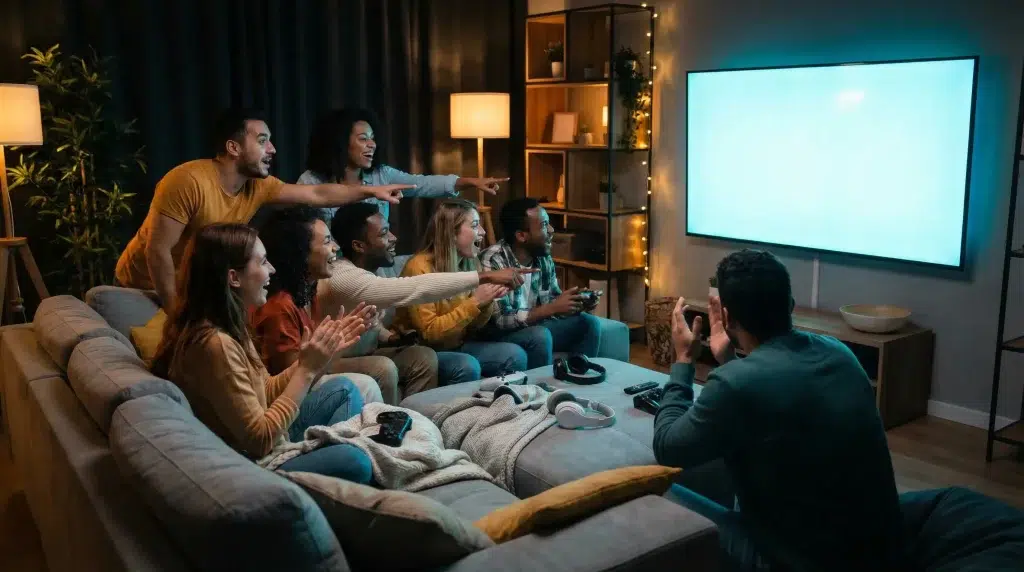
The moment streaming platforms arrived, the social side of gaming expanded again. At first the concept sounded strange. Why would anyone watch another person play a video game instead of playing themselves? But the experience turned out to be very different from simply watching a recorded video. Live chat changes the atmosphere completely. Someone reacts to a lucky moment. Another viewer jokes about a mistake. Hundreds of people might be typing at once while the game continues in the background. It starts to feel less like watching television and more like sitting in a crowded room where everyone is reacting together. For many viewers that shared reaction is the entire point.
People Discover Platforms Through Other Players
Another reason entertainment feels more social now has less to do with the games themselves and more to do with how people find them. Discovery rarely starts with advertising anymore. A friend sends a clip. A streamer mentions a game during a broadcast. Someone posts a big win or an unusual moment from a live table. Suddenly thousands of people know about a platform they had never heard of the day before. The same thing happens across gaming communities. Players compare experiences, share recommendations, and discuss which platforms feel active or interesting at the moment. Someone looking for a place to play might start by browsing available platforms, but the final decision often comes from seeing where other people are already spending time. The crowd shapes the destination.
Entertainment Feels Less Like Software Now
Step back and look at how people actually spend an evening online and the pattern becomes obvious. A person might open a game while listening to a streamer. Friends join a voice call. Someone shares a clip from a casino round that just happened. Another person suggests trying a different platform for a few minutes. Hours pass almost without noticing. What makes the experience engaging is not only the games themselves. It is the sense that things are happening in real time and that other people are reacting to them at the same moment. Entertainment platforms used to be products. Increasingly, they feel more like places.