If you’ve spent any time scrolling through fitness feeds lately, you’ve likely noticed a shift. The intense, sweat-drenched grind is making room for something more precise, controlled, and arguably more effective: Pilates. While mat classes have been the entry point for many, the real game-changer often sits quietly in the corner of the studio – sleek, mysterious, and packed with potential to transform your training. We’re talking about the Pilates machine, commonly known as the reformer.
There is a distinct difference between “doing Pilates” on a mat and training on a reformer. While both methods are fantastic, the machine introduces variables that accelerate your progress in ways gravity alone simply cannot.
- Mat Pilates: Relies on body weight and gravity.
- Machine Pilates: Introduces dynamic resistance and assistance.
If you are looking to break through a plateau or simply want to understand why your favorite instructors swear by the springs, this is for you.
What is a Pilates Machine?
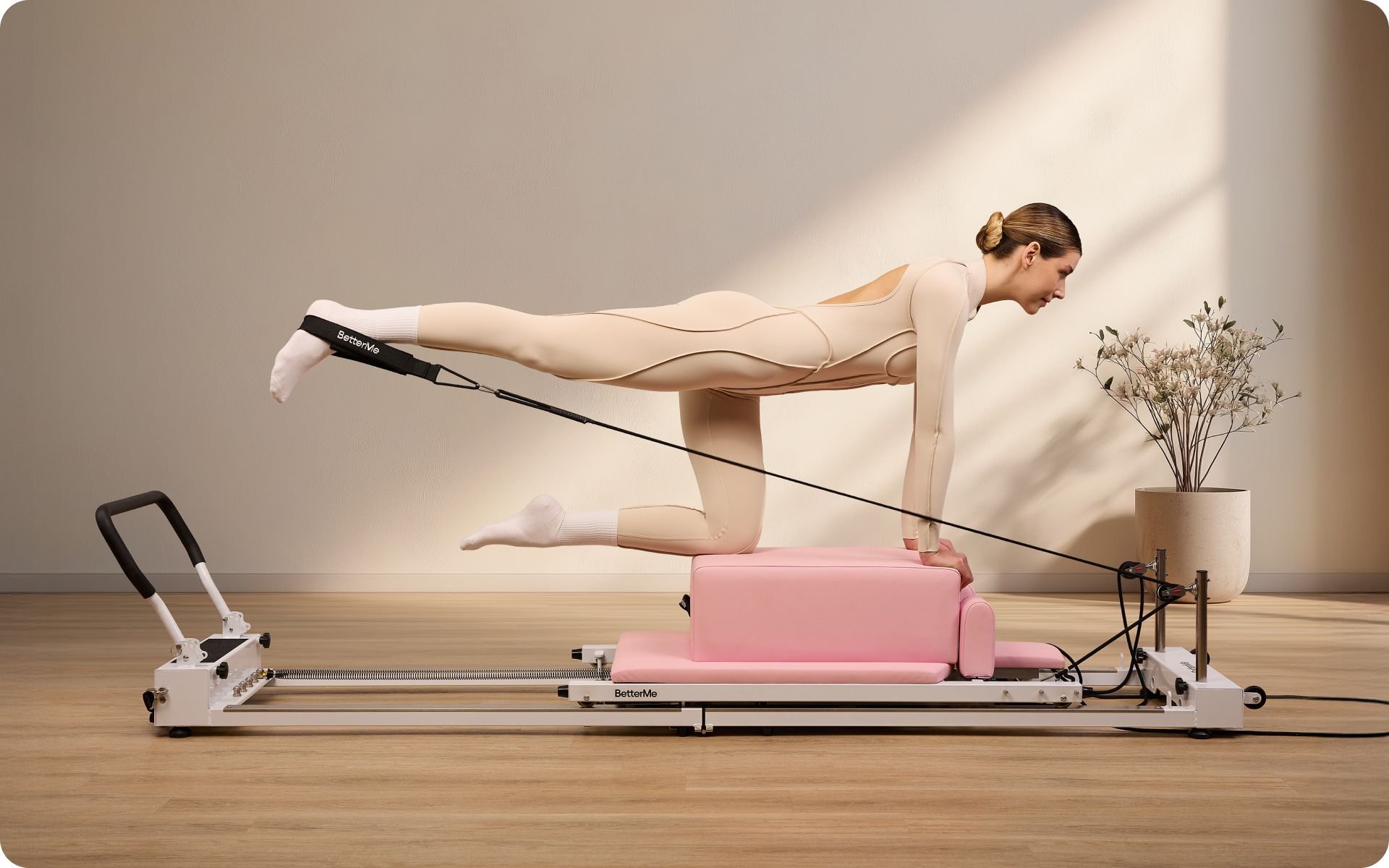
To the uninitiated, a Pilates machine can look intimidating. It’s a bed-like frame with a flat platform on it, called the carriage, which rolls back and forth on wheels within the frame. But don’t let the industrial look fool you – this apparatus is a masterpiece of biomechanical engineering. The carriage is attached to one end of the frame by a set of springs. These springs are the heart of the machine. They provide choices of differing levels of resistance as you push or pull the carriage along the frame.
Here is the breakdown of the key components:
- The Carriage: The moving surface where you lie, sit, stand, or kneel.
- The Springs: The source of resistance. Unlike weights, springs provide “variable resistance,” meaning the tension changes as you extend and release.
- The Straps and Ropes: These allow you to pull the carriage with your arms or legs, engaging the upper and lower body while stabilizing the core.
- The Footbar: An adjustable bar used by your feet or hands to move the carriage.
The spring resistance helps build strength gently. You are constantly working against the tension of the springs to control the movement, which requires deep stabilizing muscles to fire up that you didn’t even know existed.
Top Benefits of Using a Pilates Machine
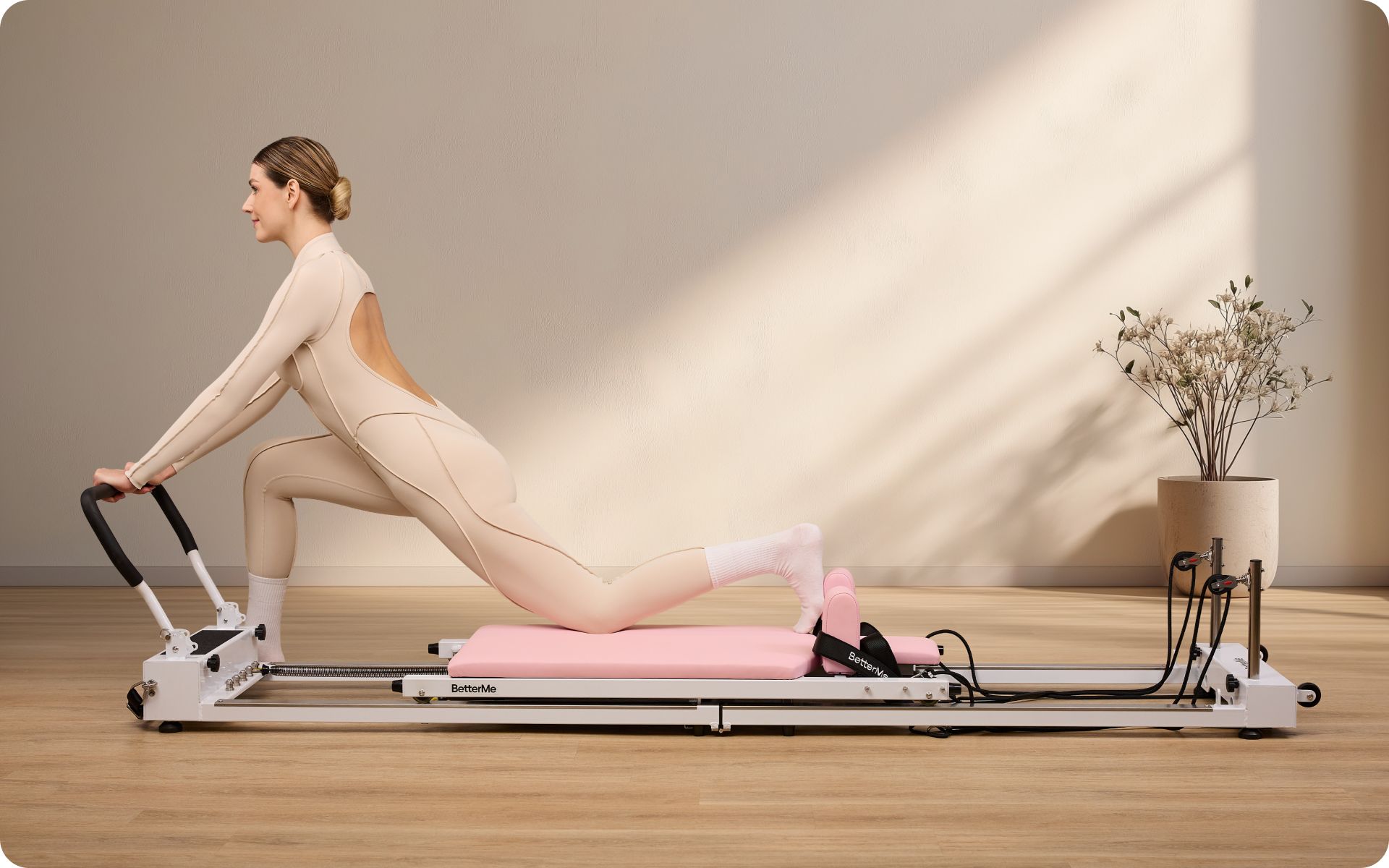
Why make the switch from the mat? Or better yet, why integrate a Pilates machine into your routine? The answer lies in efficiency. The machine doesn’t just make the exercises harder; it makes them smarter.
Here are the top Pilates reformer benefits you can expect:
- Full-Body Conditioning: There is no “leg day” or “arm day” here. A single session works the entire body at once. Pushing the carriage with your legs requires core stability; pulling straps with your arms engages the back and lats. It is comprehensive conditioning.
- Core Strength: We aren’t just talking about the “six-pack” vanity muscles. The reformer demands deeper core engagement than standard crunches because you are working on a moving surface. Your core has to work overtime just to keep you balanced, leading to a rock-solid center.
- Flexibility & Posture: The reformer is unique because it strengthens muscles while lengthening them. The resistance allows you to move through a full range of motion, safely stretching tight areas while strengthening weak ones. This dual action lengthens the back and dramatically improves posture.
- Low Impact: This is crucial for longevity. The reformer is incredibly safe for knees and backs. Because you are often lying down (supine), there is no vertical loading on the back, and the springs cushion your joints. It’s the perfect way to get a killer workout without the wear and tear.
Setting Up Your Home Pilates Studio
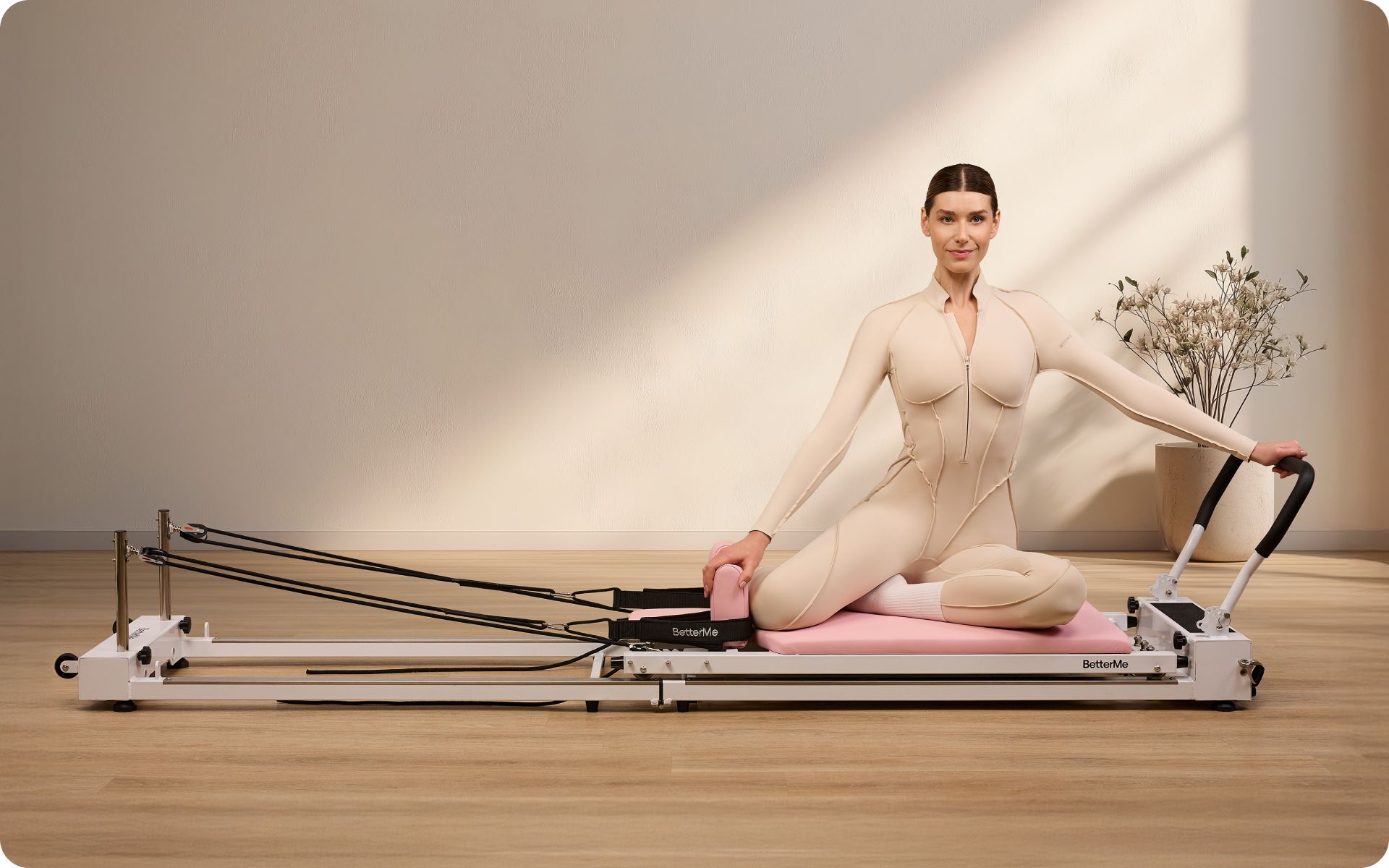
Transitioning to a home Pilates workout is a significant step in your fitness journey. It signals a commitment to consistency. While going to a studio is wonderful for community and hands-on correction, having access to equipment at home removes the friction of scheduling and travel time.
When setting up your space, atmosphere matters. You don’t need a massive room, but you do need enough clearance to extend your arms and legs fully. Good lighting, a plant or two, and a clutter-free zone can help recreate that sanctuary feel of a high-end studio.
But the most critical element is, of course, the equipment. Pilates equipment for home has come a long way from the clunky, industrial models of the past. Today, you can find machines that are essentially pieces of furniture – sleek, beautiful, and highly functional.
When you’re setting up your workout space, consider modern Pilates reformers that combine functionality and design. You want something that offers the smooth glide of a studio machine but with an aesthetic that fits a living space. If you’re browsing options, you can see a range of home-friendly styles and finishes here.
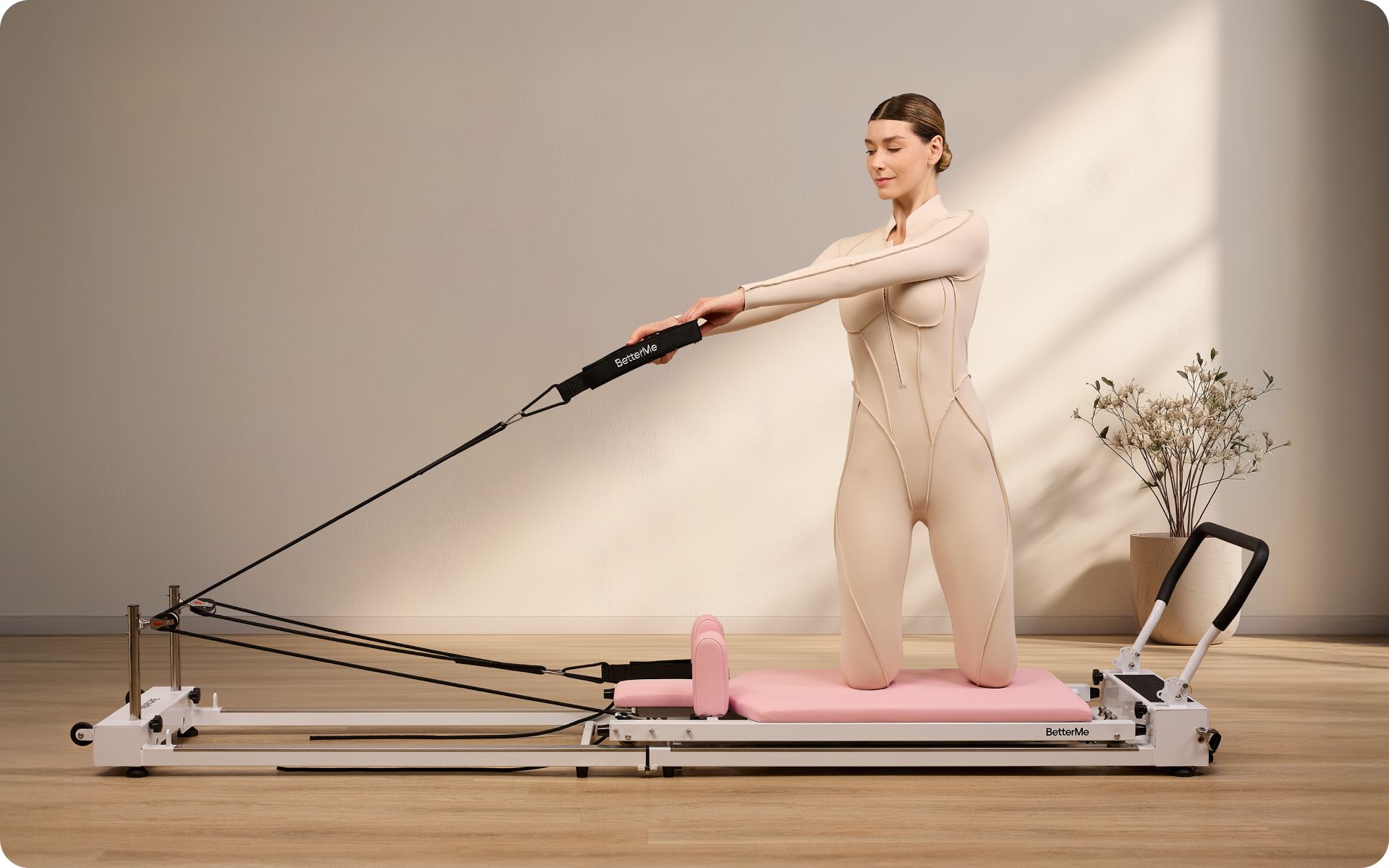
Choosing the right machine ensures your home Pilates workout is safe and effective. Look for adjustable springs, a comfortable carriage, and a sturdy frame. If the machine wobbles or the glide is gritty, you won’t use it. Investing in quality means you are investing in a better experience every single time you move.
Also, consider the versatility. Good Pilates equipment for home often comes with accessories like a sitting box or jump board, which can double the number of exercises you can perform. This variety is key to keeping your home practice fresh and challenging over the months and years.
Ultimately, purchasing a reformer is not just buying a piece of exercise gear; it is an investment in your physical longevity. It allows you to access the incredible Pilates reformer benefits – strength, flexibility, and alignment – on your own terms, in your own time.
If you have been debating reformer vs mat pilates, remember that you don’t always have to choose. But if you want to elevate your practice, the machine is the answer.