

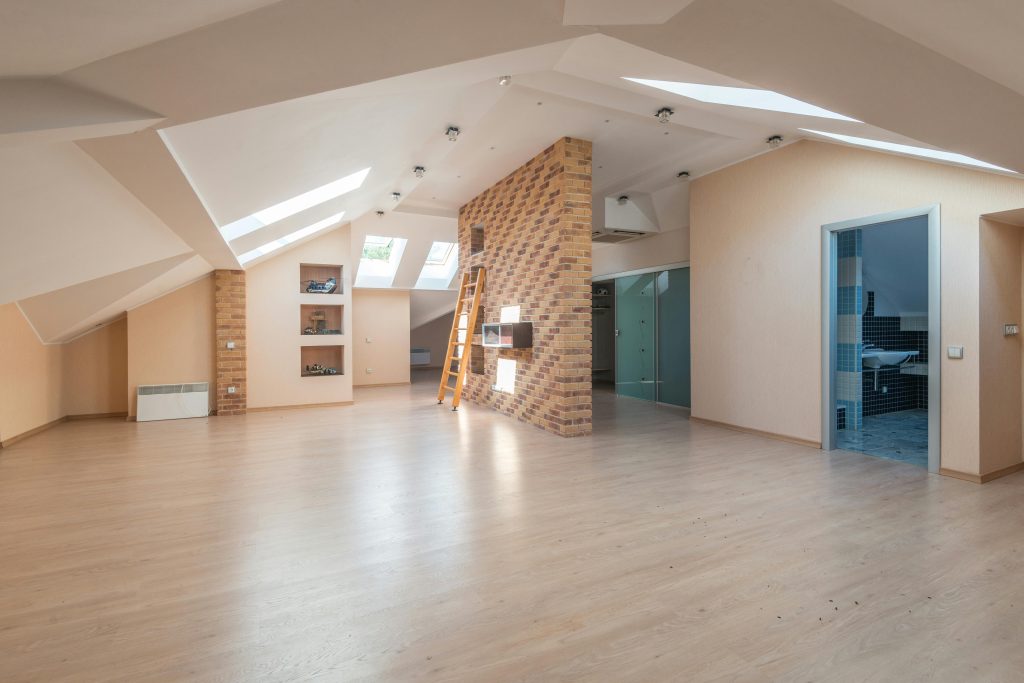
Loft conversions and top-floor rooms have a reputation for being either brilliantly sunlit—or oddly cave-like. The difference usually isn’t the size of the space; it’s the way light is invited in, then guided around what can be an awkward footprint of sloped ceilings, deep eaves, and tight stair landings.
If you’re planning a conversion (or improving an existing one), it helps to think like a lighting designer rather than a decorator. Where will daylight land at 9am in winter? Which corners will never see direct sun? And once the light arrives, what surfaces will bounce it further into the room?
Start with the big decision: how you’ll introduce daylight from the roof plane. Done well, it’s the single most effective way to transform an upper floor. Done poorly, you can end up with glare, overheating, or a room that still feels dim because the light is in the wrong place.
One useful place to explore the options and constraints around roof-based window installations is to look at the range of roof window types and how they’re typically used in lofts—because “a roof window” can mean several very different things in practice, each with different daylight and ventilation outcomes.
Think in “light paths,” not just windows
Daylight isn’t evenly distributed. In loft rooms, it tends to pool near the opening and fade quickly as you move away—especially if you have dark floors, heavy beams, or a deep reveal. Before you choose finishes, map the likely path of light:
- Orientation matters. South-facing roof glazing can flood a space, but it can also overheat in summer. North-facing openings produce steadier, softer light—often better for studios, offices, and bedrooms where you don’t want intense glare.
- Roof pitch changes the feel. A steeper pitch can project light deeper into the room at certain times of day, while a lower pitch may create broader, softer illumination but less “reach.”
- The reveal is a light funnel. Deep, boxed-in reveals can choke daylight. Splayed reveals (wider at the room side) help spread light across the ceiling plane.
Place openings where you actually live
People often centre roof windows for symmetry, then wonder why the room still feels gloomy. Instead, place glazing relative to how the room functions:
- Over a desk or reading nook, consistent daylight reduces eye strain.
- Above circulation routes (near the stairhead or landing), it makes the whole upper floor feel less enclosed.
- In bathrooms, higher placement improves privacy while still brightening the room.
Use multiple smaller sources instead of one big “spotlight”
A single large opening can create dramatic light—but also dramatic contrast. Two or three smaller openings, spread across the roof slope, often make the room feel brighter overall because they reduce shadowy zones.
The “balanced daylight” rule of thumb
If you can, distribute daylight from more than one direction. Even in a modest conversion, pairing roof glazing with a high-level gable window (where available) can soften contrast and make the space feel calmer.
Also consider how light changes through the day. One opening might perform brilliantly at noon and disappoint at 4pm. A second source can keep the room usable for longer.
Control glare and overheating (without sacrificing brightness)
“More glass” isn’t always the answer. Upper floors are exposed, and solar gain can turn a loft into a greenhouse. The trick is to keep the room bright while managing peak conditions.
Choose glazing and shading deliberately
Look at three things:
- Solar control glazing can reduce heat gain while maintaining good visible light transmission.
- Ventilation strategy matters as much as glass. Warm air rises; an opening at the top of the house can work like a thermal chimney if paired with lower-level airflow.
- Blinds aren’t an afterthought. Plan for them early so you don’t end up with poor fits or awkward cords. Light-filtering blinds are often better than blackout in living spaces, because they soften glare without plunging the room into dimness.
Make surfaces work harder: finishes that amplify daylight
Once daylight enters, your material choices decide how far it travels. This is where small details can have outsized impact.
Walls and ceilings: it’s about reflectance, not just “white”
You don’t have to paint everything stark white, but you do want high light reflectance values (LRV) on the largest planes—especially sloped ceilings that face the glazing. Soft off-whites, warm greys, and pale clay tones can still reflect plenty of light while feeling less clinical.
A simple, effective move: paint the ceiling plane (including slopes) a notch lighter than the walls. Your eye reads the room as taller and brighter.
Floors and joinery: avoid “light traps”
Dark floors can look gorgeous, but in lofts they absorb a surprising amount of light. If you love darker timber, balance it with lighter walls and strategically placed reflective surfaces. Built-in storage under eaves is another common culprit—large matte doors can swallow light. Consider lighter finishes or a subtle sheen.
Add artificial lighting like a pro: layers, not one central fitting
Daylight is only half the story. Upper floors need artificial lighting that complements natural light patterns, not fights them.
Build a three-layer lighting plan
This is one area where a quick checklist helps:
- Ambient: recessed downlights or ceiling-mounted fixtures to set general brightness.
- Task: reading lights, desk lamps, under-cabinet lighting (especially in loft kitchens or vanity areas).
- Accent: wall washers, LED strips along beams, or picture lights to lift darker corners and add depth.
If you only do one thing, avoid relying on a single central pendant. In sloped-ceiling rooms it often casts uneven light and creates harsh shadows at the edges.
Use warmer light where the ceiling is low
Lofts can feel stark if the lighting is too cool. In bedrooms and living areas, warm white lamps (often around 2700K–3000K) tend to flatter materials and soften angles. In bathrooms or work zones, slightly cooler can feel crisp—but keep it consistent within each space.
Don’t forget stairwells and landings—the “light spine” of the upper floor
A bright loft room can still feel disconnected if the stair enclosure is dim. Treat the stair and landing like a daylight corridor:
- If there’s an opportunity for high-level glazing above the stair, take it. It can transform the whole experience of the upper floor.
- Use light-coloured paint and a semi-matte finish on stair walls to bounce light.
- Add wall lights or step lights on dim runs—small fittings, thoughtfully placed, feel more natural than blasting the area with a single bright source.
Plan early around structure, regulations, and real-world use
Some of the best brightening tactics are easiest (and cheapest) when designed in from the start. Structural elements may limit where openings can go, and roof geometry can dictate what’s practical. Building regulations, ventilation requirements, and fire safety routes also shape your options—especially if you’re adding a new storey or altering escape paths.
But here’s the encouraging part: you don’t need a massive roof lantern or an all-glass end wall to get a light, uplifting loft. Smart placement, multiple light sources, reflective surfaces, and layered lighting will outperform “bigger window” thinking almost every time.
If you’re aiming for a loft that feels like a natural extension of the house—bright in the morning, comfortable in summer, and welcoming on winter evenings—design the light the way you’d design the layout: intentionally, with daily life in mind.