

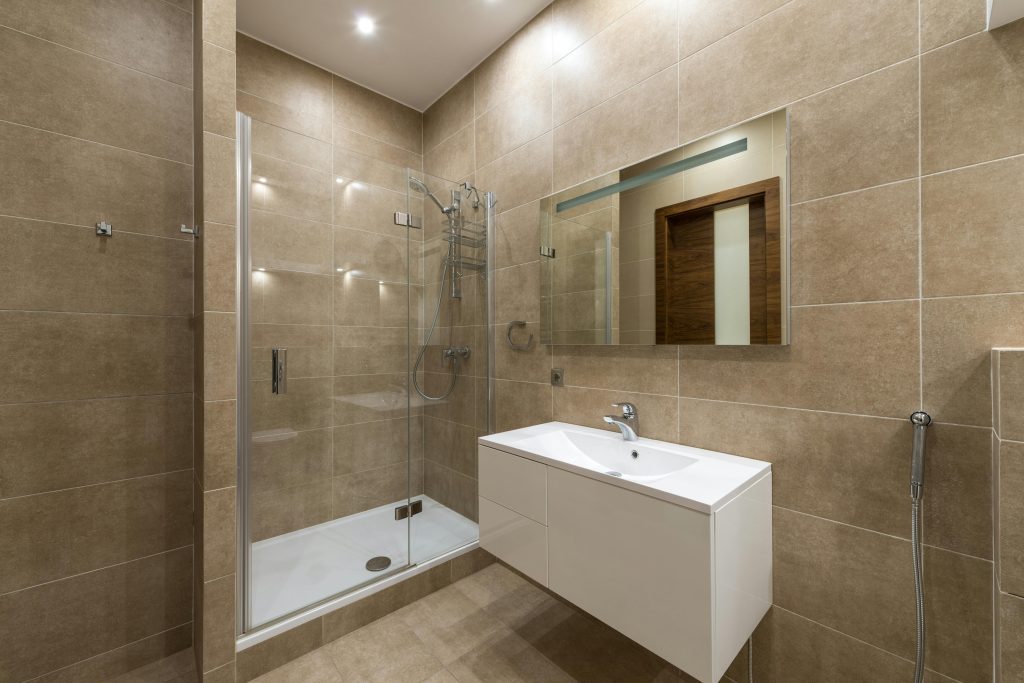
Ever stepped out of the shower and found a crescent of water on the floor, even though the door was closed? In many bathrooms the culprit isn’t the seal, it’s the door height. A door that stops well below the shower head, or below where spray rebounds off your body, leaves an invisible “escape route” for droplets. Raise the glass and the same enclosure can suddenly feel calmer, warmer, and easier to clean. But go too tall and you can trap humidity, amplify limescale, and make access awkward. So what height actually protects against splashes, and when is extra glass just decoration?
How Height Changes Where Water Goes
Shower doors aren’t just a visual boundary; they’re a barrier against three kinds of water movement: direct spray, rebound splash, and airflow-driven mist. Height mainly affects the last two. When water hits tile or glass it breaks into smaller droplets that travel upward and outward. Meanwhile the warm air column rising from the shower can carry fine mist above the top edge, especially with powerful rain heads or body jets. If you’re comparing enclosure options, browsing examples of premium shower doors for elegant interiors can help you see how different heights and layouts deal with those forces in real installations.
Common Height Ranges and What They Mean
In the UK and much of Europe, many hinged and sliding doors land in the 1850–2000 mm range, while full-height wet-room screens can run 2100 mm or higher. That first band usually works when the shower head is mounted around 2000–2100 mm and aimed inward. Problems show up when the head is higher, angled outward, or paired with a hand shower that gets sprayed toward the opening. Remember: water doesn’t need a big gap to escape. A few centimetres of open space above the glass is enough for mist to roll over, condense on a cooler wall, and drip down outside the tray.
Key Factors That Change the Ideal Height
Shower Head Type and Spray Pattern
A compact fixed head throws a predictable cone. A rainfall head, by contrast, creates a wide sheet and encourages overspray when you step forward to rinse. High-pressure systems also atomise water into finer particles that behave like fog, rising with warm air and escaping over the top. If your bathroom routinely feels damp long after you’ve finished, the issue may be mist carryover rather than a visible jet of water. In those cases, adding height—or pairing a taller door with a ceiling-mounted extractor—can cut down on the “halo” of condensation that forms beyond the enclosure.
Tray, Threshold, and Floor Slope
Height doesn’t work in isolation. A low-profile tray or level-access wet room often has less “freeboard” before water reaches the bathroom floor, so any splash that escapes becomes a puddle fast. Conversely, a deeper tray and a good upstand buy you time. Pay attention to slope, too. If the shower area falls slightly toward the opening, splashes that hit the floor will migrate out, regardless of door height. Many installers will check falls with a straightedge before blaming the glass, because correcting the gradient can do more for splash control than adding another 100 mm of door.
User Behaviour and Door Operation
Real life is messy. Kids swing hand showers around, adults crack the door to grab shampoo, and many of us leave the door partly open to reduce steam. A taller door can compensate for these habits, but only to a point. If the opening edge is close to the shower head, splashing is almost guaranteed when you turn or step out. That’s why layout matters: moving the head to the far wall or adding a fixed return panel often reduces splash more effectively than going from 1900 to 2000 mm.
Balancing Splash Protection with Ventilation and Access
Plenty of homeowners assume “taller is always better,” then wonder why the bathroom feels like a sauna. The gap above a standard-height door lets humid air escape, especially if the extractor is weak. Close that gap and you may reduce mist outside the shower, but you can also trap moisture inside. Accessibility matters too: very tall, heavy doors are harder to handle and demand robust hinges and careful alignment. Aim to contain water without making the space harder to live with for most daily routines.
A Practical Way to Choose the Right Height
Before you order glass, do a quick “splash audit” in your current shower or a similar one. Run the shower at your normal temperature and pressure, step through your usual routine, and note where water lands. Then measure from the top of the tray (or finished floor) to the highest point where droplets regularly appear. Use that as your minimum target, not the catalogue default.
- If the shower head is ceiling-mounted, aim for a door height that reaches within 100–150 mm of the ceiling.
- For wall-mounted heads, a top edge at least 150–250 mm above the spray plate usually prevents mist roll-over.
- Prioritise a fixed panel or return if the opening is close to the shower stream; it’s a better “splash baffle.”
- Don’t forget ventilation: if you reduce the top gap, upgrade extraction or leave a small trickle opening.
Door height is a tool, not a cure-all. Match it to your shower head, layout, and ventilation, and you’ll keep water where it belongs—inside the enclosure, with fewer slips overall.