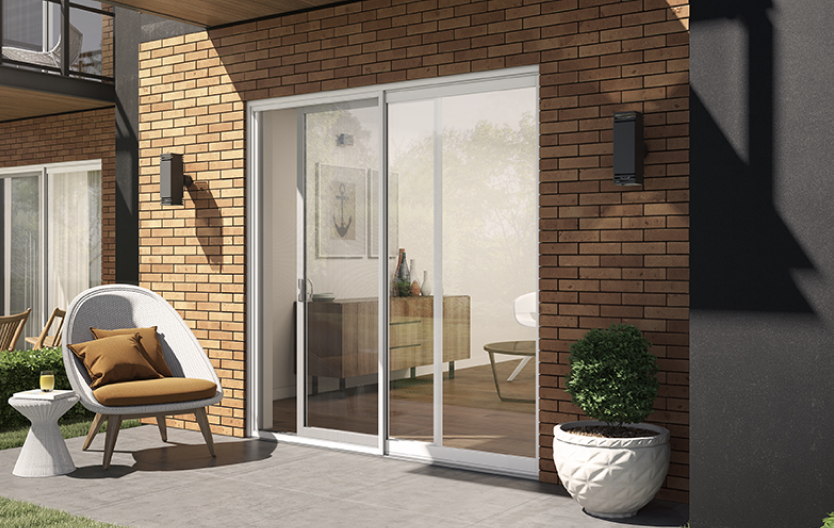
In many Canadian homes, the door leading to the backyard plays a larger role than homeowners initially expect. It is not just a passage between indoors and outdoors, but a daily-use element that affects comfort, security, and how private a living space feels. Because it sits at the boundary of the home’s envelope, its design decisions tend to have long-term consequences.
Choosing backyard doors means balancing three priorities that often pull in different directions: easy access to outdoor areas, sufficient privacy from neighbours or passersby, and reliable insulation through Canada’s changing seasons. Understanding how these factors interact helps avoid compromises that only become obvious after installation.
Access: How the Door Shapes Everyday Use
The most immediate role of a backyard door is access. It determines how people move between the house and the yard, deck, or patio, and how often that space is actually used.
Doors with wider openings encourage frequent use, especially during warmer months when indoor and outdoor spaces function as one. Narrow or awkwardly positioned doors, by contrast, can make the backyard feel disconnected, even if it is only a few steps away.
This is why many homeowners gravitate toward backyard doors designed to open up larger sections of the wall. The choice is not just aesthetic; it directly affects how furniture is arranged, how traffic flows during gatherings, and how practical the backyard feels in everyday life.
At the same time, access must be considered year-round. A door that is easy to use in summer but difficult to operate in winter, or one that requires constant clearing of snow to open properly, can quickly become a frustration rather than a benefit.
Privacy: Light and Visibility Trade-Offs
Privacy is often the next concern, especially in urban or suburban neighbourhoods where backyards may be visible from neighbouring properties. Glass-heavy doors increase daylight and visual openness, but they also increase sightlines into the home.
The challenge is that privacy is not simply about whether the door has glass, but how that glass is used. Frosted panels, divided lites, or partial glazing can reduce direct visibility while still allowing light to enter. Placement also matters: doors opening onto side yards or shared boundaries often need different solutions than those facing private green space.
Importantly, privacy requirements can change throughout the day. A door that feels fine during daylight hours may feel exposed at night when interior lighting reverses the visibility balance. Considering how the space is used after dark is just as important as how it looks during the day.
Insulation: Why Backyard Doors Are a Thermal Weak Point
From a building-science perspective, backyard doors are one of the more demanding openings in a home. They typically contain more glass than standard exterior doors and are exposed to wind, moisture, and temperature swings.
Poorly insulated or poorly sealed doors often create cold zones near the opening in winter and heat gain in summer. This discomfort is usually felt locally — near dining tables, sofas, or walkways adjacent to the door—rather than throughout the entire room.
Backyard doors must therefore balance openness with performance. This includes insulated cores, multi-pane glazing, and effective sealing systems that prevent uncontrolled air movement.
Backyard doors must provide access while also balancing privacy and insulation — as explained by the U.S. Department of Energy, exterior doors, including patio and back doors, should be insulated and well-sealed to reduce heat loss and improve energy efficiency. Tight weatherstripping and proper door construction also help with comfort and moisture resistance over time.
Frame Materials and Long-Term Performance
The door frame plays a major role in insulation and durability. Different materials respond differently to Canada’s climate.
Wood frames offer natural insulation but require careful maintenance to manage moisture. Vinyl and fiberglass frames tend to be more dimensionally stable, which helps seals remain effective through freeze–thaw cycles. Composite frames aim to combine structural strength with thermal performance.
Over time, stable frames reduce the risk of gaps forming around the door, which is often the hidden cause of drafts and condensation.
Security Without Sacrificing Comfort
Backyard doors are sometimes viewed as less security-critical than front entrances, but they are still a primary access point. Multi-point locking systems, reinforced frames, and impact-resistant glazing all contribute to security without necessarily changing the door’s appearance.
Importantly, security features also support insulation. Doors that close tightly and lock evenly along their height tend to seal better, reducing both air leakage and noise infiltration.
Integration With Windows and Doors as a System
A backyard door rarely exists in isolation. Its performance is closely tied to nearby windows and the surrounding wall assembly. Replacing a door without addressing adjacent windows or insulation can make performance issues more noticeable, not less.
Homes where windows and doors are considered together tend to achieve more consistent comfort. Temperature gradients near the backyard opening are reduced, and privacy solutions can be coordinated across multiple openings rather than treated as one-off fixes.
Practical Trade-Offs to Consider
Every backyard door choice involves compromise. A highly glazed door maximizes light and access but may require more attention to privacy and insulation details. A more solid door improves privacy and thermal performance but can reduce daylight and openness.
The key is not to look for a perfect door, but for the right balance based on how the space is used. A family that frequently entertains outdoors will prioritize access, while a home backing onto neighbouring properties may value privacy more highly.
A Balanced Decision for Canadian Homes
Choosing backyard doors is ultimately about aligning daily use with long-term comfort. Access determines how connected the home feels to the outdoors. Privacy shapes how comfortable occupants feel using the space at different times of day. Insulation affects whether the area near the door remains usable throughout the year.
When these factors are considered together — rather than in isolation — backyard doors become a functional asset rather than a compromise. In Canada’s climate, thoughtful selection and proper installation ensure that access, privacy, and insulation work together, supporting both comfort and everyday living for years to come.