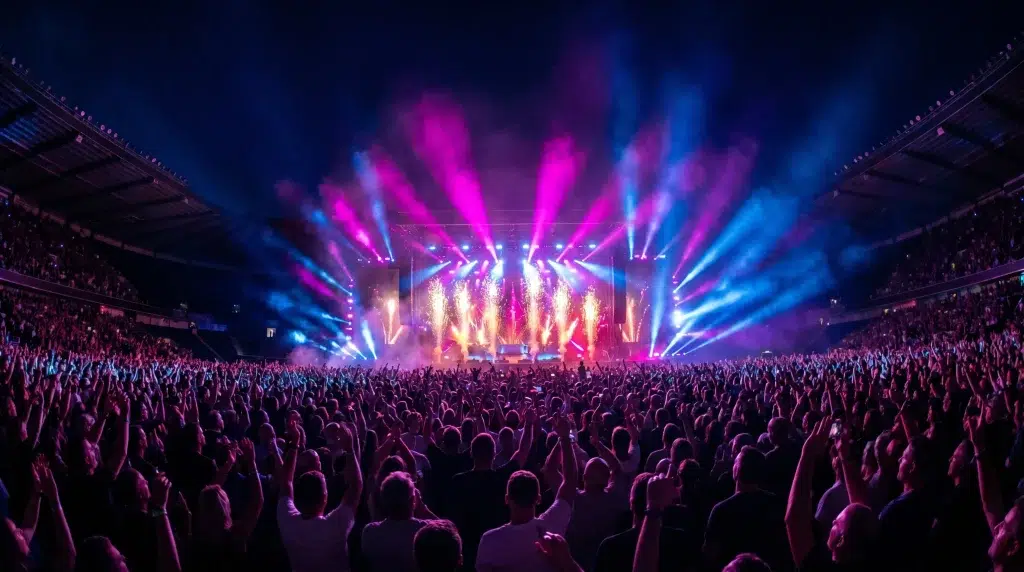
The music industry experienced remarkable revenue growth in 2023, with global top 100 tours generating 46% year-over-year increases as live events rebounded from pandemic disruptions. This explosion created opportunities for brands seeking direct access to engaged audiences in emotionally charged environments. Betting and gambling companies emerged as major players, leveraging substantial marketing budgets — UK leaders Bet365 and Sky Bet generated £3.39 billion and £2 billion respectively in 2023 — to fund tours, festivals and artist partnerships.
Casino and betting sponsorships now appear across the music landscape, from Pragmatic Play’s global partnership with Tomorrowland electronic music festival to MGM Resorts’ backing of Imagine Dragons’ world tour. These deals provide artists with financial resources to expand tour footprints, upgrade production values and deliver premium fan experiences, while sponsors gain visibility among demographics that traditional advertising channels struggle to reach effectively. Many platforms now offer seamless mobile access for users, making it easier to get started through options like 1xbet download.
The symbiotic relationship reshapes both industries. Musicians secure funding for logistics, staging and marketing without compromising creative control. Betting brands position themselves as cultural supporters rather than purely transactional gambling operators, softening public perception while building emotional connections with millions of concertgoers. This article examines the strategic frameworks, activation models and business infrastructure that make these partnerships work.
Why Betting Brands Target Music Audiences
Music fans represent high-value demographics that align closely with core betting customer profiles. Festival attendees skew toward 18-45 age ranges with disposable income, digital fluency and appetite for entertainment experiences. These audiences overlap substantially with online gambling users, making music sponsorships efficient customer acquisition channels.
Traditional advertising faces increasing regulatory scrutiny. The UK government reviews how betting companies promote in sports, with potential restrictions on shirt sponsorships and broadcast advertising. Music partnerships offer alternative routes to visibility that sidestep some regulatory constraints while accessing audiences in contexts associated with leisure and enjoyment rather than competitive pressure.
Strategic Objectives
Betting brands pursue music sponsorships to achieve multiple business goals:
- Brand perception reshaping: Positioning as entertainment supporters rather than solely gambling operators; MGM Resorts’ Imagine Dragons partnership highlighted the casino group as a premium entertainment destination
- Demographic expansion: Reaching younger, culturally engaged audiences who may not respond to traditional sports betting advertising
- Geographic penetration: Festival sponsorships enable regional market entry; Pragmatic Play’s Tomorrowland Brazil activation engaged South American audiences as the company expanded internationally
- Customer lifetime value: Music fans who associate positive festival experiences with sponsor brands demonstrate higher retention and engagement rates
- Content creation: Sponsorships generate social media content, influencer partnerships and user-generated material that extends campaign reach beyond event dates
- Differentiation from competitors: Unique music partnerships create memorable brand associations in crowded markets where dozens of operators compete for attention
Sponsorship investments in music and entertainment grew approximately 15% annually through the mid-2020s, signalling sustained confidence in this marketing channel’s returns.
Partnership Models and Deal Structures
Music sponsorships follow diverse commercial frameworks depending on artist profile, event scale, geographic scope and brand objectives. Three primary models dominate the landscape, each with distinct cost structures and activation opportunities.
Title Sponsorship
Title sponsorships grant brands naming rights and maximum visibility. The sponsor’s name appears in all event marketing, ticketing platforms, venue signage and broadcast coverage. Cinch, a UK used car marketplace, secured title sponsorship deals with four major UK festivals — Latitude, Creamfields, TRNSMT and Isle of Wight Festival — in 2021, positioning the brand centrally in summer festival season.
Title deals command premium pricing but deliver comprehensive brand integration. Sponsors typically receive exclusive category rights (no competing betting brands), VIP hospitality allocations, branded stage areas and first-right activation zones. Costs for major festivals range from £500,000 to £5 million depending on event size and duration.
Tour Sponsorship
Tour sponsorships fund multi-city concert series, providing artists with resources to expand geographic reach and upgrade production. Hard Rock Casino’s partnership with Maroon 5 exemplifies this model, combining tour funding with branded merchandise, exclusive performances at Hard Rock venues and integrated marketing campaigns.
Tour deals align sponsor brands with specific artists, leveraging fan loyalty and parasocial relationships. Sponsors gain access to multiple markets through a single partnership, with activations repeated across 20-50 tour dates. Financial structures often include base sponsorship fees plus performance bonuses tied to attendance metrics or social media engagement.
Stage or Area Sponsorship
Smaller-scale partnerships focus on branded stages, VIP areas or specific festival zones. Pragmatic Play sponsored stages at Tomorrowland festivals and Colombia’s CORE Medellín, presenting audiovisual activations featuring top house and techno artists. This model suits brands entering music sponsorship or targeting niche audiences without committing to full title sponsorship costs.
Area sponsorships range from £50,000 to £500,000 and allow creative flexibility. Sponsors design immersive experiences — branded lounges, interactive installations, exclusive performances — that create memorable touchpoints while controlling budgets. Multiple non-competing sponsors can participate in single events, diversifying festival revenue.
Behind these visible partnerships sits complex B2B infrastructure. Betting operators rarely build technology platforms from scratch; instead, they partner with specialised providers. A turnkey and white-label casino solutions provider like Cybetic supplies the complete technical stack — gaming platform, payment processing, regulatory compliance tools, CRM systems — that operators rebrand and deploy. This model allows betting companies to allocate capital toward customer-facing activities like music sponsorships rather than backend development, accelerating market entry and freeing budgets for strategic marketing investments that drive user acquisition.
Activation Strategies That Drive ROI
Successful sponsorships transcend logo placement, integrating brands into fan experiences through multi-channel activations. Betting companies employ sophisticated strategies to convert festival exposure into measurable business outcomes.
Physical activations transform festival grounds into interactive brand environments. Sponsors construct themed areas offering gaming experiences, artist meet-and-greets, exclusive merchandise and social media photo opportunities. MGM Resorts’ Imagine Dragons sponsorship included VIP experiences that connected superfans with the band while positioning MGM properties as entertainment hubs.
Digital integration extends reach beyond physical attendees. Sponsors create festival-specific apps featuring lineup schedules, 1interactive maps and exclusive content, collecting user data and building owned communication channels. Social media campaigns leverage event hashtags, influencer partnerships and user-generated content to amplify visibility. Pragmatic Play’s Tomorrowland partnership generated extensive digital engagement through audiovisual activations and artist performances.
Measurement and Attribution
Quantifying sponsorship ROI challenges marketers given the diffuse nature of brand awareness impacts. Industry practitioners employ multiple metrics to assess performance:
- Brand lift studies: Surveys measuring awareness, perception and purchase intent changes among exposed versus control audiences; typical music sponsorships deliver 8-15% brand awareness lifts
- Customer acquisition tracking: Unique promo codes, dedicated landing pages and geo-targeted offers enable direct attribution of new registrations to specific events
- Social media analytics: Monitoring mention volume, sentiment, reach and engagement across platforms; successful festival sponsorships generate 50,000-500,000 social impressions per event day
- Media value equivalency: Calculating the cost of equivalent advertising exposure through traditional channels; major festival sponsorships often deliver 3:1 to 5:1 media value ratios
- Lifetime value analysis: Comparing retention rates and betting activity of customers acquired through music channels versus other sources; music-acquired customers often demonstrate 20-30% higher LTV
Advanced attribution models use econometric analysis to isolate sponsorship impact from other marketing variables, though imperfect measurement remains an industry challenge.
Ethical Considerations and Regulatory Landscape
Music sponsorships by betting brands attract criticism from public health advocates and regulatory bodies concerned about gambling exposure normalisation, particularly among younger demographics. Festival audiences include significant numbers of 18-24 year-olds, an age group demonstrating higher problem gambling rates.
Critics argue that associating betting brands with positive music experiences creates emotional connections that encourage gambling participation. Unlike sports sponsorships where betting directly relates to the sponsored content (in-play odds on matches), music festival sponsorships introduce gambling brands into entertainment contexts unrelated to wagering activity.
Responsible Gambling Safeguards
Leading operators implement measures to address these concerns:
- Age-gating activations: Restricting branded areas to 18+ attendees with ID verification
- Responsible gambling messaging: Displaying problem gambling helpline information, self-exclusion resources and safer gambling tips in all sponsored materials
- Demographic targeting: Partnering with artists whose audiences skew older; casino brands focus on heritage rock acts and established pop stars rather than emerging youth-oriented genres
- Content restrictions: Avoiding activation designs that trivialise gambling risks or encourage impulse wagering
- Advertising code compliance: Adhering to ASA (Advertising Standards Authority) regulations that prohibit targeting minors, exploiting vulnerabilities or misleading consumers
Regulatory frameworks vary internationally. The UK Gambling Commission enforces strict advertising codes and licenses operators serving British consumers. Some jurisdictions restrict gambling advertising entirely; others permit sponsorships with disclosure requirements. Operators navigating multi-country tours must adapt activations to local regulations, adding compliance complexity.
Future Trends in Music-Gambling Partnerships
The convergence of music, technology and betting accelerates as Web3 platforms and virtual experiences reshape entertainment. Blockchain-based operators like BC.Game sponsor football clubs and esports teams, integrating NFTs and platform tokens to create digital-first fan engagement models. Similar approaches will likely extend to music, with sponsors offering token-gated content, virtual concert access and blockchain-verified collectibles.
Virtual concerts represent emerging sponsorship opportunities. As online casinos expand, sponsoring digital music events allows global reach without physical venue constraints. Artists could host performances in virtual casino environments or metaverse spaces, blending entertainment and gaming in immersive digital contexts.
Esports provides instructive precedent. Riot Games recently opened betting sponsorships for League of Legends and VALORANT teams in Americas and EMEA regions, establishing safeguards to protect competitive integrity while allowing operators to engage esports audiences. Music festivals may adopt similar frameworks, creating official betting partner categories with standardised disclosure and responsible gambling requirements.
Diversification of Sponsor Categories
As regulatory pressure on gambling advertising intensifies in some markets, music events diversify sponsor portfolios. Festival organisers increasingly prioritise mission alignment over purely financial considerations, partnering with brands whose values resonate with audiences. This trend may constrain betting sponsorship growth in certain regions while opening opportunities in newly regulated markets like Brazil, where legalisation created licensed operators seeking brand establishment.
Technology companies, financial services providers and consumer brands compete for festival partnerships, potentially displacing betting sponsors in premium positions. However, gambling operators’ substantial budgets — significantly exceeding most consumer brands — ensure continued relevance in the music sponsorship ecosystem. The highest-grossing festival in 2023, Outside Lands, generated $40 million total revenue, dwarfed by Bet365’s £3.39 billion annual turnover. This resource disparity grants betting brands negotiating leverage and ability to outbid competitors for premier partnerships.