Most people train their core with good intentions but poor results. Endless crunches, rushed planks, and random workouts often leave people wondering why their midsection feels sore but never truly stronger. The problem is not effort. It is approach.
Effective core training at home is less about doing more exercises and more about choosing the right ones. When you understand how the core actually works and how to train it with purpose, home workouts can be just as effective as gym-based routines.
This guide breaks down what real core training looks like, which exercises deliver the best return, and how small adjustments can dramatically improve results, all without needing a full gym setup.
What “Effective Core Training” Actually Means
The core is more than visible abs. It includes the rectus abdominis, obliques, transverse abdominis, lower back muscles, and deep stabilizers that support the spine and pelvis. These muscles work together to resist movement, stabilize posture, and transfer force during everyday activities.
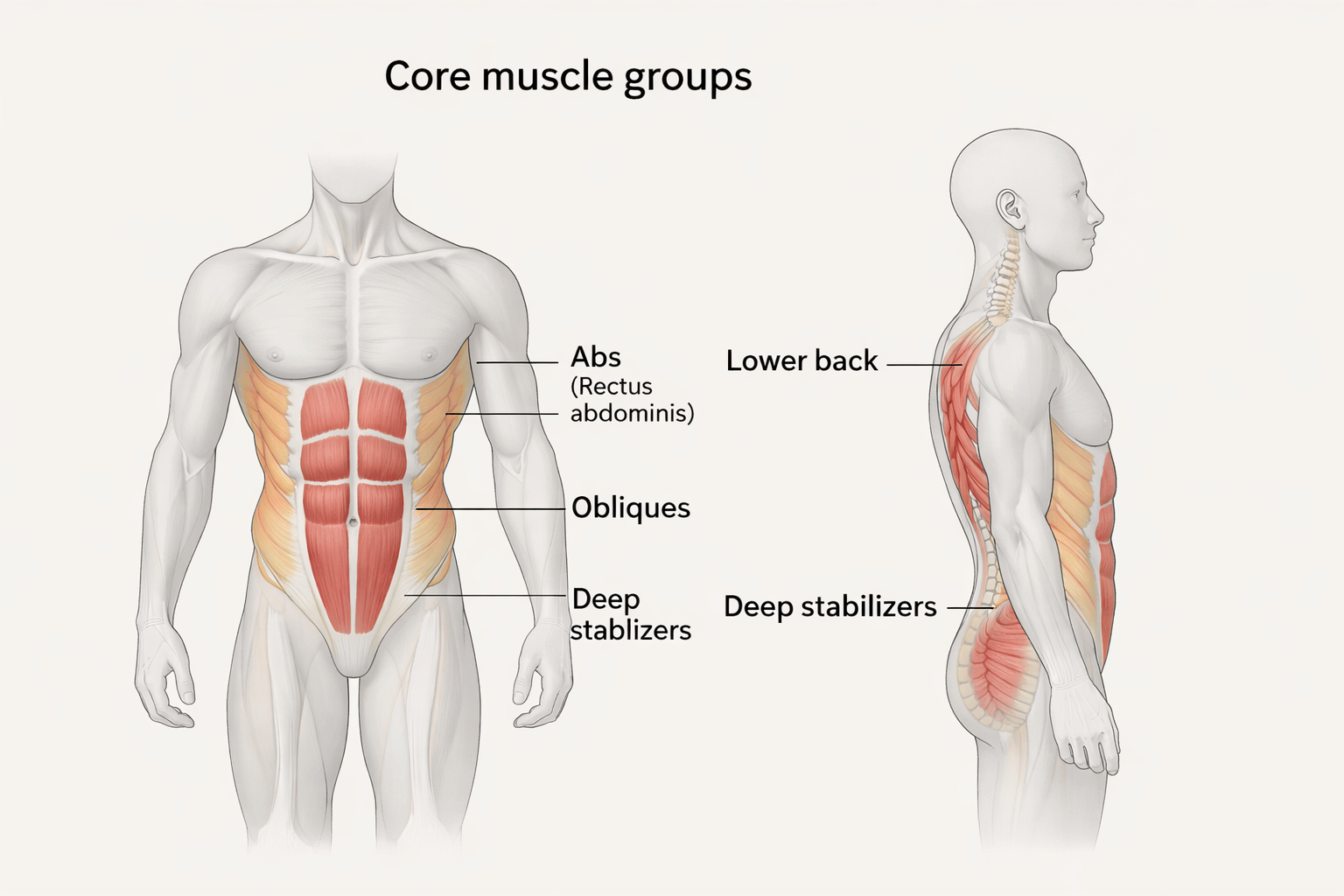
An effective core exercise usually does one or more of the following:
- Resists extension, rotation, or lateral bending
- Trains multiple muscles at once
- Requires control rather than momentum
- Can be progressively overloaded
This is why traditional ab workouts often fall short. Crunches primarily train one muscle through a short range of motion and rely heavily on momentum. While they can build endurance, they rarely develop the kind of strength that supports posture, movement, and long-term progress.
Another important distinction is strength versus visibility. A strong core does not automatically mean visible abs. Body composition plays a major role. Tools like body fat percentage calculator can provide a more realistic picture of progress than scale weight alone, especially when the goal is core definition rather than just strength.
Bodyweight Core Exercises That Build Real Strength
Bodyweight training forms the foundation of effective home workouts. When done correctly, these movements challenge stability, coordination, and muscular endurance.
Plank Variations
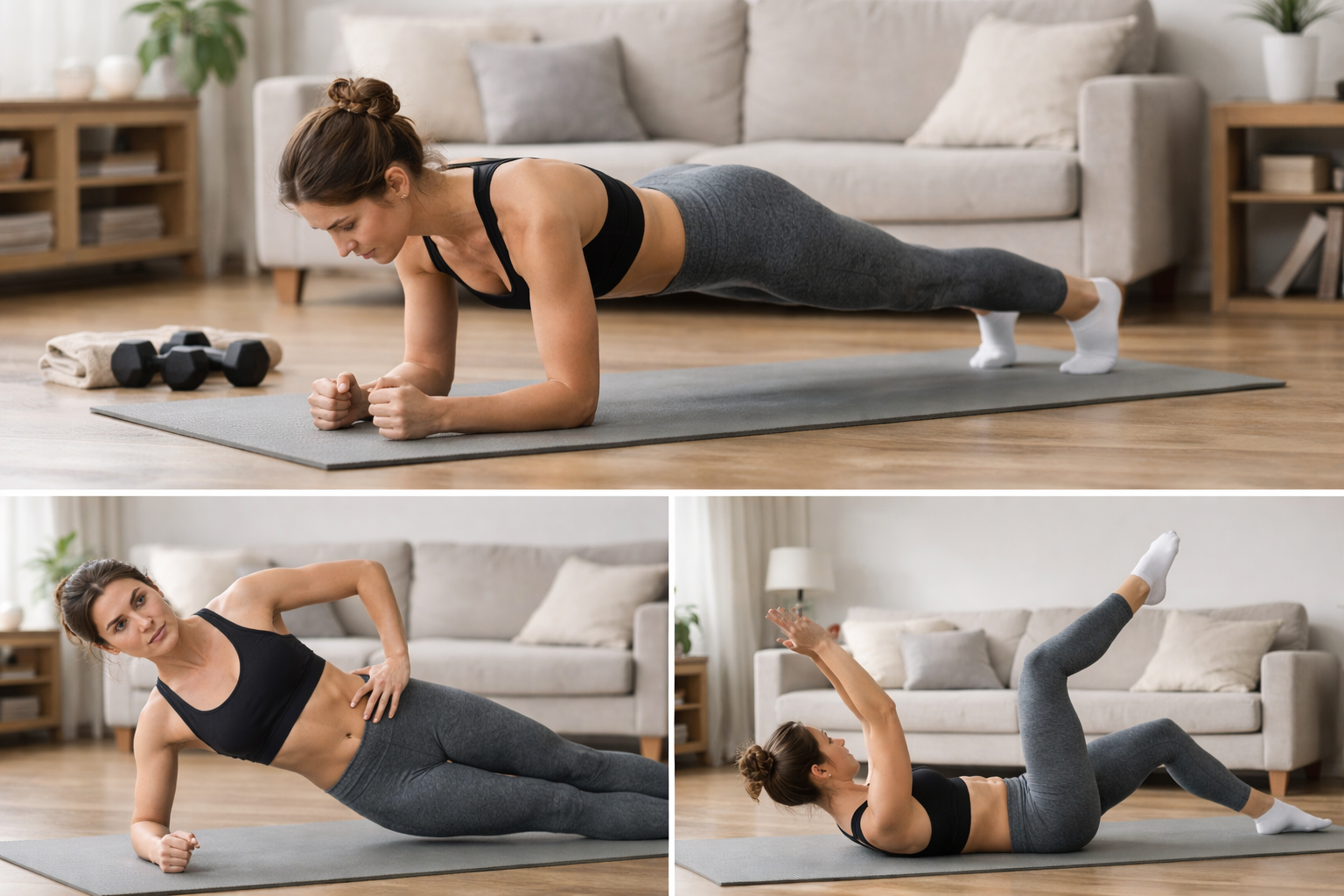
The standard plank trains the entire core by resisting spinal extension. Side planks add a lateral stability component that targets the obliques and hip stabilizers.
Key focus points:
- Maintain a neutral spine
- Engage glutes and quads
- Breathe slowly and under control
Quality matters more than duration. A technically sound 30-second plank is more effective than a shaky two minute hold.
Dead Bug
This movement trains coordination between the upper and lower body while reinforcing spinal stability. It is especially effective for beginners or anyone rebuilding core control.
The goal is to move slowly while keeping the lower back pressed into the floor.
Hollow Body Hold
Often used in gymnastics training, this exercise teaches full body tension. It challenges the deep core muscles responsible for spinal stability and posture.
Progress by increasing time or extending arms and legs further from the body.
Slow Mountain Climbers
When performed slowly, mountain climbers become a core dominant exercise rather than a cardio drill. The emphasis should be on resisting rotation while moving one leg at a time.
Why Home Core Training Often Plateaus
Many people notice early progress with bodyweight exercises, then hit a plateau. This happens for a few reasons:
- The resistance remains constant
- Range of motion is limited
- Muscles adapt quickly to repeated patterns
Without progression, even well designed exercises lose effectiveness over time. This does not mean home training stops working. It means the stimulus needs to change.
Progression can come from:
- Increasing time under tension
- Slowing down tempo
- Adding instability
- Introducing simple equipment
This is where minimal tools can significantly improve results.
How Minimal Equipment Enhances Core Activation
You do not need heavy machines to challenge the core. In fact, some of the most effective tools are small, portable, and inexpensive.
Minimal equipment helps by:
- Increasing range of motion
- Challenging balance and stability
- Forcing deeper muscle engagement
- Allowing progressive overload at home
Unlike machines that lock the body into fixed paths, simple tools require the core to stabilize dynamically, which closely mirrors real world movement.
A Simple Tool That Maximizes Core Engagement
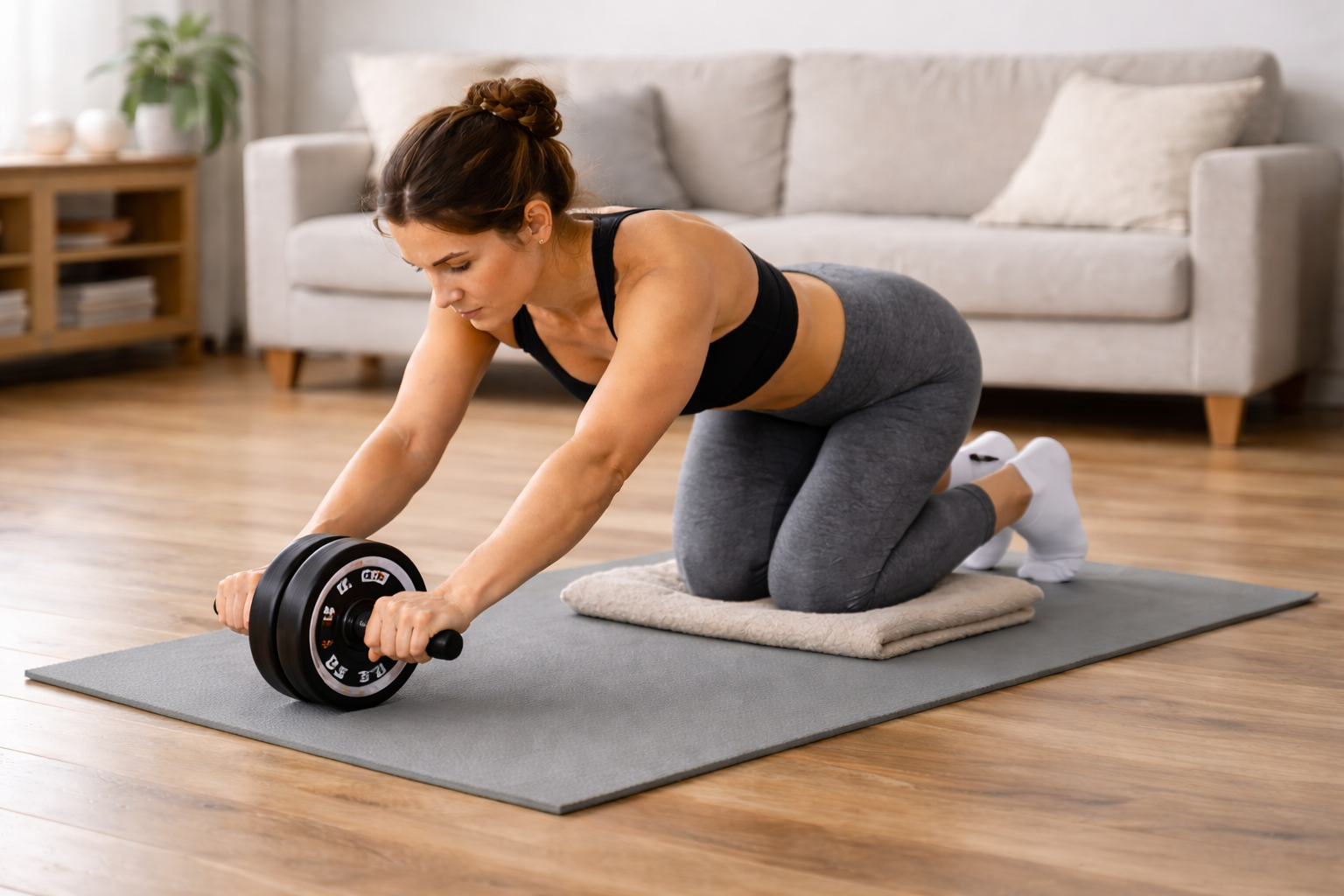
One of the most effective ways to train the core at home is through rollout style movements. These exercises emphasize anti-extension strength, meaning the core works to prevent the lower back from arching as the body extends.
A ab roller is a practical example of a tool that enables this movement pattern effectively at home. Rollout exercises challenge the entire core, shoulders, and upper body while requiring minimal space and setup. The difficulty can be adjusted by limiting the range of motion or performing rollouts from the knees before progressing to more advanced variations.
What makes rollout movements especially effective is the level of control they demand. Slow, controlled repetitions using DMoose ab roller encourage deeper core activation and help reinforce proper spinal alignment, which is often lacking in traditional ab focused exercises.
The focus should always remain on maintaining tension throughout the movement rather than relying on momentum to return to the starting position.
Sample At-Home Core Workout (10–15 Minutes)
This routine combines bodyweight movements with one rollout style exercise for a balanced approach.
Warm-Up (2 minutes)
- Cat cow mobility
- Standing torso rotations
Main Circuit (3 rounds)
- Plank hold: 30–45 seconds
- Dead bug: 8–10 reps per side
- Slow mountain climbers: 10 reps per side
- Rollout style movement: 6–10 controlled reps
Rest 30–45 seconds between exercises as needed.
Beginner modification
- Shorten plank duration
- Reduce rollout range of motion
Intermediate progression
- Add tempo pauses
- Increase time under tension
This structure prioritizes quality, control, and efficiency over volume.
How Often Should You Train Your Core?
Unlike isolated muscles, the core is involved in most daily movements. This does not mean it should be trained intensely every day.
For most people:
- 2–4 focused core sessions per week is sufficient
- Sessions can be short and intentional
- Recovery matters as much as training
Signs of overtraining include persistent lower back tightness, reduced performance, and poor posture during exercises. If these appear, reducing volume or improving technique usually resolves the issue.
Common Core Training Mistakes to Avoid
Many plateaus and discomfort issues stem from the same recurring mistakes.
Rushing repetitions
Speed reduces muscle engagement and increases reliance on momentum.
Ignoring breathing
Controlled breathing improves stability and endurance during core exercises.
Training abs in isolation
A strong core works as a system. Ignoring stabilizers limits progress.
Chasing soreness instead of strength
Soreness does not equal effectiveness. Progressive overload and control matter more.
Final Thoughts: Strength, Consistency, and Smart Metrics
Effective core training at home does not require complex routines or expensive equipment. It requires understanding how the core functions, choosing exercises that challenge stability, and progressing intentionally.
Consistency beats complexity. Short, focused sessions performed regularly lead to better results than sporadic high volume workouts. Measuring progress through strength improvements and realistic metrics, such as body composition rather than scale weight alone, provides a clearer picture of long term success.
With the right approach, home core workouts can build strength, support posture, and improve movement quality in ways that carry over into everyday life.