
Digital entertainment has been steadily growing and transforming over the past 3 decades. Not too long ago, streaming services only offered TV shows and movies, Twitch was exclusively for gaming content, and online casinos were only for gambling. Now it’s all more interconnected. You can watch live sports coverage on gambling sites, play games on Netflix, and watch gambling on Twitch.
This didn’t happen out of nowhere. Even when the main online entertainment was social media sites like Facebook, we started to see more and more games added to them to increase user engagement. So, let’s break down this phenomenon in detail, see what makes casual games so enticing, and why more digital companies are expanding their repertoire by developing games.
Closely Following Trends
Online gambling and gaming are fairly common hobbies across the globe, but it’s more pronounced in some regions than others. According to ABC’s coverage from 2023, over 30% the adult population in Australia gambles regularly or at least once a week. Bear in mind that a huge portion of gamblers are just people who play the lottery, but around 7% regularly play pokies and scratchies, both of which are available at online casinos.
Both pokies and scratchies don’t require strong financial commitments. They are fast-paced, and they give players a chance to win real money, which amps up the overall thrill. Now, one thing we shouldn’t overlook is that players are rarely going into these games bling. There are free to play pokies games sites where anyone can test pokies and even online scratchies for free. This gives anyone a chance to learn what to expect in terms of win rates, payouts, and the general feel of the game. So, next time someone decides to gamble, they know exactly which game they will play.
Also, online casinos have significantly expanded their repertoires and added mini arcades that strongly resemble regular mobile games. These are quick-paced paced that are easy to figure out, and you can learn how to play simply by seeing them one or two times. The reality is that casinos have recognized that the younger audience wants content that feels different than traditional pokies and table games. These arcades are their way of testing the waters, and so far the response has been positive.
Mobile Access and Free-to-Play

The number one reason why casual gaming has become so widespread is smartphones. In essence, we have mini-computers in our pockets that can run pretty complex software, so it’s logical that many businesses decided to make games. Because we live in a world where companies want to spend a lot of resources on advertising, it was easy to adopt a free-to-play model.
Developers didn’t need to earn from purchases but rather through user engagement itself. Every few minutes or after each level, the game would run a mandatory ad that players can’t skip. So, these free-to-play titles became one of the most reliable ways for advertiser to deliver their marketing campaign to the relevant audience. It’s easy to turn off the video or refresh the page when the ad starts on a video clip; however, it’s not the same with games. If you turn it off to skip the ad, you might lose progress. Because players don’t want to waste their time and effort, they simply sit through the entire thing.
Now you could technically bypass this by turning on Airplane mode, which is why games that work offline are rarely a thing nowadays. Before, internet coverage wasn’t as widespread, so all you had to do was download and install the app to play it. Since free wi-fi and 5G networks are very common in urban areas, devs could freely create games that only work while you are connected to the internet.
Even Casual Games Have Lots of Complexity
We should also talk about what falls into the category of “casual game” nowadays. Before, these were usually simple puzzles or an agriculture/city builder simulator like Farmville. These are fun, satisfying, and to an extent decently challenging games, but aren’t as advanced compared to modern titles. If you look at some of the top-performing titles of today, you’ll see names like Wild Rift, Hearthstone, Call of Duty, and PUBG. Each of these has its own eSports tournament, which only goes to show just how competitive they can get.
You might say that because these titles are played by pro gamers, they shouldn’t be considered casual, but you’d be wrong. They are all easy to learn but hard to master, which means there’s plenty of entertainment even on the casual level. However, because they have a more competitive format, playing them becomes more rewarding. Players are eager to pour in more and more hours because they get to track their progress or rank. What’s more, their popularity gives them a better status. So you truly feel like you are advancing in a discipline that matters, not just playing to kill time.
Social Component
Online play brings with it the ability to socialize in real time. When a game has a social component, it simply becomes more interesting. You don’t have to talk to others, but knowing that on the other side of the screen is another real person changes things. If you are winning, you know you aren’t triumphing against an emotionless machine, but against another person. This matters a lot. Even if we can’t see our opponent, we assume they aren’t having a good time or are getting frustrated for losing. In the same vein, when we are losing, we might assume the other person is gloating. So, why is this such a big deal? Well, our in-game actions have a more far-reaching effect, one that affects the real world or real people. This also affects how we feel about the game.
Online chess and online poker are still fun and remain relevant to this day for that reason. Even when you are not winning real money, you are still competing, and the outcomes affect real people. Additionally, we have features that allow us to record gameplay, which you can use to examine your performance or simply to post online if something funny happens. Once again, these might not seem like revolutionary features, but they tie into our next sub-point, which has to do with online communities around popular games.
Collaborative Work and Communities
As mentioned, casual games became more complex, and because people play together online, communities started and subreddits started to form around these titles. Whenever there is an active community around a form of entertainment, be it a book, movie franchise or TV series, that content becomes more relevant. For games, communities form for various reasons:
- Theory crafting around different combinations of strategy
- Lore, story, and discussions or speculations about what will come next
- Crafting guides for new players
- Discussions on the current state or meta, and possible balancing changes
- Exchanging opinions, feedback, and overall satisfaction with the game
These communities are incredibly useful for the developers as they see just how much players care about the game. More importantly, they get feedback from fans on how to make the product better.
Competitive Environment and Change in Design Philosophy
It’s undeniable that many games have become easier, and there’s a reason for that. The industry has evolved to the point where it’s difficult to thrive if you only cater to hardcore players. In other words, developers had to make experiences that are more digestible and easy to get into, and then sprinkle in more complex features. Before, it wasn’t risky to design a game where a player would grind for days before they got to the good part. However, it’s unwise nowadays to expect that type of time investment.
So, it’s important that a new player gets to experience the good parts after 20 minutes or so, and that they aren’t overwhelmed with a bevy of mechanics. Those get added in gradually, and there’s a lot of hand-holding or carefully placed tutorials that help players master them. These changes made complex titles more approachable, and turned more complex games into casual-friendly.
Another important change in design philosophy has to do with play sessions. As mentioned, older games used to reward bigger time investment, whereas with newer releases, you get a wholesome or satisfying experience with 20-30 minutes of play. This was a conscious decision that was made to accommodate common user behaviour. People are usually on their phones while taking a break, waiting for a bus, or using a toilet. So, you want to make a play session that feels meaningful during those 20 minutes.
Portable Consoles
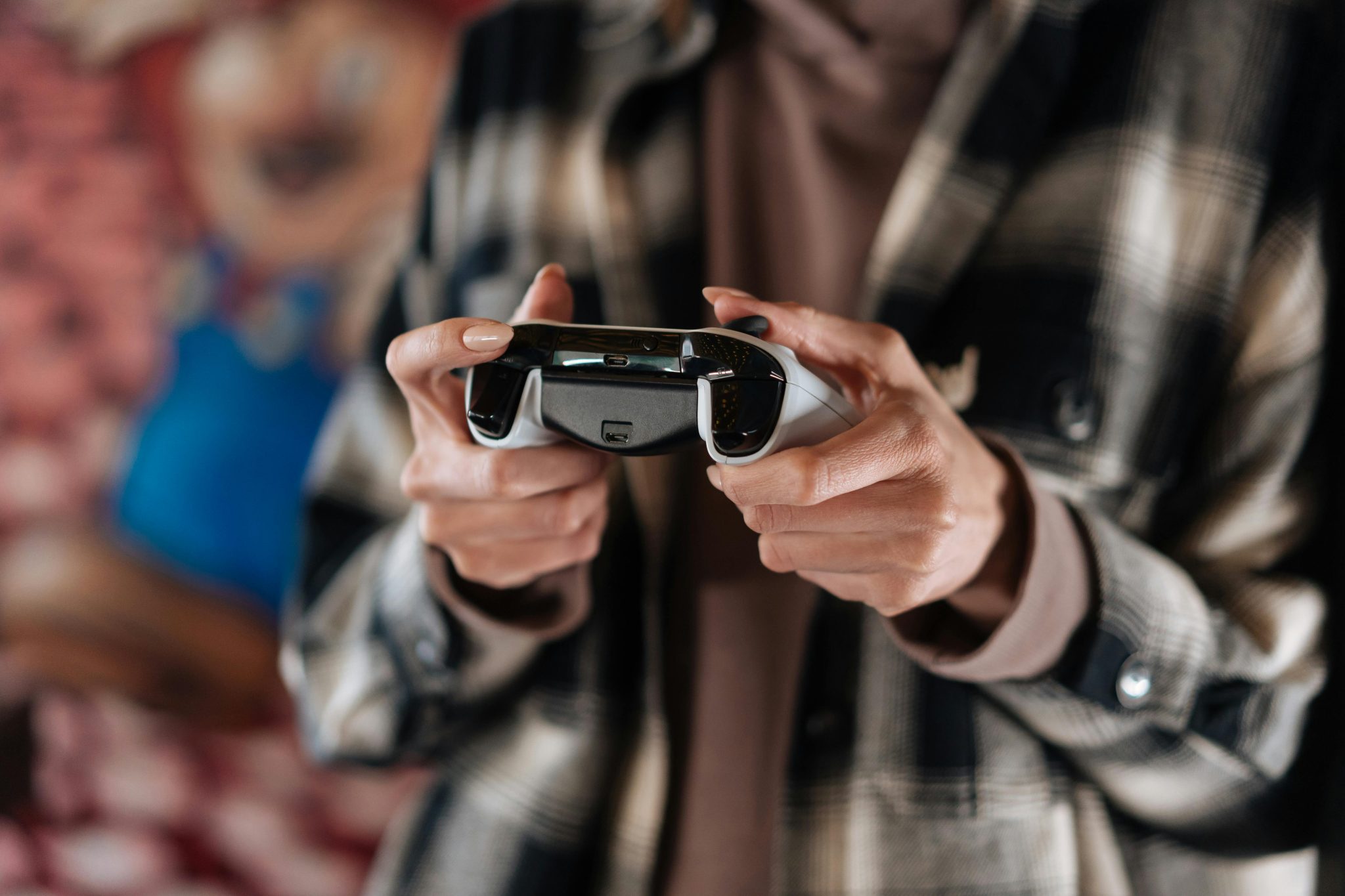
Smartphones aren’t the only devices that we use to interact with online games. There is a plethora of handheld consoles that provide a superior gaming experience, and really come in handy for those who travel a lot. Nintendo Switch (1 and 2), Steam Deck, Asus ROG Ally X, and RG556 (retro handheld) are some of the most popular examples that are available today on the market. Apart from retro consoles that serve as emulators for older consoles, other examples support online play.
The reason this is relevant is that, traditionally, smartphone games that require you to play on a touchscreen joypad never felt good. Players usually use additional hardware extensions that act as a controller in order to get more accuracy. With handhelds, there is no need for that, and they can run more demanding games that look great.
Experience and Data-Driven Approach
During the earlier days of this form of entertainment was still new, so new releases were really hit or miss. Now developers know which mechanics or features are more engaging. Also, it’s possible to repurpose older assets to generate new content more easily. In a way, an experienced studio can create a game that will be a big hit from the get-go.
This has a cascading effect, where more people interact with the product upon release, and that product gets recommended. Additionally, advertising itself has become more refined and precise, making it easier to reach the target audience. So, it’s easier for a new title to become a trend within certain communities, and that, in turn, causes more players to join out of fear of missing out.