Starting an online business used to mean choosing between two equally terrifying options. Go all in and hope the idea works, or move so cautiously that nothing ever really launches. For a long time, those felt like the only choices on the table.
That tension is exactly what’s changed.
More entrepreneurs are now building businesses without putting everything on the line from day one. They launch earlier, test ideas in smaller steps, and let real feedback guide their decisions. Entry barriers are lower, tools are easier to use, and getting started feels far more realistic.
What’s changed isn’t just the technology, but the approach. Small experiments are taking the place of big bets. Simple systems are bringing order to the early stages. Building something sustainable is starting to feel attainable rather than overwhelming.
The sections below explore how this shift is playing out and the low-risk strategies founders are using in 2026 to build online businesses with confidence.
Why Low-Risk Business Models Are Thriving
A few clear patterns explain why low-risk business models keep attracting new builders.
1. Lower Barriers Build Real Confidence
Most low-risk businesses share a similar foundation. They are inexpensive to launch, easy to run part-time or from home, and avoid heavy overhead. Consulting is a common example. It often requires existing expertise, a clear offer, and a simple way to reach clients. Payments tend to arrive early, which helps stabilize cash flow.
Digital products and dropshipping follow the same logic. Creators sell courses, templates, or subscriptions through platforms that manage delivery and payments. Dropshipping removes inventory concerns by outsourcing fulfillment. When an idea doesn’t gain traction, the downside stays contained.
That sense of containment changes how founders behave. They test more ideas, experiment more freely, and move faster because the risk feels manageable.
2. Lean Thinking Keeps Momentum High
Markets move quickly, and founders have learned to keep pace. Rather than refining ideas in isolation, many now launch early versions and let customers guide what comes next. This shortens the gap between idea and insight.
Early feedback reveals what matters, what confuses buyers, and what drives decisions. Pricing, positioning, and features improve through real use, not guesswork. Each release adds clarity and reduces uncertainty.
This approach keeps momentum alive. Progress builds through action, confidence grows with small wins, and early experiments gradually evolve into stronger businesses.
3. Tools Make Small Teams Surprisingly Capable
One of the biggest shifts in recent years is how much one or two people can accomplish. Small teams now run businesses that once required entire departments, largely because of the tools supporting them.
Modern platforms handle payments, storefronts, scheduling, analytics, and customer communication with minimal setup. This removes friction early, when momentum matters most.
AI tools have expanded that advantage. Founders use them to draft content, refine messaging, create visuals, summarize feedback, and spot patterns in performance data. Routine work takes less time, decisions happen faster, and attention stays focused on growth. The result is a business that feels lighter to run and easier to adapt as it evolves.
Popular Low-Risk Business Models New Entrepreneurs Are Choosing
Low-risk businesses tend to look different on the surface, but they often share the same logic underneath. They avoid heavy upfront costs, rely on existing platforms, and give founders room to test demand before committing deeply. In 2026, several models stand out because they balance flexibility, scalability, and real earning potential.
Consulting and Service-Based Businesses
Consulting and service-based businesses continue to be one of the most accessible ways to start online with low risk. Instead of selling products, founders sell expertise, problem-solving, or hands-on support. Startup costs stay minimal because there is no inventory, no manufacturing, and very little infrastructure required beyond communication and scheduling tools.
In 2026, demand for specialized knowledge remains strong. Businesses look for support in areas like AI adoption, fractional leadership roles, marketing strategy, operations, and remote team management. Many founders begin by offering a single, clearly defined service and expand only after they understand what clients value most.
This model also allows for flexibility. Services can be adjusted based on demand, pricing can evolve with experience, and delivery can shift from one-on-one work to retainers or productized services. Payments often happen upfront or on predictable schedules, which helps stabilize cash flow early on.
For many entrepreneurs, consulting acts as both a business and a testing ground. It provides immediate feedback, builds authority, and creates opportunities to later develop digital products or scalable offers. That combination of learning and earning makes service-based businesses a dependable starting point in 2026.
Dropshipping
Dropshipping continues to appeal to new entrepreneurs because it removes much of the pressure that comes with running an online store. There’s no need to purchase inventory upfront, rent storage space, or manage shipping logistics. Products are sold online, and once an order is placed, suppliers handle fulfillment behind the scenes. That simplicity makes it easier for founders to focus on branding, marketing, and building relationships with customers.
In 2026, the dropshipping businesses that perform well tend to be intentional. Founders choose a specific niche, take their branding seriously, and work with suppliers that prioritize quality and reliability. This approach creates a very different experience from the early days of dropshipping, when stores often felt interchangeable. Today, customers respond to brands that feel thoughtful and consistent, even when fulfillment happens elsewhere.
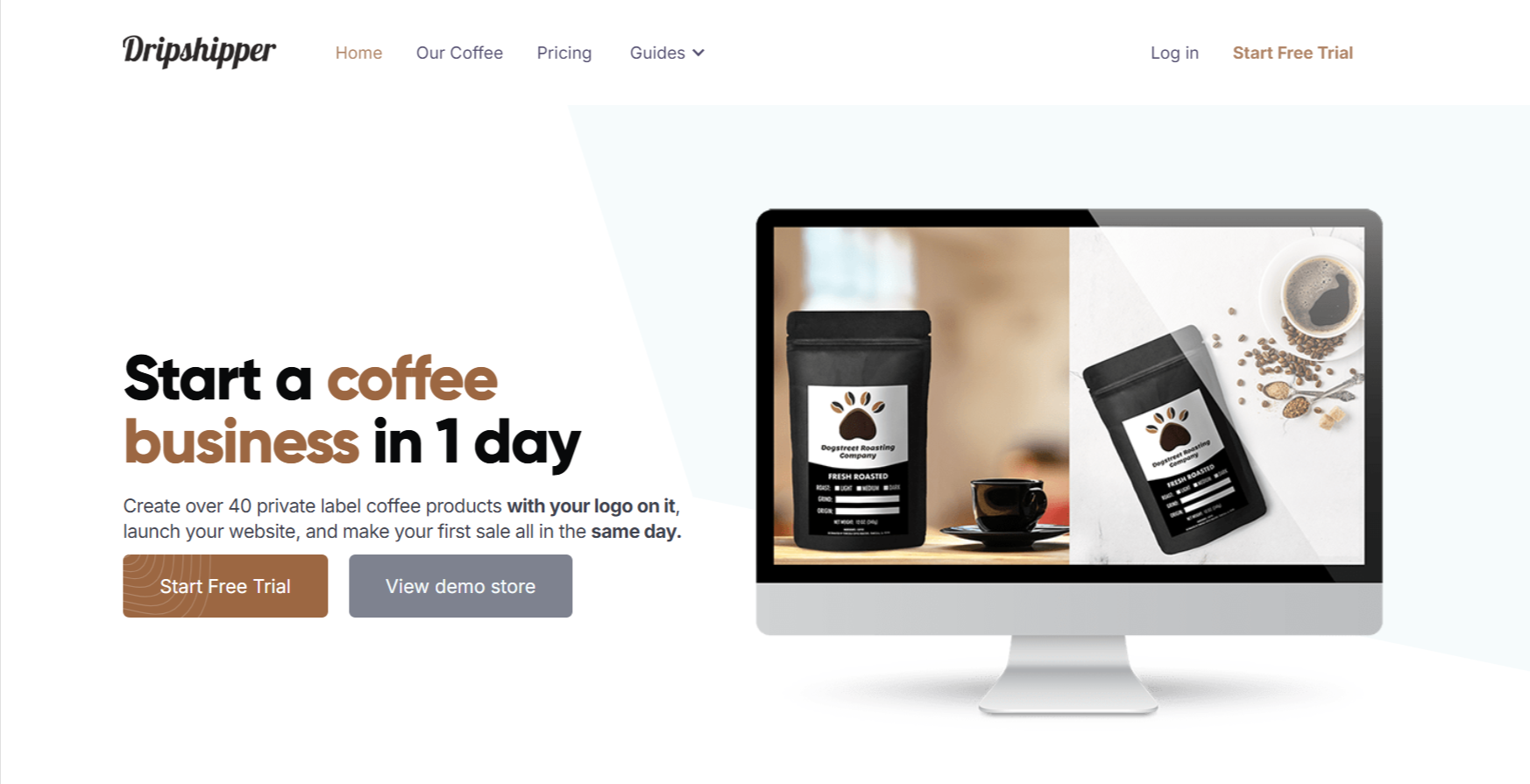
Dripshipper is a good example of how this model has matured. Entrepreneurs use it to sell private-label coffee brands by selecting from a wide range of coffees and teas, adding their own logo and packaging, and selling directly to customers under their own brand name. The roasting, packaging, and shipping are handled by established partners, often within the same day, which helps maintain freshness and quality without adding operational stress.
Digital Products
Digital products remain one of the most attractive low-risk business models because they scale without adding complexity. Courses, templates, toolkits, memberships, and downloadable resources can be created once and sold repeatedly, with no manufacturing, shipping, or inventory to manage. That simplicity makes them especially appealing to creators, educators, and consultants.
Digital products also fit naturally into how people build businesses today. Many founders start by sharing knowledge through content or services, then package what they’ve learned into structured products. Feedback from early buyers helps shape improvements, expand features, or inspire complementary offers.
Because distribution is instant and margins are high, digital products give founders room to experiment and refine without heavy financial pressure. Over time, they can become a stable revenue stream that supports growth, flexibility, and long-term sustainability.
Print-on-Demand and Merch
Print-on-demand sits comfortably between digital products and traditional e-commerce. Founders create designs, apply them to physical products like apparel, mugs, posters, or notebooks, and list them for sale online. When a customer places an order, a third party prints and ships the item. There’s no need to manage inventory or handle fulfillment.
This model works well for creators, artists, musicians, and niche communities. Merchandise often serves as an extension of identity rather than a standalone product. People buy because they connect with the message, the aesthetic, or the story behind it. That emotional connection makes marketing feel more natural and less transactional.
Print-on-demand also supports experimentation. Founders can test designs, slogans, or product types with minimal commitment. Sales data quickly reveals what resonates, allowing creators to refine their offerings or expand into higher-margin formats once demand is clear.
It’s a practical option for those who want to sell physical products without taking on the operational weight that usually comes with them.
Tools to Launch, Test, and Scale Low-Risk Businesses
Building a low-risk business becomes far easier when the right tools are in place. The most useful tools create momentum by simplifying decisions, shortening feedback loops, and keeping work organized as ideas take shape. They support progress without demanding constant attention or maintenance.
The following categories highlight the types of tools founders rely on most during the launch, testing, and early growth stages:
Project Management and Day-to-Day Coordination
As ideas turn into real offers, structure becomes important. Even one or two people can lose momentum if tasks, feedback, and decisions start living in too many places. Simple project management and communication tools help keep progress visible without turning work into admin.
Many founders rely on tools like Asana to break work into clear steps, set priorities, and track what’s moving forward. When responsibilities are defined and timelines are visible, it becomes easier to balance a business alongside other commitments. Progress feels tangible, which keeps motivation high.
For communication, tools such as Slack replace long email threads with focused conversations. Channels organize discussions by topic or project, making it easier to reference decisions and share updates without constant back-and-forth. This is especially helpful when working with freelancers, partners, or early clients.
Together, these tools create rhythm. Work stays organized, collaboration feels lighter, and small teams can operate with the clarity of much larger ones.
Client Input and Content Collection
One of the fastest ways a low-risk business becomes stressful is when founders spend more time chasing information than doing the work that actually moves the business forward. Whether it’s gathering website copy, brand assets, onboarding details, or documents, endless back-and-forth can quietly drain time, momentum, and confidence.
Tools like Content Snare solve this problem by turning information collection into a structured process. Instead of long email threads, founders create clear, step-by-step requests that guide clients or collaborators through exactly what’s needed. Everything lives in one place, with automated reminders handling follow-ups so projects keep moving without constant manual nudging.
This is especially useful for service-based businesses, agencies, consultants, and anyone working with clients during early growth. When input arrives cleanly and on time, timelines stay predictable and work feels manageable. Founders can take on more projects without increasing stress, which directly supports low-risk scaling.
Lightweight Testing and Quality Checks
As low-risk businesses grow, small issues tend to surface in places founders don’t expect. A broken link, a confusing checkout step, or an unclear onboarding flow can quietly slow momentum. Testing helps catch these problems early, but heavy testing processes often feel unrealistic for small teams.
Some founders use lightweight testing tools to keep quality in check without adding complexity. Testpad is one example of a tool that supports this approach. It allows teams to organize testing around simple checklists rather than rigid test cases, making it easier to review work as it evolves.
This kind of setup works well when teams are small or distributed. Founders can involve collaborators, contractors, or even clients in reviewing changes without requiring extensive onboarding or formal training. Testing becomes a shared activity rather than a specialized task handled by one person.
Product, Payments, and Delivery Platforms
Low-risk businesses gain momentum by removing operational friction early. Rather than building systems from scratch, founders rely on platforms that handle payments, delivery, and access with minimal setup. This helps ideas reach customers quickly and generates feedback from real use.
E-commerce platforms like Shopify make launching an online store straightforward. Payments, checkout, and integrations are built in, allowing founders to focus on product presentation and customer experience. Many pair these platforms with print-on-demand or dropshipping services to test physical products without managing inventory.
For digital products and services, tools such as Gumroad, Kajabi, or Podia handle sales, access, and delivery in one place. This setup makes it easier to test pricing, formats, and offers while keeping costs predictable.
Automation, Outreach, and Content Support
As a business gains traction, time quickly becomes a founder’s most limited resource. Automation tools help maintain consistency across outreach, scheduling, and content without adding to daily workload. The aim is to stay responsive and visible without being tied to every task.
Email outreach tools organize follow-ups and ongoing conversations, while simple scheduling tools reduce back-and-forth and keep momentum steady. This setup works especially well for consultants, service providers, and creators who rely on relationship-driven growth.
AI-powered content tools offer additional support by helping draft newsletters, outline blog posts, or refine social updates. When used as assistants rather than replacements, they save time while preserving the founder’s voice. Paired with basic SEO research, content becomes easier to plan and sustain.
At this stage, automation creates rhythm. Communication remains timely, visibility improves, and growth stays manageable for small teams.
Closing Thoughts
Low-risk businesses exist because founders want room to think clearly and move forward without constant pressure. Many entrepreneurs are choosing models that let them start small, learn quickly, and build momentum as they go. This shift isn’t about playing it safe. It’s about making smart decisions that respect time, energy, and resources.
The patterns are simple. Founders choose ideas that don’t require heavy upfront investment. They test early, listen closely, and adjust based on real feedback. They rely on tools that reduce friction and keep work organized, so progress feels steady rather than overwhelming.
For people just starting out, this approach makes the first step feel achievable. For experienced founders, it creates space to explore new ideas without disrupting what already works. Over time, these businesses tend to grow in a way that feels intentional and manageable, guided by learning and consistency rather than guesswork.
David Richardson is a seasoned business strategist known for driving innovation in the corporate world. With over 15 years of experience, he has helped startups and Fortune 500 companies alike in leveraging their potential to achieve sustainable growth. David's expertise in market analysis, strategic planning, and leadership development has made him a sought-after consultant and speaker. He authors insightful articles on business trends and strategies, aiming to empower entrepreneurs and business leaders with the tools for success.
David Richardson is a seasoned business strategist known for driving innovation in the corporate world. With over 15 years of experience, he has helped startups and Fortune 500 companies alike in leveraging their potential to achieve sustainable growth. David's expertise in market analysis, strategic planning, and leadership development has made him a sought-after consultant and speaker. He authors insightful articles on business trends and strategies, aiming to empower entrepreneurs and business leaders with the tools for success.